


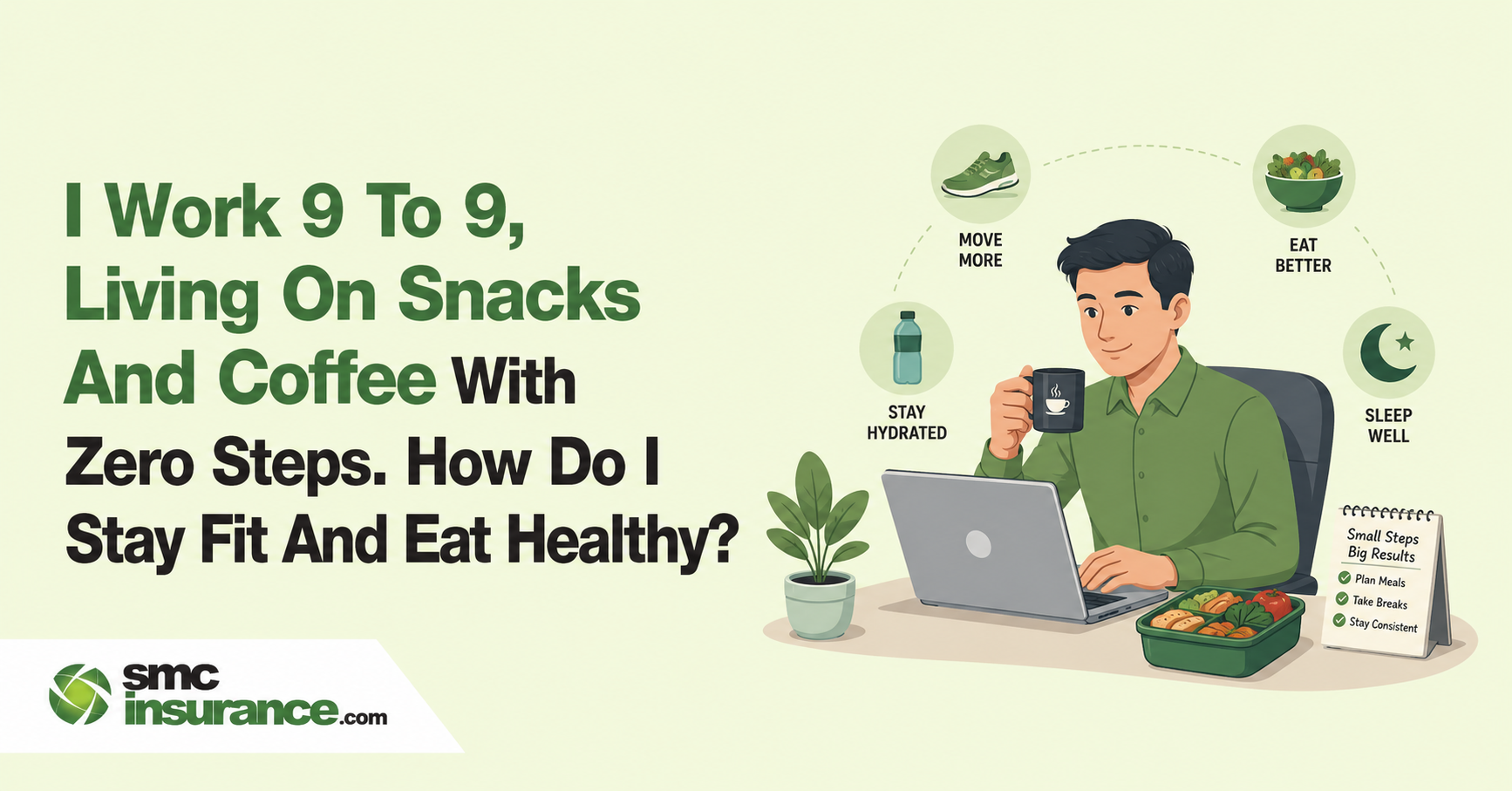

Start with three non-negotiable basics: drink 2.5–3 litres of water daily (most desk workers are chronically dehydrated), eat a protein-based breakfast every morning (boiled eggs, curd, peanuts) and replace at least two daily snacks with whole foods like fruits, makhana, or roasted chana. For movement, break sitting time every 90 minutes with a 2-minute walk and use stairs when possible. Cap coffee at 2–3 cups with reduced sugar. Carry home-cooked lunch at least 3 days a week. Eat dinner before 9:30 PM when possible and keep it light. These changes require no gym, no extra time and no dramatic schedule shifts, just consistency over 4–6 weeks.
You leave home at 8 AM and get back at 10 PM. Breakfast is either skipped or a pack of biscuits in the auto. Lunch is a quick biryani at your desk, eaten in fifteen minutes between two calls. Evening hunger hits around 6 PM and the office vending machine wins again. By the time you're home, you're too tired to cook, too hungry to wait and too wired from coffee to sleep properly. Sound familiar?
This is the daily reality for crores of Indian professionals, from IT parks in Bengaluru and Hyderabad to banking offices in Mumbai and BPO hubs in Pune. The 9-to-9 grind isn't just long hours. It's a systematic dismantling of everything you need to stay healthy: time, movement, home-cooked food and sleep. And the cost isn't visible immediately. It shows up at 32 as a lifestyle disease diagnosis, at 35 as a fatigue that no weekend can fix.
The good news is this: you don't need two hours at the gym or a gourmet meal plan to arrest the damage. This article gives you practical, Indian-context solutions that fit inside a 12-hour workday.
Why the 9-to-9 Schedule Is So Damaging to Your Health
Long hours are one part of the problem. The combination of factors is what makes this schedule genuinely dangerous.
Sedentary lifestyles and prolonged sitting are increasingly linked with cardiovascular disease, type 2 diabetes, obesity, and lower back problems in India. Findings from the ICMR-INDIAB study showed high levels of physical inactivity among Indian adults, especially in urban populations. The World Health Organization also states that prolonged sedentary behaviour increases the risk of heart disease, diabetes, and premature death, even among people who achieve recommended exercise levels.
Add to this the Indian urban diet reality: office snacks high in refined flour and trans fats, sweetened chai or coffee consumed 4–5 times daily, dinner at 10–11 PM followed immediately by sleep and near-zero water intake throughout the day. Each of these, individually, is manageable. Together, they create a metabolic environment where the body accumulates fat, loses muscle, develops insulin resistance and ages faster.
The mental load compounds it. High cortisol called the stress hormone promotes fat storage around the abdomen, disrupts sleep and increases cravings for sugar and salt. That 4 PM Kurkure craving isn't a lack of willpower. It's your cortisol talking.
The Real Problem With Office Snacks and 5 Cups of Coffee
|
Common Office Snack/Drink |
Hidden Health Risk |
Smarter Indian Swap |
|
Marie/Cream biscuits (3–4 daily) |
Refined flour + sugar = blood sugar crash by 3 PM |
Roasted chana or makhana (fox nuts) |
|
Sweetened chai/coffee (4–5 cups) |
~3 tsp sugar each = 400+ empty calories/day |
Unsweetened green tea or black coffee, max 2 cups |
|
Instant noodles (Maggi as "quick lunch") |
High sodium + MSG = bloating, acidity |
Poha or upma made the night before |
|
Vending machine chips |
Trans fats + oxidised oil = inflammation |
Peanuts or a small pack of almonds |
|
Packaged fruit juice |
20–30g sugar per glass = same as a soft drink |
Whole fruit (banana, apple) or nimbu paani |
|
Samosa from canteen |
Deep-fried in reused oil = sluggishness post-lunch |
Boiled egg or a paneer salad wrap |
|
White bread sandwich with mayo |
Refined flour + processed cheese, low protein |
Multigrain bread with peanut butter or egg |
Note: You don't need to eliminate all of these overnight. Replacing two or three items from this list weekly makes a measurable difference within a month.
The coffee issue deserves special attention. Two cups of black coffee per day is associated with reduced risk of type 2 diabetes and improved focus. The problem is the Indian version as it comes in large cups with 2–3 teaspoons of sugar and full-fat milk, consumed 5–6 times a day. That's 400–500 empty calories, insulin spikes throughout the day and caffeine dependency that disrupts sleep. If cutting sugar feels hard, reduce it by half a teaspoon per week. Your taste adjusts faster than you expect.
What a Realistic Healthy Day Looks Like on a 9-to-9 Schedule
There's no point designing a plan that requires a 5 AM gym session when you slept at midnight. Here's a realistic framework built around an actual 9-to-9 workday.
- Before Office (15 minutes, non-negotiable)
Start with two glasses of warm water. Even before chai. Rehydration after 7–8 hours of sleep takes priority. A banana or two boiled eggs takes under two minutes to eat and keeps you full till 11 AM. If you can manage it, five minutes of simple stretching like neck rolls, cat-cow, shoulder rotations, etc., reduces the stiffness that builds up over 10 hours at a desk.
- At Office (small choices, big cumulative effect)
Take the stairs for the first two floors, then take the lift. It adds 80–100 steps a day with zero additional time. Drink one glass of water per hour. You can set a phone reminder if needed, because dehydration masquerades as hunger and fatigue. During calls that don't require a screen, stand up or pace. Three 10-minute walks across the day to the bathroom, to a colleague's desk, during a coffee break, etc., adds up to 30 minutes of low-intensity movement, which research shows has genuine metabolic benefits.
- Lunch (the most important meal to get right)
The biggest health investment for a desk worker is carrying lunch from home at least 3 days a week. A dal-rice-sabzi combination made the previous evening takes 5 minutes to pack. Rajma, chole, moong dal, any sabzi with roti provide protein, complex carbs and fibre that sustain energy far better than canteen food. On days you can't carry food, choose sabzi-roti from a local thali over biryani or fried options.
- Afternoon Slump Fix
The 3–4 PM energy crash is real and it's mostly caused by the blood sugar spike-and-crash cycle from a high-carb lunch. A small snack of roasted chana, peanuts, or a fruit at 4 PM prevents the crash and reduces the evening vending machine temptation.
- Dinner (timing matters as much as content)
Eating dinner after 9:30 PM regularly is associated with weight gain, poor sleep quality and higher triglyceride levels. If your schedule makes this unavoidable, keep dinner light with khichdi, dal, curd rice, or a vegetable soup. Avoid heavy, fried food late at night. The body at rest processes lighter meals far better than it manages a full biryani at 11 PM.
Movement Hacks That Require Zero Extra Time
The common advice to "join a gym" or "go for a morning run" doesn't account for a person who leaves home at 8 AM and returns at 10 PM, genuinely exhausted. Here's what actually works.
- Desk-based micro-exercises (do these throughout the day):
- Calf raises while standing at the printer: 30 reps, takes 45 seconds
- Seated spinal twist: 30 seconds each side, every 2 hours
- Neck tilts and shoulder circles: do these during every phone call
- Glute squeezes while seated: sounds odd, but activates a muscle group that switches off completely during prolonged sitting
- Weekend movement banking: One 45-minute walk on Saturday and one on Sunday doesn't compensate for 5 sedentary days. But it maintains baseline cardiovascular fitness and significantly reduces the mental load of the week. It doesn't have to be structured. Evening market walks, stairs instead of lifts at a mall, these count.
- The 2-minute rule: Any movement that takes 2 minutes or less, always do it without thinking. Walk to a colleague instead of messaging. Use the washroom on another floor. Stand while eating lunch. These micro-decisions accumulate to 800–1,200 extra steps a day with zero schedule disruption.
Meal Prep for the 9-to-9 Person: Indian Meals That Work
The barrier to eating well is usually not knowledge; it's time and energy. Meal prep reduces both.
Sunday 45-minute prep:
- Cook a large batch of dal (stays good for 3 days)
- Boil 8–10 eggs (breakfast and snacks for 4–5 days)
- Wash and chop vegetables (salad assembly time drops to 2 minutes)
- Make a batch of upma or poha for weekday breakfasts
Tiffin ideas that travel well:
- Dal rice in a two-tier tiffin box
- Multigrain rotis with sabzi or paneer
- Curd rice with a small pickle
- Sprout salad with lemon and chaat masala
- Boiled egg with a banana and some nuts
If you think you don't have time to think about health insurance for the lifestyle diseases developing quietly in your body, now is the right moment to reconsider. Check your current health coverage at SMC Insurance. Remember that a comprehensive health insurance plan is cheaper than treating diabetes or hypertension.
Hydration: The Simplest Fix Nobody Does
Most 9-to-9 workers are mildly dehydrated all day. Mild dehydration (as little as 1–2% of body weight) causes measurable drops in concentration, increased fatigue and headaches that are routinely blamed on stress or screen time. The standard recommendation is 2.5–3 litres of water per day for adults in Indian urban conditions. Here's how to hit it without thinking:
- 2 glasses on waking
- 1 glass before every meal and snack
- 1 bottle (750ml–1L) kept on your desk, refilled twice
- 1 glass before bed
Nimbu paani (without sugar), coconut water and plain buttermilk (chaas) count toward hydration and also provide electrolytes that coffee and tea deplete.
Wrapping Up,
The 9-to-9 schedule wasn't designed with human biology in mind. But working within it doesn't mean surrendering your health. The changes that matter most are small, consistent and don't require an overhaul of your schedule.
Swap two snacks a week. Carry lunch for three days. Drink water before every cup of coffee. Take the stairs. Eat dinner before 9:30 PM when you can. Stand during phone calls. Your body is giving you signals right now like the afternoon fatigue, the weekend bloating, the backache at 30, the acidity at night. These are early warnings, not permanent conditions. The lifestyle disease statistics for Indian urban professionals are sobering. But they're not inevitable. A few deliberate choices, made consistently, change the trajectory significantly.
Disclaimer:The information provided on this platform is intended for general awareness and educational purposes. While every effort is made to ensure accuracy, some details may change with policy updates, regulatory revisions, or insurer-specific modifications. Readers should verify current terms and conditions directly with relevant insurers or through professional consultation before making any decision.
All views and analyses presented are based on publicly available data, internal research, and other sources considered reliable at the time of writing. These do not constitute professional advice, recommendations, or guarantees of any product’s performance. Readers are encouraged to assess the information independently and seek qualified guidance suited to their individual requirements. Customers are advised to review official sales brochures, policy documents, and disclosures before proceeding with any purchase or commitment.
FAQs
Start with one thing, not everything. The single highest-return change for a sedentary desk worker is hydration. Two glasses of water on waking, one bottle on your desk, one glass before meals. It costs nothing, takes zero time and reduces fatigue, hunger and headaches within days. Once that's automatic (usually within 2 weeks) add one food swap (replace one daily biscuit snack with roasted chana). Build from there. Trying to overhaul everything on day one is the most common reason people quit within a week.
Fit is relative, but yes, meaningful health improvements are achievable without a gym. Research consistently shows that breaking up sedentary time with short bouts of movement throughout the day reduces metabolic risk, even without structured exercise. For Indian urban professionals, the targets should be: no sitting stretch longer than 90 minutes, 5,000–7,000 steps per day (achievable through office movement) and two weekend walks of 30–45 minutes each. This won't make you an athlete, but it will substantially reduce your lifestyle disease risk.
Two cups of black coffee or unsweetened tea is the general upper limit for most adults without adverse effects. The Indian version of sweet, milky chai or heavily sweetened coffee, adds the sugar problem on top of the caffeine problem. At 5 cups a day with 2 teaspoons of sugar each, that's 10 teaspoons (40g) of sugar just from beverages, nearly double the WHO's recommended daily sugar intake for adults. Cutting to 2–3 cups and reducing sugar by half each week is a practical, sustainable approach.
Options that take under 5 minutes and require minimal or no cooking: two boiled eggs (prep the night before), a banana with a small handful of peanuts, a bowl of pre-made overnight oats with fruits, curd rice (if you have leftover rice), a multigrain roti with peanut butter or a boiled egg, or a pre-made thepla (Gujarati flatbread) which stays good for 2–3 days at room temperature. The key rule is to prepare the night before; mornings in a 9-to-9 schedule have no buffer for cooking.
Both. Chronic back and neck pain from prolonged sitting is a genuine musculoskeletal issue, not just discomfort to push through. Sitting with poor posture compresses lumbar discs and shortens hip flexors, both of which worsen over time if not addressed. Two immediate steps: set a timer to stand up and stretch every 90 minutes and check your chair-monitor-keyboard alignment (monitor at eye level, back supported, feet flat on the floor). If pain is persistent or radiates to your arms or legs, see an orthopaedic consultant — this is not something to manage indefinitely with painkillers.
Eating a heavy meal close to sleep disrupts the body's circadian rhythm. The biological clock that regulates metabolism, hormone release and repair processes during sleep. Late heavy meals elevate triglycerides and blood sugar during sleep, when the body's insulin sensitivity is naturally lower. Over time, this contributes to fatty liver, abdominal weight gain and higher cardiovascular risk. If a late dinner is unavoidable, keep it light with khichdi, curd rice, vegetable soup, or dal and eat at least 90 minutes before lying down.


