


Why does my scooter battery drain so fast?
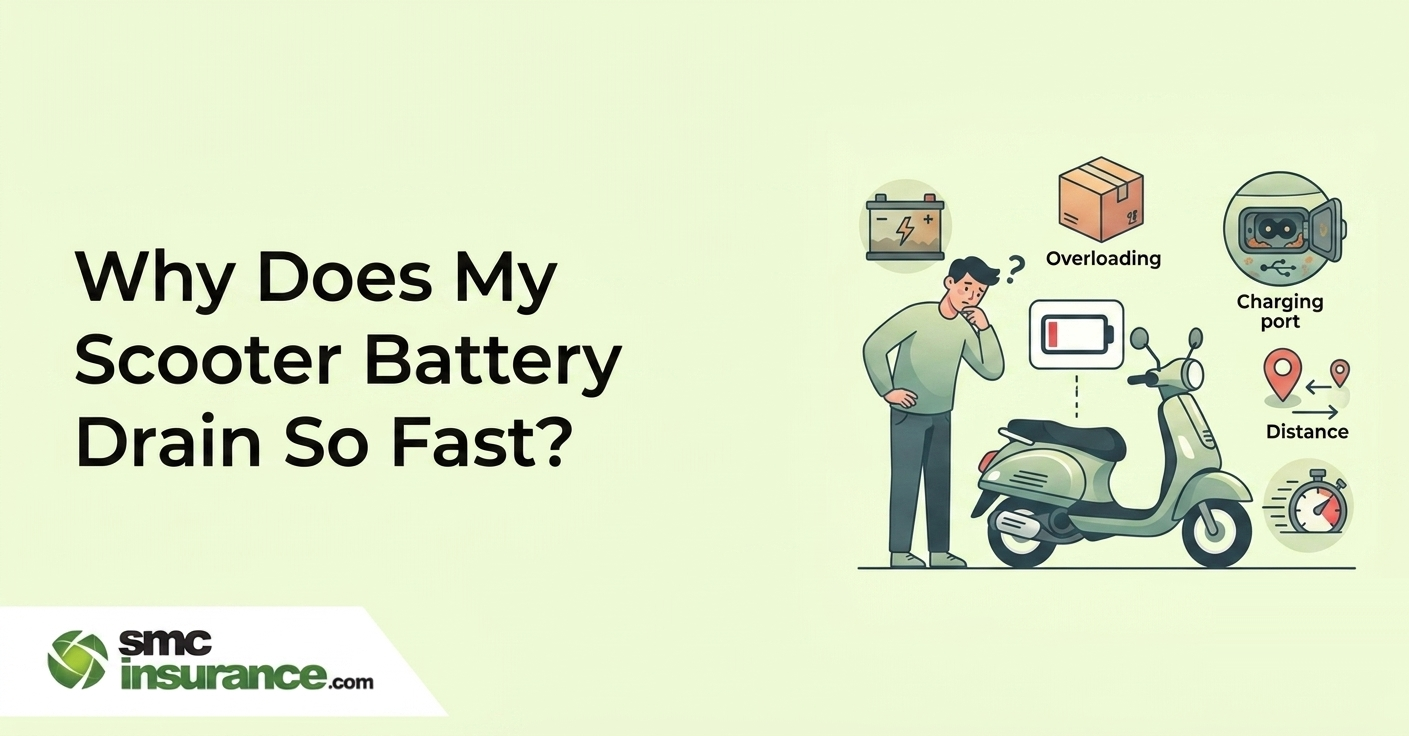
Fast battery drain in electric scooters is usually caused by a combination of factors like aggressive riding habits, low tyre pressure, heavy load, steep terrain, extreme temperatures and degraded battery cells from poor charging practices. All lithium-ion batteries gradually lose capacity with use. The rate of degradation depends on battery chemistry, temperature exposure, charging habits and battery management systems. Noticeable range reduction often becomes apparent after several hundred charge cycles, although actual battery life varies by manufacturer and usage conditions. Keeping charge levels between 20% and 80%, riding in eco mode and maintaining proper tyre pressure can collectively recover 20–30% of lost range. If range has dropped below 50% of the original specification, battery replacement may be necessary.
You charged your electric scooter fully before leaving home. By the time you reach work, you're already down to 40%. The promised 60-km range? You're getting maybe 35 on a good day. Sound familiar? For lakhs of electric scooter owners across India, this is a very real daily frustration and it only gets worse as the scooter ages.
The battery is the most expensive component on any electric two-wheeler. Battery replacement is typically one of the most expensive repairs on an electric scooter, especially when you don’t have a robust E-bike insurance policy. Costs vary significantly by manufacturer, battery capacity, warranty status and service centre policies. Owners should obtain a written quotation from an authorised service centre before considering replacement. That makes understanding battery drain not just useful, but financially important.
This article explains exactly why your scooter battery drains faster than expected, what you can fix right now and what genuinely signals a deeper problem.
Table of Contents
- The Real Reasons Your Scooter Battery Drains So Fast
- Battery Aging: What Is Normal and What Is Not
- Battery Warranties Have Improved Significantly in India
- How to Fix Fast Battery Drain: What You Can Do Right Now
- When to Replace Your Scooter Battery
- What Does Battery Replacement Cost in India?
- Is Your Scooter Insured for Battery-Related Issues?
The Real Reasons Your Scooter Battery Drains So Fast
Not all battery drain is created equal. Some causes are immediate and fixable. Others are gradual and structural. Knowing which category your issue falls into saves you from spending money on problems that don't exist.
Riding at High Speed or in Sport Mode Continuously
This is the single biggest range-killer that most riders don't take seriously enough. When you hold full throttle or ride continuously in sport mode, your motor draws two to three times more current than it would at a steady, moderate pace. For a scooter rated at 60 km of range, riding at top speed consistently can cut that down to 30–35 km. The physics is straightforward: energy consumption rises sharply with speed, not linearly. Switching to eco mode for daily commuting and reserving sport mode for occasional use makes a significant real-world difference.Low Tyre Pressure
Underinflated tyres are one of the most common causes of poor range — and one of the most overlooked. When tyre pressure drops below the recommended level, rolling resistance increases. The motor works harder to maintain the same speed, drawing more current from the battery. This is a five-minute check that many riders skip for months. Most Indian e-scooters recommend tyre pressure between 28–36 PSI. Check yours weekly, especially during monsoon season when temperature-related pressure drops are common.Rider and Load Weight
Every electric scooter has a rated payload capacity — typically between 100 kg and 150 kg for Indian models. When you exceed this, or consistently carry heavy bags, the motor draws more power to compensate. A rider weighing 90 kg with a 10 kg backpack is putting meaningful additional strain on the battery compared to the manufacturer's test conditions. This won't destroy the battery, but over daily use, the extra draw adds up and shortens per-charge range noticeably.Hilly Terrain and Rough Roads
Flat, smooth roads are where rated range figures are tested. Indian roads are rarely either. Climbing an incline demands substantially more motor output than flat riding. Rough, potholed surfaces also increase rolling resistance and vibration losses. If your daily route includes flyovers, hilly areas, or consistently broken roads, your real-world range will consistently be lower than what is written in the brochure. This is expected and normal, not a defect.Temperature Extremes
Lithium-ion batteries are sensitive to temperature. In cold weather, the chemical reactions inside battery cells slow down, reducing the battery's ability to deliver its full rated charge. Even a fully charged battery can perform 10–25% below normal in cold conditions. In India's context, extreme summer heat presents the more pressing problem. Storing or charging your scooter in a hot, sun-exposed location — like an open parking garage during peak Chennai or Delhi summers — accelerates cell degradation over time. This causes permanent capacity loss, not just temporary performance dips.Poor Charging Habits
How you charge matters as much as how you ride. Two habits cause the most long-term damage:
Overcharging: Leaving the scooter plugged in overnight, well past 100%, puts unnecessary stress on battery cells. Most modern scooters have overcharge protection, but regular overnight charging still accelerates gradual wear.
Deep discharging: Letting the battery drain completely to 0% and leaving it that way causes irreversible damage to lithium-ion cells. This is far more harmful than most riders realise.
Many battery experts recommend avoiding prolonged periods at either 0% or 100% state of charge. For daily commuting, some riders choose partial charging where supported by the manufacturer. However, owners should always follow the charging guidance provided by their scooter manufacturer. Full charges are fine occasionally (before a long trip), but daily deep cycling significantly shortens battery life.
Battery Health Tip: Follow the charging recommendations provided by your scooter manufacturer. Modern battery management systems are designed to protect batteries during charging, but consistently exposing the battery to extreme heat, deep discharge, or long periods of storage at very low charge levels can accelerate degradation.Mechanical Drag and Brake Friction
Sometimes the problem isn't electrical at all. Brake pads that rub slightly against the wheel, misaligned wheels, or dry bearings create mechanical resistance that forces the motor to work harder. The scooter feels fine to ride, but the battery drains faster than it should. A simple inspection at a service centre can identify this quickly.Frequent Stop-Start Riding in Traffic
Every time your scooter accelerates from a standstill, the motor draws a surge of current from the battery. City riders who spend their commute in stop-go traffic — traffic signals, congestion, narrow lanes — consume significantly more energy per kilometre than riders on open roads. This is an inherent reality of urban commuting, not a malfunction. But anticipating stops, coasting where possible and avoiding hard acceleration at every green light helps reduce this energy waste.Accessories and App-Connected Features
Modern Indian e-scooters like the Ather 450X or Ola S1 Pro come with displays, Bluetooth connectivity, turn-by-turn navigation and app integration. All of these draw power. Keeping all features active simultaneously contributes to parasitic drain that quietly reduces your range. Dimming screen brightness, disabling Bluetooth when not needed and turning off unnecessary connected features are small steps that add up over a full day of riding.
Battery Aging: What Is Normal and What Is Not
|
Charge Cycles Completed |
Expected Capacity Remaining |
What You'll Notice |
|
0–100 cycles |
~98–100% |
Range matches rated specification |
|
100–300 cycles |
~90–95% |
Slight reduction, mostly unnoticed |
|
300–500 cycles |
~80–85% |
Noticeable but manageable range drop |
|
500–700 cycles |
~70–75% |
Clear loss; range below 75% of original |
|
700+ cycles |
Below 70% |
Battery likely needs replacement |
Note: One full charge cycle is one full discharge from 100% to 0%. Partial charges count proportionally. A rider charging daily covers roughly 300 cycles in under two years. Actual battery degradation varies by manufacturer, battery chemistry, climate, charging habits and usage patterns. The figures above are illustrative estimates only and should not be treated as manufacturer guarantees.
Battery Warranties Have Improved Significantly in India
One reason electric scooter ownership has become less risky in recent years is the improvement in battery warranties offered by major manufacturers. Several leading brands now provide extended battery protection programmes that address consumer concerns around battery degradation and replacement costs.
For example, Ola Electric offers battery warranty programmes extending up to 8 years and 1,25,000 km on eligible vehicles. Ather's Eight70 Warranty provides battery coverage for up to 8 years or 80,000 km and includes a battery health assurance threshold of 70% state of health. Riders concerned about long-term battery costs should review the battery warranty terms available for their specific scooter model before purchase.
How to Fix Fast Battery Drain: What You Can Do Right Now
Most battery drain issues are fixable or at least improvable without spending money.
Check tyre pressure immediately
This takes five minutes and can recover meaningful range. Inflate to the manufacturer's recommended PSI.Switch to eco or normal mode for daily use
Reserve sport mode for when you actually need it. This alone can add 15–20 km of range per charge.Avoid charging to 100% every day
Aim for 80% for regular use. Many newer e-scooters (Ather, Ola) allow you to set a charge limit directly from the app.Don't leave the scooter at 0% overnight
Plug in when you get home, not the next morning.Get a mechanical inspection
Ask your service centre to check brake alignment, wheel trueness and bearing condition if range has dropped suddenly.Store in shade or indoors
Especially in summer months, avoid prolonged exposure to direct sun.
When to Replace Your Scooter Battery
|
Warning Sign |
What It Means |
|
Range drops below 50% of original |
Battery nearing end of useful life |
|
Voltage drops suddenly during riding |
Cell imbalance inside the battery pack |
|
Scooter shuts off unexpectedly under load |
Battery cannot sustain power demand |
|
Charging completes unusually fast |
Battery can no longer hold full charge |
|
Range has not improved after all maintenance steps |
Degradation is the root cause |
Note: A sudden dramatic range loss (not gradual) can sometimes indicate a faulty Battery Management System (BMS), not the cells themselves. Get a diagnostic at an authorised service centre before buying a replacement.
What Does Battery Replacement Cost in India?
Battery costs vary significantly by brand, capacity and whether you use an OEM or third-party supplier.
|
Scooter Model |
Approximate Battery Replacement Cost (2026) |
|
Ola S1 Air |
Rs. 18,000 – Rs. 25,000 |
|
Ola S1 Pro |
Rs. 35,000 – Rs. 50,000 |
|
Ather 450X |
Rs. 30,000 – Rs. 45,000 |
|
TVS iQube |
Rs. 28,000 – Rs. 40,000 |
|
Bajaj Chetak |
Rs. 25,000 – Rs. 38,000 |
|
Hero Vida V1 |
Rs. 20,000 – Rs. 32,000 |
Note: Prices are indicative estimates based on service centre data
as of early 2026. Always obtain a written quote from an authorised service centre before replacement. Third-party batteries may be cheaper
but can void your warranty and may not be compatible with your BMS. Manufacturers generally do not publish standard battery replacement pricing.
Actual costs vary by location, battery version, warranty status, labour charges and service centre policies.
Thinking about what happens if your
battery fails
mid-route or your scooter is damaged in an accident? A comprehensive e-bike insurance policy can cover you for repair and replacement costs
beyond routine wear. Compare your options at
SMC Insurance.
Is Your Scooter Insured for Battery-Related Issues?
This is a question many Indian e-scooter owners don't ask until it's too late. Under the Motor Vehicles Act, electric scooters with a motor power above 250W or a top speed above 25 km/h require mandatory third-party insurance. But third-party insurance only covers damage to others and not your own scooter or its battery.
For battery-related repair coverage, fire damage, theft, or accident-related damage to your own vehicle, you need a comprehensive two-wheeler insurance policy or own damage (OD) cover. It is important to note that normal battery degradation, ageing and loss of capacity due to regular use are generally considered wear and tear and are typically not covered under motor insurance policies. Coverage usually applies only when battery damage results from an insured event, such as an accident, fire, theft, or other covered peril, subject to policy terms.
Understanding what your two-wheeler insurance covers before a problem arises is far better than discovering the gaps at claim time. Riders should also review the own damage cover for their bike to understand exactly what is and isn't included in their policy.
Wrapping Up,
A fast-draining scooter battery is rarely a mystery. In most cases, it comes down to a combination of riding habits, maintenance gaps and the natural aging of lithium-ion cells. The good news is that several of the most common causes (low tyre pressure, sport mode overuse, poor charging habits and mechanical drag) are entirely within your control and cost nothing to fix.
Where degradation is the issue, it follows a predictable pattern. A battery that has done 400–500 full charge cycles will deliver noticeably less range than it did when new. That's not a defect; it's the nature of the technology. What matters is how you treat it through those cycles.
Start with the basics: tyre pressure, riding mode and charging habits. If range improves, the problem was behavioural. If it doesn't, get a diagnostic before committing to a replacement. And regardless of where your battery stands, ensure your scooter has adequate insurance coverage, because repair costs in the EV world are not small.
Disclaimer: The information provided on this platform is intended for general awareness and educational purposes. While every effort is made to ensure accuracy, some details may change with policy updates, regulatory revisions, or manufacturer-specific modifications. Readers should verify current terms and conditions directly with relevant manufacturers or service centres through professional consultation before making any decision.
All views and analyses presented are based on publicly available data, internal research, and other sources considered reliable at the time of writing. These do not constitute professional advice, recommendations, or guarantees of any product's performance. Readers are encouraged to assess the information independently and seek qualified guidance suited to their individual requirements. Customers are advised to review official manufacturer documentation, warranty terms, and insurance policy documents before proceeding with any purchase or commitment.
FAQs
A full charge doesn't guarantee full range. If your battery has completed 300 or more charge cycles, its capacity may have dropped to 80–85% of the original. This means a full charge now holds less energy than it did when the scooter was new. Riding in sport mode, low tyre pressure and heavy loads compound the drain. Start by checking tyre pressure and switching to eco mode. If range remains poor, get a battery health diagnostic at an authorised service centre.
Yes, significantly. Indian summers regularly push temperatures above 40 degree Celsius in many cities. Lithium-ion batteries exposed to prolonged heat, whether stored outdoors, parked under direct sun, or charged in a hot garage, experience accelerated cell degradation. This causes permanent capacity loss over time, not just a temporary performance drop. Storing your scooter in a shaded or indoor location and avoiding charging immediately after a long ride in peak heat are practical protective steps.
Most modern e-scooters have overcharge protection that cuts off charging at 100%. However, consistently leaving the battery at 100% for extended periods still contributes to gradual degradation. For daily use, charging to around 80% is better for long-term battery health. Many newer models (Ather, Ola) allow you to set a charging limit in the app. Full charges are fine occasionally, such as before a long trip.
Battery life varies by manufacturer, chemistry, charging practices and environmental conditions. Many modern electric scooter manufacturers now offer battery warranties extending up to 8 years, reflecting improvements in battery durability and battery management systems. For a daily commuter charging once per day, that translates to roughly 2–3 years of use before noticeable decline. After 700+ cycles, capacity often drops below 70% of the original rated range. If your scooter is 3–4 years old and range has steadily worsened despite good maintenance, battery replacement is likely due.
Standard third-party insurance does not cover your own vehicle's battery or electrical system. For that, you need comprehensive insurance or an own damage (OD) policy. Some insurers offer electrical component add-ons that provide specific coverage for battery and motor-related issues. Check your policy document carefully, or speak with your insurer before assuming coverage exists. Reviewing your e-bike insurance options before a problem arises is always the smarter approach.
In theory, individual cells inside a battery pack can be replaced. In practice, most authorised service centres for brands like Ola, Ather and TVS replace the entire battery module rather than individual cells. This is partly for warranty reasons and partly because cell-level repair requires specialised equipment. Third-party battery repair shops do offer cell replacement at lower cost, but quality and compatibility vary. Always get a diagnostic first to confirm whether the issue is the cells, the Battery Management System (BMS), or something else entirely.
Yes, every time the motor accelerates from a standstill, it draws a significant burst of current. Frequent stops at traffic signals, navigating through congestion and repeated acceleration cycles in urban commuting consume considerably more energy per kilometre than steady highway riding. This is why range figures quoted by manufacturers, typically tested under controlled conditions, often don't reflect real-world city commuting. Anticipating stops, coasting early and avoiding hard starts are the most effective habits for improving range in city traffic.


