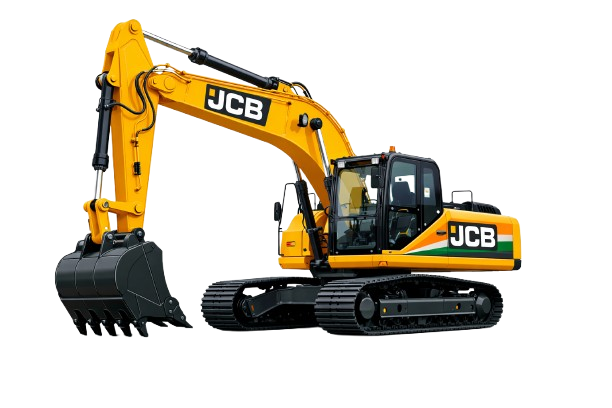
JCB insurance is a commercial vehicle insurance policy that covers backhoe loaders, excavators and other JCB construction equipment against accidental damage, theft, fire, natural calamities and third-party liabilities. Third-party insurance is mandatory under the Motor Vehicles Act, 1988 for all JCB machines operated on Indian roads or construction sites. Comprehensive policies range from approximately Rs. 25,000 to Rs. 85,000 per year depending on the machine model, Insured Declared Value (IDV), age, site location and add-ons selected. For a JCB 3DX (priced at Rs. 30 to 38 lakh ex-showroom in 2025-26), a comprehensive policy with IMT 23 and zero depreciation cover is strongly recommended, as repair costs for critical components
like boom arms, buckets and hydraulics can run into several lakhs.
A JCB is not just a piece of
equipment. For thousands of contractors, infrastructure firms and owner-operators across India,
it is the machine that pays the EMI, funds school fees and keeps the crew employed. A single accident
on a road-widening project or a flooded excavation site can put a Rs. 30-38 lakh machine out of service
for weeks, with repair bills running well into six figures. Without the right
insurance in place, that loss lands entirely on the owner.
JCB insurance is the commercial vehicle insurance policy that covers these machines and it works very differently from the car insurance most people are familiar with. The coverage categories, the mandatory add-ons needed to protect expensive attachments and the claim process all have their own logic and most JCB owners find this out the hard way, usually at the time of a claim.
This guide covers everything that matters: what is covered and what is not, how premiums are calculated,
which add-ons are non-negotiable and how to navigate the claim process without losing money over paperwork gaps.
What is JCB Insurance and Why is it Mandatory Under Indian Law?
JCB insurance falls under the category of miscellaneous commercial vehicle insurance and is regulated by IRDAI and governed by the Motor Vehicles Act, 1988. Under Section 146 of the Motor Vehicles Act, 1988, no motor vehicle can be used in a public place without at least a valid third-party insurance policy.
The word 'mandatory' matters here. An operator or owner running a JCB without valid insurance faces a fine of Rs. 2,000 for the first offence and Rs. 4,000 for any subsequent offence, along with potential imprisonment of up to three months. More practically, if the uninsured JCB causes damage to a third party, the entire financial liability falls on the owner personally. At construction sites, where heavy equipment operates near workers, utilities and public roads,
the potential third-party liability from a single incident can be staggering.
JCB India is the market leader in India's construction equipment space, with a large presence across infrastructure, mining and municipal projects. The sheer spread of JCB machinery across Indian infrastructure projects, mining zones and municipal works makes JCB insurance one of the more commonly searched commercial vehicle policies in the country.
In our experience, many first-time JCB owners buy
third-party cover at purchase because the dealer requires it for registration and then assume that is sufficient protection.
It is not. Third-party cover pays for damage or injury your JCB causes to others. It does nothing for your own machine
when the hydraulic boom cracks on a rocky site or the machine rolls into a trench.
Types of JCB Insurance Policies Available in India
There are two broad policy types for JCB machines and choosing
between them is not really a choice for a machine worth 30 lakh or more.
Third-Party (Liability Only) Insurance
This is the minimum legal requirement. A third-party JCB insurance policy covers legal liability arising from injury to or death of a third party, damage to third-party property up to Rs. 7.5 lakh and personal accident cover for the owner-driver. The premium for this policy is fixed by IRDAI and notified by the Ministry of Road Transport and Highways (MoRTH) annually.
It does not vary across insurers. What it does not cover is your own machine. If the JCB is damaged in an accident, stolen, caught in a flood, or destroyed by fire, a third-party policy pays nothing toward repair or replacement.
For a machine that represents the owner's primary earning asset, this gap is untenable.
Comprehensive (Package) Insurance
A comprehensive JCB insurance policy covers both own damage and third-party liability. Own damage cover under a comprehensive plan includes accidental damage during operation or transit, theft or burglary of the machine, fire, explosion and self-ignition, damage from natural calamities including floods, earthquakes, cyclones and
landslides and damage arising from riots, strikes, or malicious acts. The comprehensive policy also covers the personal accident benefit for the owner-driver and can be extended to cover paid drivers and additional workers through optional endorsements. This is the policy type almost all
commercial finance lenders require as a condition of the equipment loan. Third-party premium is IRDAI-fixed and identical across all insurers. Comprehensive premium varies by insurer, IDV, add-ons and NCB history, so this is where
comparison and broker guidance make a genuine difference.
JCB Insurance Premium: What is the Cost and What Drives It?
Premium for JCB insurance has two distinct parts. The third-party component is a regulated, fixed amount set by IRDAI through MoRTH notifications. The own damage component is calculated by
the insurer based on the IDV of the machine, its age, location and risk profile.
Third-party premiums for miscellaneous commercial vehicles are typically in the range of Rs. 8,000 to Rs. 12,000 per year for a standard JCB backhoe loader, depending on engine capacity. This figure is fixed and non-negotiable. Comprehensive policy premiums, by contrast, can range from Rs.
25,000 to Rs. 85,000 per year and sometimes more, depending on the factors listed below.
Factor
How It Affects Your Premium
Owner Action
IDV (Insured Declared Value)
Higher IDV = higher premium. IDV = market value minus depreciation. Directly determines your maximum claim payout.
Do not undervalue the IDV to save premium. Under-IDV means under-payout at claim.
Machine Age
Depreciation reduces IDV each year. Older machines carry lower premiums but also lower claim limits.
For machines over 5 years, ensure IDV reflects genuine replacement cost, not book value.
Model and Variant
Heavier or more expensive variants (3DX Super, 3DX Xtra at Rs. 32-38 lakh) attract higher premiums than standard entry models.
Compare quotes across insurers; the same model can differ by 15-20% across providers.
Site Location / RTO
High-risk zones (mining belts, flood-prone districts, urban metro sites) attract higher premiums.
Accurate site registration is essential. Misrepresenting location is grounds for claim rejection.
No Claim Bonus (NCB)
0 claims in Year 1 = 20% OD discount at renewal. Up to 50% after 5 consecutive claim-free years.
Add NCB protector add-on so one small claim does not wipe out years of built-up bonus.
Add-ons chosen
IMT 23, zero depreciation, engine protection each add to premium, typically 5-15% per add-on.
Essential add-ons pay for themselves in the first major repair.
Voluntary Deductible
Opting for a higher voluntary deductible reduces premium.
Only choose if you can absorb minor repair costs out of pocket.
Note: Premium figures mentioned are indicative market ranges for FY 2025-26. Third-party premium is fixed by IRDAI and notified by MoRTH. Own
damage premiums vary by insurer. Always verify current rates with your insurer or broker before purchase.
JCB repair costs are not predictable. Repairs involving hydraulic
systems and major structural components can be expensive, making comprehensive insurance and suitable add-ons particularly important.
Comparing the right comprehensive policy before you buy can save you significantly on both premium and claim settlement. Visit
SMC Insurance to compare quotes from 30+ insurers
and get expert guidance on which add-ons your machine actually needs.
What is Covered and Not Covered in JCB Insurance
Coverage under a comprehensive JCB insurance policy is broad, but the fine
print matters considerably for
construction equipment because JCBs operate in conditions that are genuinely hazardous.
Accidental Damage Any damage to the JCB arising from a collision, overturning,
or accidental impact during operation or during transit by road or rail is covered. This includes damage
sustained while the machine is being loaded onto or off a flatbed trailer for transport between sites.
Theft and Burglary Comprehensive policies cover total loss of the machine due to theft or
burglary. Partial theft, such as removal of attachments or accessories, is covered if supported by the appropriate add-on. Filing an FIR at the nearest police station is mandatory for theft claims and the insurer must be
notified within the timelines specified in the policy, typically within 24 hours.
Fire, Explosion and Self-Ignition Damage caused by fire, explosion, lightning, or self-ignition is
covered under the own damage section. Given that JCBs run diesel-powered hydraulic systems in high-heat
environments, this is not a theoretical risk.
Natural Calamities Coverage extends to damage caused by floods, earthquakes,
cyclones, storms, hailstorm, landslide and rockslide. This is particularly relevant for JCBs deployed at
riverbank excavation projects, hilly terrain, or flood-prone districts in states like Assam, Kerala and Bihar.
Riot, Strike and Malicious Damage Loss or damage arising from riots, strikes, or deliberate acts of vandalism is covered. This has become more relevant as
infrastructure projects increasingly run in contested or politically sensitive areas.
In-Transit Damage Damage to the JCB while it is being transported from one site to another, whether by road or rail, is covered under the policy. This is an important inclusion because JCB transport via flatbeds is
common and carries its own set of risks including securing failures and road accidents.
Personal Accident Cover for Owner-Driver Personal Accident Cover of Rs. 15 lakh is mandatory for owner-drivers unless they already
hold a valid owner-driver personal accident policy elsewhere.
Typically excludes:
Exclusions in JCB insurance cause more claim rejections than anything else. Most owners read the inclusions and skip this section. That is a costly mistake.
Mechanical or electrical breakdown not caused by an external accident is not covered. If the engine fails due to overheating, or the hydraulic pump seizes from inadequate maintenance, that is a breakdown, not an insured event.
Normal wear and tear is excluded across all policy types. Gradual deterioration of parts, rubber seals, hoses and structural fatigue from usage are not claimable.
Tyre and tube damage from regular use is excluded. Tyre damage is only covered if it arises directly from an accident. Without the IMT 23 add-on, tyre replacement is always at the owner's cost.
Driving without a valid licence is a ground for claim rejection. The operator must hold a valid HMV (Heavy Motor Vehicle) or equivalent licence appropriate for the machine class.
Drunk driving or driving under the influence of controlled substances will void the claim.
Operation outside the declared geographical area nullifies coverage. A JCB registered in one state and operating in another for extended periods without policy endorsement can face rejection.
War, nuclear risk and invasion are standard exclusions across all motor insurance policies.
Contractual liability is excluded. If the JCB
owner signs a contract that increases liability beyond what would otherwise exist, the excess is not covered by insurance.
Consequential losses, meaning business income lost while the machine is
under repair, are not covered under standard policies. This is where a Business Interruption endorsement on a separate
commercial policy becomes relevant for fleet operators.
Damage to attachments and accessories like buckets, boom arms, headlamps
and painted panels are generally excluded from a standard policy unless the IMT 23 add-on is in place.
Key Add-ons for JCB Insurance: Which Ones Actually Matter
Add-ons are where JCB insurance gets customized for real-world protection. The standard comprehensive policy alone leaves several important gaps for construction equipment.
Here is a clear view of which add-ons are genuinely worthwhile and why.
IMT 23 Add-On (Critical for JCB Owners)
The India Motor Tariff 23 endorsement is, in our view, non-negotiable for any JCB owner. Standard comprehensive policies exclude tyres, tubes, headlamps, mudguards, buckets, boom arms and painted body panels from coverage. IMT 23 brings these back in, subject to depreciation deduction. Given that a single JCB bucket replacement can cost Rs. 40,000 to Rs. 1.5 lakh and a boom arm repair
runs considerably higher, this endorsement pays for itself in one incident.
Zero Depreciation Cover
Without zero depreciation, any claim settlement deducts depreciation from the
repair cost based on the age of the replaced part. Rubber and plastic components depreciate at 50% and metal parts at 30% or more in
older machines. For a JCB where replaced parts tend to be expensive, zero dep can substantially increase the actual claim payout.
Zero depreciation cover is
generally available subject to insurer-specific eligibility conditions and machine age.
Engine and Hydraulic System Protection
This covers damage to the engine and hydraulic components,
which are the most expensive elements of a JCB. Ingress of water or oil leakage causing internal damage,
which can occur during flood-related incidents or site waterlogging, is typically
excluded from the base policy but covered under this add-on.
NCB Protector
The No Claim Bonus on JCB insurance accumulates from 20% after the first
claim-free year to 50% after five consecutive years, applying to the own damage portion of the premium. A single claim resets or
reduces this discount significantly. The NCB protector add-on allows one or two claims within the policy year without losing the accumulated bonus. For owners who
have built up three or four years of NCB, this is worth the additional premium.
Operator / Paid Driver Personal Accident Cover
The standard policy includes PA cover only for the owner-driver. If the JCB is operated by a paid driver, the owner carries personal liability for any injury or death. An operator PA cover endorsement extends the protection to include paid drivers, which is important for
fleet operators and contractors who employ dedicated machine operators.
Return to Invoice (RTI) Cover
RTI cover bridges the gap between the depreciated IDV payout in case of total loss and the actual invoice value of the machine. For a newer JCB where depreciation in the first two years can reduce IDV by 15-25%,
this add-on can recover a meaningful amount in the event of total loss or theft.
Full part replacement cost without depreciation deduction
Machines under 5 years old
+8 to 15% on OD premium
Engine and Hydraulic Protection
Engine internals, hydraulic pump and cylinder damage from water ingress or oil leakage
Machines in flood-prone / waterlogged sites
+5 to 10% on OD premium
NCB Protector
Preserves accumulated NCB on 1-2 claims per policy year
Owners with 3+ years NCB
+3 to 5% on OD premium
Paid Driver PA Cover
Personal accident cover for employed operators
Fleet operators, contractors with dedicated drivers
Flat addition, Rs. 500-1,500 per driver
Return to Invoice (RTI)
Bridges IDV and original invoice value in total loss
New machines (under 2 years)
+5 to 8% on OD premium
Note: Premium impact percentages are indicative market ranges. Actual figures depend on machine model,
insurer, IDV and location. Verify with your insurer at the time of purchase.
How to Buy or Renew JCB Insurance Online: Step-by-Step
Buying JCB insurance online has become genuinely straightforward in
the last few years and the process is not materially different from buying car insurance online, except that
you will need some additional machine-specific details ready.
Step 1
You will need the JCB registration certificate (RC), the previous insurance policy copy if renewing, the make and model of the machine, the year of manufacture,
the RTO where the machine is registered and your operator licence details.
Step 2
Visit a licensed broker platform. Go to SMC Insurance and navigate to Commercial
Vehicle Insurance. Select the miscellaneous vehicle category, enter your machine registration number and the system will retrieve
available details from the RC database.
Step 3
Choose your IDV carefully. The platform will suggest an
IDV based on the machine's age and market value. Do not blindly accept
the lowest IDV. Ensure it reflects the actual replacement cost of your machine,
since this is the maximum you will receive in a total loss claim.
Step 4
Select add-ons based on your machine's risk profile. For a working JCB on an active
construction site, IMT 23 and zero depreciation at minimum are advisable.
Add engine protection if the machine works in waterlogged zones.
Step 5
Compare quotes across insurers. Comprehensive premiums vary between insurers depending on IDV,
machine age, claims history, location and add-ons selected. The cheapest is not always the best;
check the claim settlement ratio and the insurer's track record for commercial vehicle claims.
Step 6
Complete payment online and download the policy. Policy documents are issued digitally
and sent to your registered email. Save a digital copy on your phone and keep a physical copy at the site office.
For renewals, most platforms allow renewal by entering only the machine registration number. However,
if the policy has lapsed for more than 90 days, a fresh inspection of the machine may be required
before the insurer will issue a new comprehensive cover.
JCB Insurance Claim Process:
How to File and What to Expect
Filing a claim for a JCB is broadly similar to any commercial motor claim, but there are a few important differences because the machine operates at a fixed site rather than on
public roads and the damage is often assessed in place rather than at a garage.
Step 1: Report Immediately Inform your insurer or broker within 24 hours of the incident. For theft, also file an FIR at the nearest police station immediately. Delay in reporting is one of the most common grounds for claim complications, so document the
timestamp of your call or written intimation.
Step 2: Do Not Move or Repair the Machine Before Survey This rule is critical for JCB claims. The insurer will appoint a licensed surveyor under the IRDAI (Insurance Surveyors and Loss Assessors) Regulations, 2015. The surveyor needs to inspect the machine in its damaged condition at the site. Attempting repairs before the survey,
even minor ones, gives the insurer grounds to dispute the claim amount.
Step 3: Document Everything at the Site Photograph the damage from multiple angles, including close-ups of the broken components and wide shots showing the site context. Note the date, time and the names of any witnesses. If third-party property or persons were
involved, collect their information as well.
Step 4: Submit Documents to the Insurer The standard document checklist for a JCB own damage claim includes: the duly filled claim form, a copy of the JCB registration certificate (RC), a copy of the current insurance policy, the driving or operator licence of the person operating the machine at the time, an FIR copy (mandatory for theft; advisable for major accidents involving third parties), photographs of the damage and the repair estimate from an
authorised workshop or JCB service centre.
Step 5: Claim Settlement Once the surveyor's report is submitted and documents verified, the insurer will approve the claim amount. For cashless claims at network garages, the insurer settles directly with the repair facility. For reimbursement claims, you pay the workshop and the insurer transfers the
approved amount to your bank account after document verification. One thing our advisors consistently flag: get the surveyor's visit confirmation in writing. For a JCB sitting idle at a remote site, the survey visit can be delayed. If the machine is blocking a project, document every attempt to
expedite the inspection so your file shows you acted in good faith.
Key Terms You Must Understand Before Buying JCB Insurance
IDV: Insured Declared Value IDV is the maximum amount the insurer will pay if your JCB is stolen or declared a total loss. It is calculated as the manufacturer's listed selling price minus depreciation based on the machine's age. A new JCB 3DX priced at Rs. 35 lakh will have a lower IDV at renewal in Year 2. Under-declaring IDV to save premium is a common mistake that leaves owners
significantly short at the time of a total loss claim.
NCB: No Claim Bonus NCB is a discount on the own damage premium rewarded for claim-free years. It starts at 20% after the first claim-free year and scales up to 50% after five consecutive years. NCB applies only to the own damage component, not the third-party premium. If you make a claim, the NCB resets or reduces. The bonus belongs to the policyholder, not the machine,
so it can be transferred when you buy a new JCB.
Compulsory Deductible Every commercial vehicle policy has a compulsory (mandatory) deductible, which is the amount the owner must bear out of pocket on every own damage claim. For JCBs, this is typically Rs. 2,000 to Rs. 5,000 depending on the engine capacity class.
You cannot waive this; it is a regulatory requirement.
Voluntary Deductible You can opt to pay a higher deductible in exchange for a reduction in your premium. This makes sense only if you are confident of not making small
claims and can absorb minor repair costs yourself.
Total Loss vs. Constructive Total Loss If repair costs exceed 75% of the IDV, the insurer may declare the machine a constructive total loss and pay the IDV minus the salvage value and deductibles, rather than fund the full repair. Understanding this threshold matters
especially for older machines where IDV has depreciated significantly.
Common JCB Insurance Mistakes That Cost Owners Money
Across the queries we handle for commercial vehicle insurance, a few patterns come up
repeatedly with JCB owners. Most of these are avoidable:
Buying only third-party cover to save premium For a Rs. 30+ lakh machine that is the primary income source, this is a
false economy. One serious hydraulic failure, one flood-damaged engine and the savings over years are wiped out.
Skipping IMT 23 Buckets, tyres and headlamps are precisely the parts that wear and take site hits. Excluding them from coverage
misses the most frequent and real repair costs.
Under-declaring IDV Owners who reduce the IDV by 20-30% to cut the premium are effectively self-insuring the gap. In a total loss or major theft scenario,
the shortfall is money directly out of pocket.
Not renewing on time A policy that lapses beyond 90 days usually requires a fresh inspection before a new comprehensive policy is issued. This delays coverage and sometimes results in a higher
premium if the machine shows signs of damage or wear.
Not informing the insurer of change in site location JCBs frequently move between projects. If the machine is registered for a low-risk zone but has been working at a flood-prone site for months, a
claim from that site could be contested.
Attempting repairs before the survey visit Even in urgent situations, starting repairs before the surveyor has documented the damage gives the insurer legitimate grounds to dispute the claim amount. Photograph everything and
wait for the survey confirmation.
If you own other commercial vehicles alongside your JCB fleet,
you may also want to read our detailed guide on Commercial Vehicle Insurance and our article on Tractor Insurance for agriculture-use equipment.
Summing Up,
A JCB machine is working equipment, exposed to
ground-level risk every single day it is on site. JCB insurance protects this asset against risks that cannot be
predicted or controlled — from accidents and theft to legal claims and natural calamities. The insurance
decision for a JCB is a business decision and it deserves the same analytical thinking that goes into buying the machine itself.
Premium shopping matters, but it should never override claim reliability.
Keep your policy documents at the site, renew before expiry and inform your insurer whenever the machine changes its primary work location.
These small habits prevent the claim complications that often have nothing to do with the actual damage and everything to do with
documentation gaps.
Disclaimer: The information provided on this platform is intended for general awareness and educational purposes. While every effort is made to ensure accuracy, some details may change with policy updates, regulatory revisions, or insurer-specific modifications. Readers should verify current terms and conditions directly with relevant insurers or through professional consultation before making any decision.
All views and analyses presented are based on publicly available data, internal research and other sources considered reliable at the time of writing. These do not constitute professional advice, recommendations, or guarantees of any product's performance. Readers are encouraged to assess the information independently and seek qualified guidance suited to their individual requirements. Customers are advised to review official sales brochures, policy documents and disclosures before proceeding with any purchase or commitment.
The company is wonderful insurance platform providing multiple policies under 1 roof. Experience in purchasing the policy is very good. Experts guides you very well
Annu Gour Annu Pune, April 07, 2025
Easy Renewal process
The process to renew my 2-wheeler policy is indeed very quick and easy. Got it done in just 10 minutes. Thanks.
Bipin Singh Mumbai, April 06, 2025
Quick Response
I thought let me renew my two wheeler policy with SMC and see the experience. The experience was good and simple, the only gap which I felt was that the details of the vehicle did not come up after mentioning the vehicle number.
Yes, under the Motor Vehicles Act, 1988, all motorised vehicles including JCB backhoe loaders and construction equipment must carry at least a valid third-party liability insurance policy. Operating a JCB on a public road, construction site, or any location accessible to the public without this cover is a punishable offence attracting fines and potential imprisonment. Third-party premium rates are fixed by IRDAI and notified annually by MoRTH. While third-party cover is the legal minimum, a comprehensive policy is strongly advisable given the high repair and replacement costs of JCB machines.
Third-party JCB insurance premium is fixed by IRDAI and typically falls in the range of Rs. 8,000 to Rs. 12,000 per year depending on engine capacity. Comprehensive JCB insurance premium ranges from approximately Rs. 25,000 to Rs. 85,000 per year and depends on the machine model, IDV, age, RTO location, add-ons selected and No Claim Bonus accumulated. Depending on the variant and location, JCB 3DX backhoe loaders are generally priced in the Rs. 30 lakh to Rs. 35 lakh-plus range. Comparing quotes across insurers can reveal premium differences of 15-25% for identical coverage.
IDV stands for Insured Declared Value and represents the maximum amount your insurer will pay if the JCB is stolen or declared a total loss. It is calculated as the manufacturer's listed selling price of the machine minus accumulated depreciation. Depreciation typically runs at 15% for Year 1, 20% for Year 2 and progressively higher for older machines. A JCB worth Rs. 35 lakh at purchase may have an IDV of Rs. 25 to 28 lakh at the time of second-year renewal. Undervaluing IDV to reduce premium is a common mistake. In the event of total loss, you receive only the IDV minus the deductible and the shortfall is yours to bear.
The IMT 23 (India Motor Tariff 23) is an endorsement that extends JCB insurance coverage to include parts specifically excluded from standard policies, namely tyres, tubes, headlamps, buckets, boom arms, mudguards and painted body panels. Under a standard comprehensive policy, damage to these components is not compensated. For a JCB, these are precisely the parts most exposed to site damage. IMT 23 covers the cost of repair or replacement of these items subject to depreciation deduction. Given that a JCB bucket replacement can cost Rs. 40,000 to Rs. 1.5 lakh and boom arm repairs can run much higher, IMT 23 is widely considered essential rather than optional.
For an own damage claim, you will need the duly filled claim form from the insurer, a copy of the JCB registration certificate, your current insurance policy copy, the driving or operator licence of the person who was operating the machine, photographs of the damage taken immediately at the site and a repair estimate from a JCB authorised service centre. For theft claims, an FIR from the nearest police station is mandatory. For claims involving third-party injury or property damage, an FIR is strongly advisable. The machine should not be repaired before the insurer's surveyor completes the site inspection.
Yes, No Claim Bonus in India belongs to the policyholder, not the vehicle. When you sell your existing JCB or
upgrade to a new machine, you can transfer the accumulated NCB to the new machine's insurance policy.
You will need an NCB certificate from your previous insurer confirming the discount percentage.
NCB starts at 20% after the first claim-free year and scales to 50% after five consecutive
claim-free years, applying only to the own damage premium component. If your policy lapses
for more than 90 days, the NCB is typically forfeited.
A comprehensive JCB insurance policy covers damage both during operation at the construction site and during
transit on public roads. The machine does not need to be on a public road at the time of the incident for the claim
to be valid. Damage sustained while digging, loading, or working at an excavation site is covered under own damage
provisions. However, accurate declaration of the site type and location at the time of purchasing the policy is
important, as misrepresentation of where the machine primarily operates can be used as grounds to contest a claim.





 Instant Renewal.
 No Paperwork.