
Visit the SMC Insurance website and navigate to Commercial Vehicle Insurance.





SMC Insurance
Welcome to SMC.
How may I assist you?

Time Remaining to Avail Tax Benefits
(Under section 80C & 80D)
Get 90 Lakh Health Cover at Just ₹2K


Buy Life Insurance Now!


100% Privacy
Zero Spam

Network
30+ Reliable Insurers

Legacy
20+ Years & Counting

Highly rated insurance website
4.1/5

 Instant Renewal.
 No Paperwork.
Plans start at Just ₹575/day
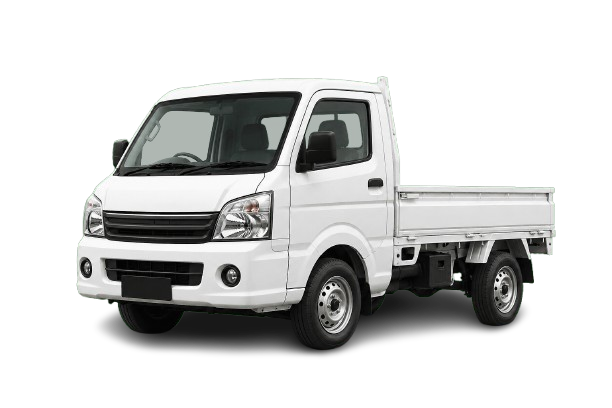
A mini truck earns its money every single day. Whether it is shuttling produce from a mandi to a retail store, carrying construction material through narrow city lanes, or making last-mile e-commerce deliveries, these small commercial vehicles run hard and they run often. That kind of daily use puts the vehicle, the driver and the cargo under constant risk, which is exactly why getting the right insurance for a mini truck is not a paperwork exercise, it is a financial necessity.
Most mini truck owners focus on one thing when buying insurance: keep the premium low. That instinct is understandable, but it often leads to a policy that either under-covers the vehicle or creates problems at the time of a claim. A rejected claim on a commercial vehicle is not just inconvenient, it can shut down operations for days or weeks. This guide covers everything you need to know about mini truck insurance in India, from mandatory requirements and premium ranges to add-ons that actually matter and the common reasons claims get denied.
Mini trucks fall under the category of Light Commercial Vehicles (LCVs) and Small Commercial Vehicles (SCVs) in India. These are goods-carrying vehicles with a GVW that typically ranges from around 1,460 kg for entry-level SCVs like the Tata Ace Pro up to around 7,500 kg for larger LCVs. Popular models in this segment include the Tata Ace (and its variants), Mahindra Jeeto, Ashok Leyland Dost and Bada Dost, Maruti Suzuki Super Carry, Mahindra Supro Profit Truck and the Eicher Pro X.
Under the Motor Vehicles Act, 1988, any vehicle operating on Indian roads must carry at least a valid third-party insurance policy. This rule applies without exception to mini trucks and other goods-carrying commercial vehicles. There is no grey area: operating a mini truck without third-party cover is a legal offence.
Mini truck insurance is a specific type of commercial vehicle insurance designed for this vehicle category. It differs from private car insurance in several important ways: the risk assessment is based on commercial usage, the premium is tied to the vehicle's Gross Vehicle Weight rather than engine capacity and the policy terms account for
factors like goods in transit, driver eligibility and permit conditions.
Who needs it:, Individual truck owners, small logistics operators, traders who own their own delivery vehicles, fleet operators running a few mini trucks, e-commerce last-mile delivery
partners and any business that depends on a mini truck to transport goods.
There are two main types of insurance available for mini trucks in India and your choice between them determines how much protection you actually have when something goes wrong.
In our experience advising small
fleet operators, many first-time owners opt for third-party only to save on premium, then find themselves in
serious financial trouble after a road accident damages their truck beyond basic repair. The difference in annual
premium between a third-party and a comprehensive policy for a mini truck is generally not large enough to justify the exposure.
Premium for a mini truck is calculated differently from a private car. There are two components: the third-party premium, which is fixed by IRDAI and applies uniformly across all insurers and the own-damage premium, which varies by insurer and depends on several vehicle and usage-specific factors.
IRDAI-Fixed Third-Party Premium for Mini Trucks
For goods-carrying vehicles other than three-wheelers with a GVW not exceeding 7,500 kg, the IRDAI-prescribed third-party premium has been set at Rs. 16,049 per year. This rate applies uniformly across all insurance companies. You cannot negotiate this
component down, regardless of which insurer you approach.
For electric mini trucks in the same GVW bracket (up to 7,500 kg), the tariff is lower at Rs. 13,642, reflecting the
government's policy of encouraging EV adoption in commercial transport.
Own-Damage Premium: What Affects Your Comprehensive Policy Cost
The own-damage component is market-linked and varies across insurers.
The factors that influence it include:
Insured Declared Value (IDV): The IDV is the current market value of your mini truck and forms the basis of any own-damage payout. A higher IDV means a higher premium but better compensation in case of total loss or theft. Never under-declare the IDV to save on premium.
Vehicle Age: Older vehicles have a lower IDV due to depreciation, which brings down the own-damage premium. However, some insurers may also charge a loading for older vehicles that are considered higher risk.
GVW of the Vehicle: Larger, heavier mini trucks within the LCV segment attract a higher premium as they pose more risk on the road.
Geographical Zone: Premiums are typically higher in metro cities and high-risk areas compared to smaller towns or rural zones.
Claims History and NCB: If you have not made a claim in a prior policy year, you earn a No Claim Bonus discount on the own-damage component at renewal, starting at 20% for the first claim-free year and scaling up to 50% after five consecutive claim-free years.
Add-ons Chosen: Each add-on increases the overall premium, but often by a modest amount relative to the coverage added.
Indicative Premium Ranges for Mini Trucks (2025-26)
|
Mini Truck Segment |
Approx. Vehicle Price Range |
TP Premium (IRDAI Fixed) |
Comprehensive Premium (Indicative) |
|
SCV (GVW up to ~2,000 kg) e.g. Tata Ace, Mahindra Jeeto |
Rs. 4 - 7 lakh |
Rs. 16,049 |
Rs. 18,000 - 24,000 |
|
LCV (GVW 2,000 - 3,500 kg) e.g. Ashok Leyland Dost, Maruti Super Carry |
Rs. 7 - 12 lakh |
Rs. 16,049 |
Rs. 22,000 - 30,000 |
|
Larger LCV (GVW 3,500 - 7,500 kg) e.g. Ashok Leyland Bada Dost, Tata Intra V30 |
Rs. 10 - 18 lakh |
Rs. 16,049 |
Rs. 28,000 - 42,000 |
|
Electric Mini Truck (GVW up to 7,500 kg) e.g. Tata Ace EV |
Rs. 8 - 16 lakh |
Rs. 13,642 |
Rs. 20,000 - 32,000 |
Note: Third-party premiums are IRDAI-mandated and uniform across insurers. Comprehensive premiums are indicative and vary by insurer, IDV, vehicle age, location and claims history. Get quotes from multiple insurers to compare the own-damage component. Premiums cited reflect 2024-25 IRDAI tariff guidance.
Running a mini truck on third-party-only insurance and unsure whether you have enough cover? Our advisors at SMC Insurance can help you compare comprehensive plans across 30+ insurers in minutes, with zero spam and honest guidance on what each add-on actually delivers. Visit SMC Insurance or call us to get started.
Add-ons are optional extensions that you attach to a comprehensive policy to fill specific coverage gaps. Not every add-on is worth buying for every operator, but some are near-essential for mini trucks used in daily commercial operations.
When your mini truck is repaired after an accident, insurers apply a depreciation deduction on replaced parts based on the vehicle's age. Zero depreciation cover waives this deduction, meaning you receive the full cost of parts replaced during a claim. This add-on is most valuable for new or relatively new vehicles (typically up to three to five years old) where the depreciation deduction would otherwise be significant.
This is arguably the most important add-on for any working mini truck. It covers the cargo being transported in the vehicle against loss or damage due to accidents, fire, theft and specified natural perils. Without this, every consignment you carry is at your own financial risk. The premium for GIT cover depends on the nature of goods carried, the value declared and the transport routes used. For operators carrying regular
consignments of moderate value, the cost of GIT cover is usually quite manageable.
It is worth noting that GIT and marine inland transit insurance are two ways to achieve similar ends, but they work slightly differently. GIT as an add-on to your motor policy covers cargo losses tied to vehicle accidents and specified perils. A standalone marine inland transit policy can offer broader coverage for multiple modes of transport and higher cargo values. Speak to your insurance advisor to
determine which route suits your operation better.
Your No Claim Bonus is valuable. After five consecutive claim-free years, you get 50% off the own-damage premium at renewal. An NCB Protector add-on allows you to make one claim during the policy year without losing your accumulated NCB. For mini truck operators who have built up three or four years of NCB, this add-on is worth serious consideration.
Commercial vehicles working daily routes can face breakdowns far from service centres. RSA cover provides towing, on-the-spot repair support, fuel delivery and emergency accommodation assistance if the vehicle breaks down more than a specified distance from the operator's home city. For intercity mini truck operators, this can be genuinely useful.
Flood damage to engines is not covered under a standard policy unless you have this add-on. If your mini truck's engine is damaged due to hydrostatic lock caused by waterlogging, the standard policy will not pay for the engine repair. Engine and gearbox protection becomes essential in flood-prone regions or during monsoon months, particularly for trucks parked outdoors.
If you employ a paid driver for your mini truck, their legal liability to third parties and their own injury claims are not covered under the standard policy unless you specifically add IMT 23. This is an often-overlooked but important endorsement for any mini truck owner who does not drive the vehicle personally.
|
Add-On Cover |
What It Covers |
Best For |
|
Zero Depreciation |
Full parts cost without depreciation deduction at claim |
New trucks (0-5 years old) |
|
Goods in Transit (GIT) |
Cargo loss/damage due to accident, fire, theft, natural perils |
All working mini trucks carrying goods |
|
NCB Protector |
Preserves No Claim Bonus after one claim per year |
Operators with 3+ years NCB accumulated |
|
Roadside Assistance |
Towing, breakdown help, emergency fuel, accommodation |
Intercity operators, solo drivers |
|
Engine & Gearbox Protect |
Engine damage from waterlogging/hydrostatic lock |
Flood-prone zones, outdoor parking |
|
IMT 23 (Paid Driver Liability) |
Legal liability cover for employed driver |
Owners who hire a driver |
|
Consumables Cover |
Engine oil, nuts, bolts, coolant costs during repairs |
High-usage trucks with frequent repairs |
|
Key and Lock Replacement |
Replacement of lost/stolen keys and lock sets |
Urban operators in high-theft areas |
Note: Add-on availability varies by insurer. Not all insurers
offer every add-on. Confirm availability and exact terms with your broker or insurer before purchase.
Buying mini truck insurance online has become straightforward and doing it through a broker like SMC Insurance gives you the added benefit of comparing quotes across multiple insurers in one place.
Visit the SMC Insurance website and navigate to Commercial Vehicle Insurance.
Select GCV (Goods Carrying Vehicle) from the vehicle category options.
Enter your vehicle registration number to auto-fetch vehicle details, or fill in manually: make, model, variant, RTO location and year of manufacture.
Review quotes from multiple insurers, comparing both the premium and the IDV offered.
Select your add-ons and confirm the policy duration (usually one year for own-damage; some insurers offer long-term TP bundling).
Complete online payment.Policy documents are emailed and accessible via the SMC Insurance app.
For renewals: do not wait until the last day. A lapsed policy means loss of your accumulated NCB if the gap exceeds 90 days and it also means you are operating without coverage, which is both illegal and financially exposed. Renew at least a few days before expiry.
Registration Certificate (RC) of the vehicle
Previous policy copy (for renewal or port from another insurer)
Valid driving licence of the insured owner-driver or employed driver
Route permit / goods carriage permit
NCB certificate from previous insurer (if porting)
PAN or Aadhaar of the vehicle owner for KYC
Filing a claim correctly and promptly makes a significant difference to the settlement outcome. A delayed or poorly documented claim is one of the most common reasons settlements get delayed or reduced.
How to File a Claim?
Intimate the insurer or broker immediately after the incident. Do not wait. Call SMC Insurance or your insurer's helpline right away.
For accidents involving third parties or theft, file an FIR at the nearest police station.
Do not move the vehicle or start repairs until the surveyor has inspected it, unless you have explicit written consent from the insurer to proceed.
The insurer will assign a surveyor to assess the damage. Keep the vehicle accessible for inspection.
Submit all required documents: claim form, FIR copy, RC, driving licence, permit, prior insurance policy copy and repair estimates.
Use a cashless network garage if possible for direct settlement. For reimbursement claims, submit all original repair bills after repair completion.
Why Mini Truck Claims Get Rejected
Several of the most common claim rejection causes in the commercial vehicle segment go unmentioned. Here are both
the well-known and the less-discussed causes:
Overloading: Carrying goods beyond the registered GVW of the vehicle is both a Motor Vehicles Act offence and a direct policy exclusion. Claims arising from accidents while overloaded are rejected. This is the single most common reason for commercial vehicle claim rejection in India.
Invalid or mismatched commercial licence: The driver must hold a valid transport endorsement on their driving licence at the time of the accident. An LMV licence without transport endorsement is insufficient for a commercial goods vehicle. Expired licences also void the own-damage claim.
Route permit violations: If your mini truck operates outside the geographical area or route specified in its goods carriage permit, the claim can be rejected on the grounds of operating outside permitted use.
Goods damaged but no GIT cover: The truck policy does not cover cargo. Operators sometimes assume the comprehensive policy extends to the goods being transported. It does not, unless a GIT add-on is specifically included.
Delayed intimation that worsened the loss: IRDAI's 2024 guidelines clarify that claims cannot be rejected solely for delayed intimation unless the delay actually worsened the loss. However, very long delays or situations where early intervention could have prevented further damage remain grounds for reduced settlements.
Vehicle used for purpose different from declared: If the vehicle is insured as a private goods carrier but is found operating under a public goods permit or vice versa, the insurer can contest the claim.
NCB applies to the own-damage component of a comprehensive commercial vehicle policy, not to the third-party premium. The discount structure is standard across all IRDAI-regulated insurers, starting at 20% after one claim-free year and rising to 50% after five consecutive claim-free years.
For a mini truck with an own-damage premium of Rs. 12,000, a 50% NCB means the operator pays only Rs. 6,000 for the OD component at renewal, saving Rs. 6,000 every year as long as no claim is made. Over the life of the vehicle, this adds up to substantial savings.
NCB is attached to the policyholder, not the vehicle. If you sell your mini truck and buy a new one, the accumulated NCB transfers to the new vehicle's policy, provided you obtain an NCB retention certificate from your insurer. You must also renew within 90 days of the previous policy's expiry to retain NCB, a deadline that many operators miss when they are busy with operations.
One practical consideration: for small damage claims of Rs. 5,000 to Rs. 10,000, it is often better to pay for repairs out of pocket rather than make a claim. A single small claim can reset a 35% or 50% NCB to zero, costing far more in future premiums than the claim amount saved.
Use the NCB Protector add-on if you have built up a significant NCB and want a safety net.
There are several areas that mini truck operators actually need to know more about:
The Electric Mini Truck Insurance Question
Electric mini trucks attract a different (lower) IRDAI third-party premium of Rs. 13,642 for the sub-7,500 kg segment. However, own-damage premiums for EV mini trucks can be higher due to the cost of battery replacement, which can account for 40% to 60% of the vehicle's total value. Confirm explicitly with your insurer whether battery damage is covered under the
standard own-damage clause or requires a separate endorsement.
CNG Mini Trucks: A Coverage Gap Nobody Mentions
The Ashok Leyland Dost CNG, Tata Ace Gold CNG and Mahindra Jeeto CNG are popular choices because of lower fuel costs. But CNG kits, particularly aftermarket installations, must be declared to the insurer and reflected in the RC. If a CNG kit is not declared in the insurance policy, the insurer may reject any claim where the CNG system played a role in the damage, such as in a fire caused by a gas leak. Always declare the fuel type
accurately when buying or renewing insurance for a CNG mini truck.
Hypothecation and Financed Vehicles
A large proportion of mini trucks in India are purchased on loan. When a vehicle is financed, the lender (usually a bank or NBFC) is listed as a hypothecatee in the RC. The insurance policy must reflect this hypothecation. If you renew insurance without updating the hypothecation status or fail to include the lender's endorsement, your claim may face complications. Some insurers pay the settlement directly to the lender in the case of total loss or theft, not to the owner.
Understand this before filing a claim on a financed truck.
Fleet Policies for 5 or More Mini Trucks
Operators running five or more mini trucks under a single business can opt for a fleet insurance policy, which covers all vehicles under one policy document. Fleet policies offer simplified renewal, uniform coverage terms across all vehicles and volume-based discounts negotiated with the insurer. If you are running a small fleet, a fleet policy is administratively simpler and often more cost-effective than
maintaining separate policies for each truck.
Named Driver Clauses and Multiple Drivers
Standard commercial vehicle policies do not restrict driving to a named individual, but when a paid driver is employed, the IMT 23 endorsement is necessary to cover that driver's liability. If multiple drivers operate the same truck on different shifts, confirm with your insurer how the policy handles multiple-driver scenarios and whether a named driver clause
applies in your specific policy terms.
Owners of mini trucks that are also used for personal purposes sometimes ask whether a standard private vehicle policy would be sufficient. The answer is categorically no and attempting to use a private vehicle policy for a commercial goods carrier will result in claim rejection.
Commercial vehicles carry yellow number plates in India; private vehicles carry white plates. The insurance type must match the registration.
Private vehicle insurance premiums are based on engine capacity (cc). Commercial vehicle insurance premiums are based on GVW and usage classification.
Private policies do not account for goods carriage, route permits or commercial driver licences, all of which are relevant to a mini truck claim.
Using a privately insured vehicle for commercial goods transport voids the own-damage cover. IRDAI's own regulations confirm that mismatch of use is grounds for claim rejection.
If your mini truck is registered as a goods carriage vehicle, there is no workaround.
It must be insured under a commercial vehicle (GCV) policy.
Mini truck insurance covers the vehicle. But your overall business
risk goes wider than that. If you are transporting goods regularly, you should also understand
Goods Carrying Vehicle
Insurance in detail, which covers the broader category of goods transport vehicles and the specific terms that apply.
If your business also uses commercial vans for delivery,
Commercial Van Insurance is a related policy type with slightly different terms. And if your company operates a
mixed fleet of commercial vehicles, a
Commercial Vehicle Insurance main policy comparison will help you understand coverage across all segments.
Mini truck insurance is not complicated, but it is easy to get wrong. Set the IDV accurately, neither inflated nor deflated, because it directly affects what you receive in a total loss claim. Add goods-in-transit cover if you regularly transport cargo of meaningful value, because the truck policy will not protect the cargo. For operators running multiple mini trucks, talk to an insurance broker about fleet policies. The administrative simplicity and potential cost savings are real and unlike managing five separate renewals, a single fleet policy is far easier to track and manage.
The claims that get rejected are almost always preventable. Overloading, invalid licences, undisclosed CNG kits, undeclared hypothecation and missing GIT cover are the usual culprits. Going through this checklist once before you buy or renew your policy takes about ten minutes and can save you a great deal of grief later.
Disclaimer: The information provided on this platform is intended for general awareness and educational purposes. While every effort is made to ensure accuracy, some details may change with policy updates, regulatory revisions, or insurer-specific modifications. Readers should verify current terms and conditions directly with relevant insurers or through professional consultation before making any decision.
All views and analyses presented are based on publicly available data, internal research and other sources considered reliable at the time of writing. These do not constitute professional advice, recommendations, or guarantees of any product's performance. Readers are encouraged to assess the information independently and seek qualified guidance suited to their individual requirements. Customers are advised to review official sales brochures, policy documents and disclosures before proceeding with any purchase or commitment.
(Showing Newest to Oldest)
Simple Process
The company is wonderful insurance platform providing multiple policies under 1 roof. Experience in purchasing the policy is very good. Experts guides you very well
Easy Renewal process
The process to renew my 2-wheeler policy is indeed very quick and easy. Got it done in just 10 minutes. Thanks.
Quick Response
I thought let me renew my two wheeler policy with SMC and see the experience. The experience was good and simple, the only gap which I felt was that the details of the vehicle did not come up after mentioning the vehicle number.
Yes, absolutely. Under the Motor Vehicles Act, 1988, every vehicle operating on public roads in India must have at least a valid third-party liability insurance policy. This applies to all commercial goods vehicles, including mini trucks. Operating without valid insurance is a criminal offence under Section 196 of the Motor Vehicles Act and can result in a fine of Rs. 2,000 for a first offence and Rs. 4,000 for a repeat offence, along with potential imprisonment.
For goods-carrying vehicles other than three-wheelers with a GVW not exceeding 7,500 kg, the IRDAI-fixed third-party premium is Rs. 16,049 per year. This applies uniformly across all insurance companies and cannot be negotiated. For electric mini trucks in the same GVW category, the rate is Rs. 13,642. These are the regulated base rates; confirm the most current rates with your insurer at the time of purchase, as IRDAI revises tariffs periodically.
No, a standard mini truck insurance policy, whether third-party only or comprehensive, does not automatically cover the goods or cargo being transported in the vehicle. The vehicle policy covers the truck itself and third-party liability. To cover the cargo, you need either a Goods in Transit (GIT) add-on, which can be attached to the vehicle policy, or a separate marine inland transit policy. If you regularly transport goods of significant value, GIT cover is strongly recommended.
Yes, mini truck insurance can be purchased and renewed entirely online. Through an insurance broker like SMC Insurance (www.smcinsurance.com), you can compare quotes from multiple insurers, select your coverage and add-ons and complete payment online. Policy documents are issued digitally and sent to your email. The process typically takes 10 to 15 minutes for a straightforward purchase. For vehicles with modifications, ongoing claims or hypothecation complications, speaking to an advisor directly may be faster.
Your NCB is linked to you as the policyholder, not to the specific vehicle. When you sell the existing mini truck and purchase a new one, you can transfer the accumulated NCB to the new vehicle's insurance policy. To do this, request an NCB retention certificate from your current insurer before the existing policy expires. Present this certificate to the insurer when buying insurance for the new vehicle. The NCB transfer applies to the own-damage premium component and can reduce your renewal premium significantly, especially if you have accumulated 35% or 50% NCB over multiple claim-free years.
SCV stands for Small Commercial Vehicle and generally refers to mini trucks with a GVW up to around 2,000 to 2,500 kg, such as the Tata Ace, Mahindra Jeeto and Maruti Super Carry. LCV or Light Commercial Vehicle refers to a broader category that includes vehicles with a GVW up to 7,500 kg. For insurance premium purposes under the IRDAI tariff structure, the key breakpoint is 7,500 kg GVW. Both SCVs and LCVs with GVW up to 7,500 kg fall under the same TP premium bracket of Rs. 16,049. The own-damage premium, however, will differ between a small Rs. 5 lakh SCV and a larger Rs. 15 lakh LCV because the IDV is quite different.
Yes, if your mini truck is involved in an accident and the driver at the time does not hold a valid commercial vehicle driving licence with the appropriate transport endorsement, the own-damage claim can be rejected. A standard LMV licence without a transport endorsement is not sufficient for a goods-carrying commercial vehicle. Ensure any driver you employ has a valid LMV-Transport or HMV licence, whichever is applicable and that it is current. IRDAI's 2024 guidelines have clarified that breaches that are not causally connected to the loss should not automatically lead to rejection, but licence validity is considered directly relevant to any accident claim.
 Tractor Insurance
Commercial Van Insurance
Passenger Carrying Vehicle Insurance
Goods Carrying Vehicle Insurance
PUC Rules For Commercial Vehicles
How To Renew Commercial Vehicle Insurance Online
Commercial Vehicle Insurance On EMI
Add-On Covers In Commercial Vehicle
RC Mismatch In Commercial Insurance
Tractor Insurance
Commercial Van Insurance
Passenger Carrying Vehicle Insurance
Goods Carrying Vehicle Insurance
PUC Rules For Commercial Vehicles
How To Renew Commercial Vehicle Insurance Online
Commercial Vehicle Insurance On EMI
Add-On Covers In Commercial Vehicle
RC Mismatch In Commercial Insurance
SMC Insurance Brokers Pvt. Ltd.
SMC Metro Mall, Near Pratap Nagar Metro Station, Pratap Nagar, New Delhi-110007
Registration No: 289, Registration Code No: IRDAI/DB-272/04/289, Valid till: 27/01/2029, License category: Composite Broker, CIN: U66000DL1995PTC172311
Insurance is the subject matter of solicitation.
Visitors are hereby informed that their information submitted on the website may be shared with insurers.
Product information is authentic and solely based on the information received from the Insurer.

Scan to Download
SMC Insurance App
