


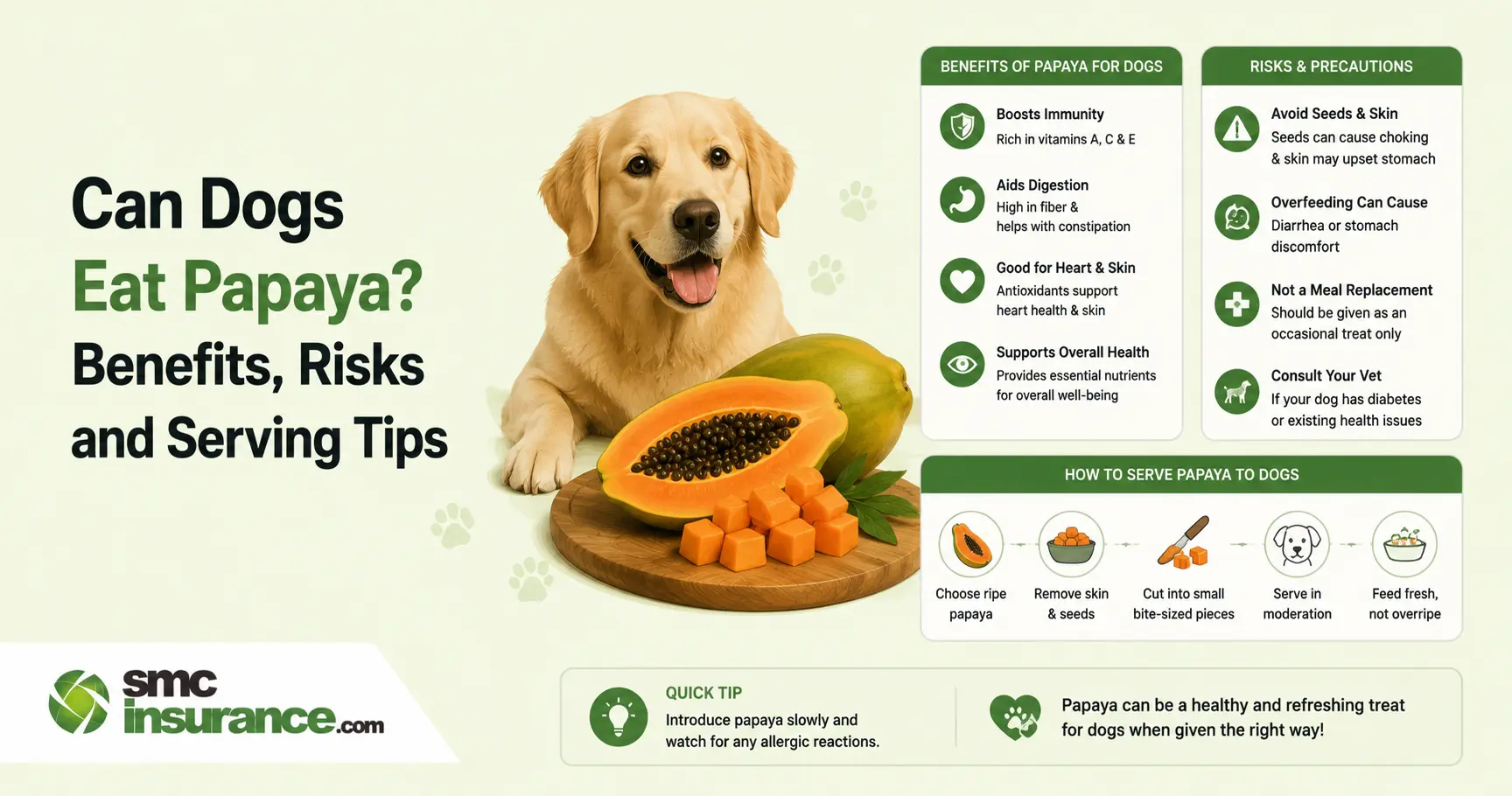

Can dogs eat papaya?
Yes, most healthy adult dogs can eat small amounts of ripe papaya as an occasional treat. Remove the skin & seeds and cut the flesh into small, easy-to-chew pieces. Start with one or two bites and watch for digestive discomfort. Keep papaya and all other treats within 10% of your dog's daily calorie intake. Avoid sweetened papaya products and ask your veterinarian before offering papaya to puppies, diabetic dogs or dogs on prescription diets. If your dog develops repeated vomiting, swelling or abdominal pain after eating papaya, seek veterinary advice promptly.
Table of Contents
- Can Dogs Eat Papaya Safely? The Verdict for Indian Pet Parents
- Is Papaya Good for Dogs? Nutrition Benefits and the Hype to Ignore
- Can Dogs Eat Papaya Seeds, Skin and Raw Papaya? What to Remove and Why
- How Much Papaya Can Dogs Eat? Serving Size by Dog Weight
- Does Papaya Count Towards Your Dog's Daily Treat Limit?
- How to Prepare Papaya for Dogs, Step by Step
- Papaya for Puppies, Diabetic Dogs and Others Who Need Caution
- Papaya vs Other Fruits Dogs Can Eat in India
- What a Swallowed Seed or Blockage Can Cost and Where Pet Insurance Helps
Your dog is parked beside the cutting board while you slice a ripe papita, tracking every piece with those hopeful eyes and you start wondering whether one bite is harmless or the start of a late-night call to the vet. So, can dogs eat papaya? Yes, ripe papaya flesh is safe for dogs in small amounts, but the peel and seeds are another story, as is the raw green papaya that ends up in Indian sabzis. Most mistakes happen with the parts people throw away, or with a generous handful handed over because the dog looked so deserving. By the end of this guide you will know which parts to share, how many cubes your dog's size allows and what to watch for afterwards.
Can Dogs Eat Papaya Safely? The Verdict for Indian Pet Parents
Let's settle the main question first, because everything else in this guide depends on it.
Ripe papaya flesh is non-toxic for dogs and veterinary guidance treats it as an acceptable occasional treat once the skin and seeds are gone. The catch is that safety here is almost entirely about preparation and quantity rather than the fruit itself, which is why the same papita can be a fine snack on Tuesday and a stomach ache on Wednesday if the portion triples.
Dogs do not need fruit to stay healthy, so we would call papaya a snack with a small side benefit rather than a supplement. Most vets suggest keeping all treats combined, papaya included, to around 10 percent of your dog's daily calories, with the rest coming from a complete dog food.
Which brings up one habit worth breaking early: feeding papaya straight off your own plate. Your portion was cut for you and not for a ten-kilo dog and it may still carry seeds or a dusting of chaat masala that has no business in a dog's bowl.
Is Papaya Good for Dogs? Nutrition Benefits and the Hype to Ignore
It helps to know what you are actually getting for those few cubes.
According to USDA FoodData Central, 100 grams of raw papaya carries about 43 kcal, 1.7 g of fiber, 7.8 g of sugar and roughly 61 mg of vitamin C, along with vitamin A and potassium. In dog terms, a 30-gram handful comes to around 13 kcal, so the calorie cost is negligible and the fibre does most of the work, keeping stools regular in small amounts and loosening them when the portion is too big.
Papaya provides vitamin C, vitamin A-related nutrients and antioxidants. However, healthy dogs generally produce their own vitamin C, and a complete, balanced diet should already meet their essential nutritional needs. Papaya can add variety to treat time, but it is not necessary for maintaining healthy eyes, skin or coat.
Papaya contains papain, an enzyme associated with protein breakdown. Although papain has attracted interest for its potential health benefits, there is not enough clinical evidence to conclude that feeding papaya helps relieve arthritis or joint pain in dogs. Papaya should be treated as an occasional snack, not as a replacement for veterinary treatment or prescribed medication.
Can Dogs Eat Papaya Seeds, Skin and Raw Papaya? What to Remove and Why
Here is the part-by-part answer in one place, with the reasoning underneath.
Part of papaya |
Verdict |
Why |
Ripe orange flesh | Yes, in small amounts | Soft, easy to digest and low in calories |
Skin | No | Tough and fibrous, can upset the stomach or lodge in a small dog's gut |
Black seeds | No | Difficult to digest and may cause digestive discomfort |
Raw green papaya | Skip | Latex irritates the stomach and sabzi versions carry oil and masala |
Dried papaya, tutti frutti | No | Concentrated or added sugar, sometimes preservatives |
Packaged papaya juice | No | Usually sweetened and low in fibre |
Papaya leaves | No | No veterinary guidance supports feeding them |
Note: This is general guidance for healthy adult dogs. Dogs on prescription diets or with medical conditions should only get papaya after a vet's go-ahead.
Seeds cause the most debate. Papaya seeds should be removed before feeding the fruit to your dog. They are difficult to digest and may cause stomach discomfort, especially when eaten in large amounts. The safest option is to serve only the ripe, peeled flesh, cut into small pieces. If your dog swallows several seeds or develops vomiting, abdominal pain or unusual behaviour, contact your veterinarian for advice. Since unexpected veterinary treatment can be expensive, it also helps to understand whether your pet insurance policy covers emergency treatment and digestive complications.
You will also run into claims online that papaya seeds work as a natural dewormer for dogs. The veterinary sources we reviewed advise skipping the seeds entirely and a vet-prescribed deworming product is both safer and properly dosed.
Dried papaya and tutti frutti deserve their own warning in India. The red and green cubes in a bakery fruit cake are typically candied raw papaya, which means sugar and colouring layered onto an already concentrated fruit and even plain dried slices pack far more sugar per bite than fresh ones.
Green papaya is the other trap. The unripe fruit carries a milky latex that can irritate a dog's stomach and the raw papaya sabzi on your plate has usually been cooked with oil and masala as well. Some sources say plain boiled green papaya is gentle enough, but with ripe papaya so easy to find there is little reason to take the chance.
How Much Papaya Can Dogs Eat? Serving Size by Dog Weight
The amount of papaya a dog can eat depends on its size, daily calorie needs, age and overall health. The portions below are approximate starting guidelines for healthy adult dogs, not fixed nutritional requirements. Introduce papaya in small amounts and make sure all treats combined remain within 10% of your dog's daily calorie intake.
Dog's weight |
Suggested occasional serving |
Guidance |
Under 5 kg | 1–2 very small pieces | Start with a single bite |
5–10 kg | 2–3 small pieces | Monitor digestion |
10–23 kg | 4–6 small pieces | Divide into bite-sized portions |
23–40 kg | 6–8 small pieces | Avoid offering a large handful |
Over 40 kg | Up to 10 small pieces | Keep within roughly ¼ cup |
Note: These are approximate portions adapted from veterinarian-reviewed feeding guidance, not independently validated safe limits. Piece size and the dog's individual calorie allowance matter.
A cube here means roughly 1 cm, about the size of a small dice. Offer papaya occasionally rather than making it a major part of your dog's diet. There is no fixed weekly feeding schedule that suits every dog. What matters most is the amount served, how well your dog tolerates it and whether all treats combined stay within 10% of daily calories.
Big dogs get overfed because a cube looks tiny in a large mouth, so count the pieces instead of eyeballing them.
Does Papaya Count Towards Your Dog's Daily Treat Limit?
Even healthy fruits count as treats. Veterinary nutrition guidance recommends that at least 90% of a dog's daily calories come from a complete and balanced diet, leaving no more than 10% for treats and other extras.
For example, if your dog needs 500 calories a day, all treats combined should contribute no more than 50 calories. That includes papaya, biscuits, training rewards and any other food given outside regular meals.
The exact calorie requirement varies with your dog's age, size, activity level and health. If you are unsure how much to feed, ask your veterinarian to help calculate an appropriate daily allowance.
How to Prepare Papaya for Dogs, Step by Step
The preparation takes five minutes and nearly every papaya problem we have described can be avoided in this stretch.
- Pick a ripe fruit with orange-yellow skin that gives slightly under your thumb and leave any green-patched papaya for the kitchen.
- Wash the rind under running water before you cut, so the knife does not drag dirt from the surface into the flesh.
- Halve the fruit and scoop out every seed, checking the groove a second time because a few always cling on.
- Slice away the whole skin, leaving only the soft orange flesh.
- Cut the flesh into cubes of about 1 cm, going smaller for toy breeds and puppies.
- Offer a single cube the first time, then wait a full day to see whether loose stools or itching show up.
- Serve it plain, with no chaat masala and no sugar and let frozen cubes soften for a minute in summer so they are not rock hard.
And a note for monsoon weeks: cut papaya spoils quickly in humid kitchens, so serve it fresh and bin anything that has turned slimy or smells sour, even if it looks fine otherwise.
Papaya for Puppies, Diabetic Dogs and Others Who Need Caution
A few dogs should wait for a vet's opinion before papaya goes anywhere near the bowl.
Puppies can try a tiny amount once they are weaned and eat solid food steadily, but their stomachs are touchy, so start with a single small cube and keep the vet in the loop. Diabetic dogs deserve extra care because papaya still carries about 7.8 g of sugar per 100 grams and the same goes for dogs on a prescription diet, where veterinary advice is to avoid any food outside the plan.
Stop feeding and call your vet if you see hives, itching or a swollen face after a first taste, since that points to an allergy. Repeated vomiting, a tight painful belly, unusual tiredness or straining to pass stool needs a same-day visit, particularly if you suspect your dog swallowed seeds or a chunk of skin.
Papaya vs Other Fruits Dogs Can Eat in India
Papaya is one of several fruits that work as an occasional treat, so it is worth knowing where it sits.
Banana, watermelon without its seeds, apple slices without the core and mango flesh without the stone are all generally considered safe in small amounts and each follows the same logic of plain, fresh and portion-controlled. Grapes and raisins are the exception to remember, since they are toxic to dogs and have no safe amount, so keep them off the table however natural they seem.
If your dog tolerates papaya well, rotating it with one of these keeps treat time interesting without leaning on a single fruit's sugar.
What a Swallowed Seed or Blockage Can Cost and Where Pet Insurance Helps
Papaya itself costs next to nothing, which makes the vet bill after a mistake feel even more absurd.
A gastrointestinal blockage is the expensive outcome in this story. Our pet insurance guide gives an example of blockage surgery plus a two-day hospital stay coming to around Rs. 45,000, though the real figure depends on your city, the clinic and how late the dog is brought in.
What insurance does with a bill like that comes down to the fine print. Routine care and pre-existing conditions are generally excluded, illness claims usually carry a waiting period of 15 to 30 days and many policies cap a single surgery, with our guide putting the typical cap near Rs. 30,000, so read the schedule of benefits before you assume the sum insured is what you will receive.
Not sure what your dog's surgery cover would actually pay out? Compare pet insurance plans by your dog's age and breed at SMC Insurance and check the sub-limits and waiting periods now, while the biggest worry is a papaya seed.
Wrapping Up,
Ripe, peeled and deseeded papaya is a perfectly reasonable treat for most healthy dogs and the risk sits almost entirely in the parts people overlook. The skin, the seeds, green papaya, dried slices and candied tutti frutti all belong outside your dog's bowl. Portion size follows body weight, so a toy breed gets a cube or two while a Great Dane tops out near a quarter cup. Keep papaya to a couple of times a week and remember that every treat counts toward the 10 percent daily ceiling. Introduce it with a single cube and watch for loose stools or itching over the next day. If your dog is a puppy, diabetic or on a prescription diet, ask your vet before the first bite. Should a blockage or a sudden bout of vomiting ever happen, the quickest route to treatment is a vet visit that same day and a pet insurance plan reviewed in advance takes much of the sting out of the bill.
Disclaimer: The information provided on this platform is intended for general awareness and educational purposes. While every effort is made to ensure accuracy, some details may change with policy updates, regulatory revisions, or insurer-specific modifications. Readers should verify current terms and conditions directly with relevant insurers or through professional consultation before making any decision.
All views and analyses presented are based on publicly available data, internal research and other sources considered reliable at the time of writing. These do not constitute professional advice, recommendations, or guarantees of any product’s performance. Readers are encouraged to assess the information independently and seek qualified guidance suited to their individual requirements. Customers are advised to review official sales brochures, policy documents and disclosures before proceeding with any purchase or commitment.
FAQs
Most healthy adult dogs can have a few small cubes of ripe papaya now and then, but daily feeding is not needed. The fibre and sugar add up and treats should stay within roughly 10 percent of daily calories. A couple of times a week is a sensible rhythm for most dogs and your vet can adjust that if your dog has a health condition.
No, both should be removed before serving. The skin is tough and fibrous and can upset the stomach or cause an obstruction in small dogs, while the seeds are difficult to digest and should be removed before serving. A single stray seed is rarely a crisis, but it should never be offered on purpose.
We would skip it. Unripe papaya contains a latex that can irritate a dog's stomach and cause vomiting or loose stools and the raw papaya sabzi most Indian homes cook is usually made with oil and masala. Ripe orange papaya is easier to digest and much less likely to cause trouble.
Puppies can have a very small amount once they are weaned and eating solid food steadily, though their digestion is more sensitive than an adult's. Start with a single tiny cube, wait a day and watch the stools. Check with your vet first, especially for young or underweight puppies.
Both are best avoided. Drying concentrates the natural sugar and packaged dried papaya or tutti frutti often has added sugar and preservatives on top. Store-bought juice is usually sweetened and has lost the fibre that makes whole fruit gentler on the gut, so fresh ripe cubes are the better choice.
The fibre in a small portion may help mild constipation, but the evidence for papain easing digestive problems in dogs is limited. Too much papaya can cause the very diarrhoea you were trying to fix. If constipation or loose stools last more than a day or two, see your vet instead of experimenting with fruit.
The risk depends on the amount swallowed, your dog's size and whether symptoms develop. So, watch your dog closely for the next 24 hours. If your dog accidentally eats papaya seeds, remove any remaining seeds and contact your veterinarian for advice, particularly if a large quantity was swallowed. Watch for vomiting, abdominal discomfort, loss of appetite or unusual tiredness. If these symptoms develop, seek veterinary attention promptly rather than waiting for them to disappear.


