


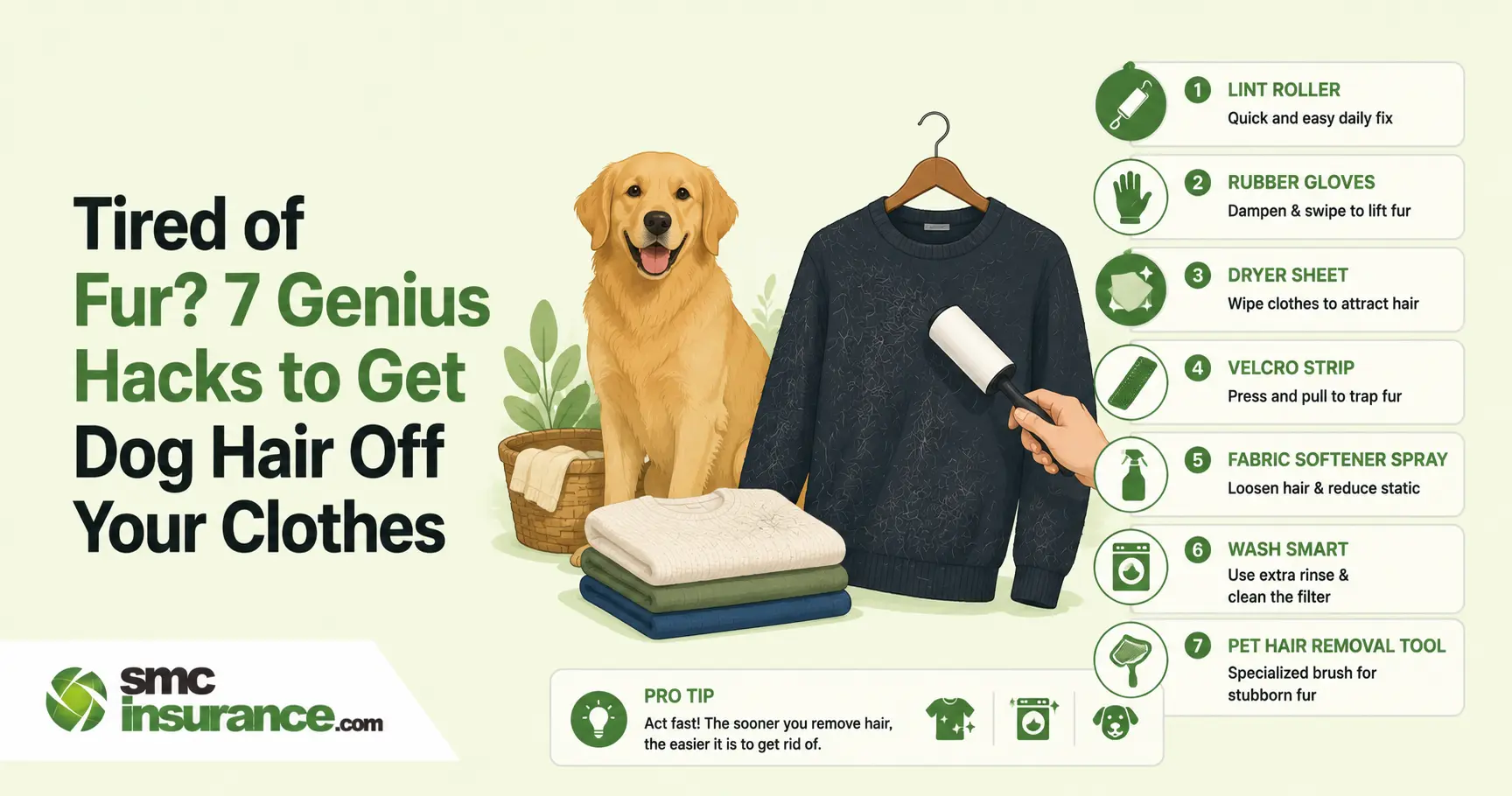

To remove dog hair from clothes, start by shaking the garment outdoors and using a lint roller, masking tape or slightly damp rubber glove to collect loose fur. If the care label allows, a ten-minute no-heat dryer cycle before washing can help loosen stubborn hair. Avoid overloading the washing machine and check the manufacturer's instructions before using vinegar or other laundry additives. Use gentle methods on delicate fabrics and brush your dog regularly to reduce shedding around the house.
Table of Contents
- Why Dog Hair Sticks to Clothes, Even After Washing
- Can Dog Hair Damage Your Washing Machine?
- 7 Hacks to Get Dog Hair Off Clothes, Before and After the Wash
- Which Dog Hair Removal Hack to Use When
- How to Get Dog Hair Off Clothes Without a Dryer
- Best Way to Get Dog Hair Off Clothes by Fabric Type
- How to Reduce Dog Shedding at Home
Anyone who shares a home with a Labrador or a Golden Retriever knows the moment: you are dressed and almost out the door when the hallway mirror shows pale fur all over your black trousers. The lint roller ran out of sheets last week, a quick swipe with your hand only spreads the hair around and rewashing the trousers seems to relocate the fur rather than remove it. Trying to get dog hair off clothes eats into your mornings, wears out favourite fabrics and sometimes sends a good shirt to the dry cleaner for no reason except fur. Below are seven hacks that work, plus the fabric rules and no-dryer fixes most guides skip, so you can stop losing this daily battle.
Why Dog Hair Sticks to Clothes, Even After Washing
A minute on the enemy first, because knowing why fur clings tells you which hack to reach for.
Dog hair can cling to clothes because of static electricity and friction between the hair and fabric. Synthetic materials such as polyester and fleece are particularly prone to static buildup, which can make loose fur harder to remove. The fabric's texture also matters, as hair may become caught between fibres or within the weave.
The wash often makes things worse. Water loosens hair from one garment only to deposit it on another and an overstuffed drum cannot tumble or rinse properly, which is how a black T-shirt comes out furrier than it went in.
Can Dog Hair Damage Your Washing Machine?
Dog hair is not just a problem for your clothes. When large amounts of fur enter a washing machine, the wet strands can gather into clumps, stick to the drum and potentially interfere with drainage. Over time, this may put additional strain on the appliance. To reduce the risk, remove loose fur before washing heavily covered garments and check the machine's filters regularly. Always follow the manufacturer's cleaning instructions, as filter locations and maintenance requirements differ between models.
7 Hacks to Get Dog Hair Off Clothes, Before and After the Wash
Order matters here. Hacks one to four work on dry clothes, when fur is easiest to catch and hacks five to seven take over once the garment reaches the washing machine.
Hack 1: Shake it out on the balcony first
Hold each garment at arm’s length on the balcony or terrace and shake it hard for about ten seconds, well away from the door and from the dog’s favourite spot. It sounds too simple to count, but it clears the loose top layer so that hair never reaches the drum and spreads across the whole load.
Hack 2: Drag a damp rubber glove across the fabric
Dampen a kitchen glove, shake off the drips and stroke it over the garment in one direction. The rubber creates friction and the moisture holds the strands, so the fur rolls into small clumps you can peel away. Denim, wool sweaters and sofa covers respond especially well and you already own the tool. Keep the glove barely wet so you don’t soak the garment itself.
Hack 3: Use masking tape or a lint roller properly
For collars, cuffs and seams, wrap masking tape sticky side out around your fingers and press in short dabs rather than dragging, since dragging flattens hair into the weave. Consumer Reports calls a lint roller or masking tape the best way to take hair off clothes and on wide surfaces like trousers a roller simply covers more ground. Peel off the used sheet every few passes, because a clogged roller smears more than it lifts
Hack 4: Run a no-heat tumble before the wash
If your garment's care label permits tumble drying, try running it through an air-only or no-heat dryer cycle for about ten minutes before washing. The movement can loosen pet hair, allowing some of it to collect in the lint filter. A dryer sheet may also help reduce static, provided it is suitable for the fabric. Shake the garment afterwards and clean the dryer's lint filter before the next load. No dryer at home? There is a section on that further down.
Hack 5: Add white vinegar to the rinse, but read your manual first
White vinegar is often suggested as a way to loosen pet hair during washing, but it is not suitable for every washing machine. Consumer Reports recommends checking the appliance manual before using it, while Whirlpool advises against adding vinegar directly to its washing machines because it may damage rubber seals and hoses over time. If your manufacturer does not recommend vinegar, skip this method and focus on removing loose hair before washing.
Hack 6: Add a hair-catcher ball and an extra rinse
Pet-hair catcher balls and discs are sold as laundry accessories, but their effectiveness can vary. For better results, remove as much loose fur as possible before putting clothes in the washing machine. Avoid overloading the drum, choose a suitable wash cycle and use an additional rinse if your machine provides that option. After washing heavily furred items, check and clean the accessible filters according to the manufacturer's instructions.
Hack 7: Kill the static, then finish with a fabric brush
A light mist of water or an anti-static spray on fleece, wool or polyester stops hair from re-clinging and a soft fabric brush stroked in one direction lifts the last strands. Do this at the door just before you leave, because fur you cannot see in the bedroom shows up clearly under office lights or the torch on your phone.
Which Dog Hair Removal Hack to Use When
With seven options, the real question is which one suits the moment, so here is a quick way to choose.
Situation |
Best hack |
Approx. time |
Dryer needed? |
Running late, fur on black trousers | Masking tape or lint roller (Hack 3) | 1 to 2 minutes | No |
Sofa cover, denim or thick sweater | Damp rubber glove (Hack 2) | 3 to 5 minutes | No |
Whole laundry load covered in fur | Shake, no-heat tumble, extra rinse (Hacks 1, 4, 6) | About 10 minutes before the wash | Only for Hack 4 |
Fleece or polyester top | Anti-static mist plus fabric brush (Hack 7) | 2 minutes | No |
Washed clothes still show hair | Shake, tape, then rewash with extra rinse (Hacks 1, 3, 6) | One extra cycle | No |
Note: Times are rough estimates and depend on garment size and how furry it is. Check the care label before using any method and spot-test delicate fabrics first.
How to Get Dog Hair Off Clothes Without a Dryer
Most guides assume a dryer in every home, which is not how laundry works in many Indian flats, where a top-loader and a balcony clothesline are far more common.
Without a dryer, swap hack four for hack one plus hack two and treat the washing machine as the second stage rather than the first. Add the extra rinse and shake each garment once more as you hang it, because hair tends to loosen once the fabric is no longer soaked.
And then there is the monsoon, when clothes dry indoors and sit near the sofa where the dog sleeps. Hang them in a room the dog cannot enter, or you will be picking fur off damp fabric all over again. While keeping dog hair off your clothes is part of everyday pet care, it is also worth planning for your dog's health needs. You can explore pet insurance options through SMC Insurance to understand the coverage available for unexpected veterinary expenses.
Best Way to Get Dog Hair Off Clothes by Fabric Type
Fabric decides how hard the fur grips and how roughly you can treat the garment, so this table is worth a glance before you start scrubbing.
Fabric |
How dog hair behaves |
Recommended method |
Avoid |
Cotton and denim | Hair may cling to the surface or fabric weave | Shake outdoors, then use a lint roller or slightly damp glove | Excessive scrubbing |
Polyester, nylon and fleece | Static can make loose fur cling more strongly | Lint roller, fabric-safe anti-static treatment or gentle brush | Excessive heat and friction |
Wool and knitted fabrics | Hair can become trapped in textured fibres | Soft fabric brush or gentle lint removal | Rough brushing and pulling at fibres |
Silk and delicate fabrics | Fragile surfaces require careful handling | Gentle, fabric-safe lint removal or professional cleaning | Strong adhesive tape and harsh rubbing |
Leather and faux leather | Loose hair may collect on the surface | Soft, dry cloth or manufacturer-approved cleaning method | Soaking, harsh chemicals and abrasive tools |
Note: Always follow the garment’s care label. For expensive or delicate pieces, test any method on a hidden corner first.
How to Reduce Dog Shedding at Home
Every hair you stop at the source is one you never have to chase across a wardrobe.
Brush your dog regularly, adjusting the frequency to its breed, coat type and shedding pattern. Dogs that shed heavily may need daily brushing during peak shedding periods, while others may need it only a few times a week. Short-haired dogs often benefit from a grooming glove or bristle brush, while longer and double-coated breeds may need a slicker brush or undercoat rake. Use these tools gently to avoid irritating the skin. Washable sofa covers, keeping fur-heavy areas separate from clean laundry and placing a lint roller near the door can also help reduce hair transfer. Washable covers on the sofa, a bedroom that stays off-limits and a lint roller parked by the front door cut hair transfer more than any laundry trick.
Not every increase in shedding is seasonal. If your dog suddenly loses large amounts of fur or develops bald patches, persistent itching, redness or irritated skin, consult a veterinarian. These symptoms may be linked to allergies, parasites, infections or other health conditions. Veterinary expenses depend on the treatment required, so it helps to plan for unexpected medical costs rather than assume every visit will be inexpensive. Pet insurance coverage varies by insurer and policy. Some plans exclude routine services such as vaccinations, grooming and preventive care, while others may offer these benefits under specific coverage options. Pre-existing medical conditions may also be excluded or subject to policy-specific restrictions and waiting periods. Before purchasing a plan, check the policy wording carefully to understand what is covered, what is excluded and when coverage becomes available.
Shedding is a nuisance, but an unplanned vet bill is the real expense. If you would rather sort out cover while your dog is healthy, you can compare plans in a few minutes at SMC Insurance, or run your dog’s details through our pet insurance premium calculator.
Summing Up,
Dog hair is not going anywhere as long as the dog lives with you, but it does not have to win every morning. Dry clothes give up their fur most easily, so shaking, gloving and taping before the wash does most of the work. A no-heat tumble helps if you own a dryer and the damp-glove-plus-extra-rinse route works well if you do not. Treat vinegar with caution until you have checked your washing machine’s manual and match the method to the fabric instead of scrubbing everything the same way. Brush your dog regularly, keep a lint roller where you leave the house and pay attention when shedding looks abnormal. A little routine now saves you the rewashing, the ruined shirts and the last-minute outfit changes later.
Disclaimer: The information provided on this platform is intended for general awareness and educational purposes. While every effort is made to ensure accuracy, some details may change with policy updates, regulatory revisions, or insurer-specific modifications. Readers should verify current terms and conditions directly with relevant insurers or through professional consultation before making any decision.
All views and analyses presented are based on publicly available data, internal research and other sources considered reliable at the time of writing. These do not constitute professional advice, recommendations, or guarantees of any product’s performance. Readers are encouraged to assess the information independently and seek qualified guidance suited to their individual requirements. Customers are advised to review official sales brochures, policy documents and disclosures before proceeding with any purchase or commitment.
FAQs
A lint roller or masking tape is quickest for dry clothes, taking one to two minutes on a pair of trousers. Press and lift on collars and seams and roll in one direction on flat areas. If you have neither, a slightly damp rubber glove works almost as fast. Skip washing as a quick fix, since it rarely removes all the hair.
White vinegar may help loosen pet hair, but it is not recommended for every washing machine. Some manufacturers, including Whirlpool, warn that vinegar can damage rubber components over time. Check your appliance manual before using it. Removing loose hair before washing is a safer starting point, and an additional rinse may help clear remaining strands.
Yes. Shake each garment outdoors, go over it with a damp rubber glove or masking tape and then wash with an extra rinse. Shake the clothes again as you hang them. During the monsoon, dry them in a room the dog cannot enter so fresh fur does not settle on damp fabric.
Dog hair may remain after washing because some strands become trapped in the fabric while others collect in the machine or move between garments. Overloading the drum can also reduce effective washing and rinsing. Remove loose hair before washing, avoid overcrowding the machine and clean accessible filters as directed by the manufacturer.
Black shows every strand, so use the three-step routine: shake outdoors, go over the garment with a damp glove or tape and give it a final check under bright light. After washing, a quick pass with a fabric brush catches strays. Dark synthetic fabrics also benefit from an anti-static mist before you wear them.
It is better not to. Heavily furred items shed into the rest of the load, so pre-clean them first or wash them on their own. Wipe the drum and clean the filter afterwards so the next load starts hair-free.


