


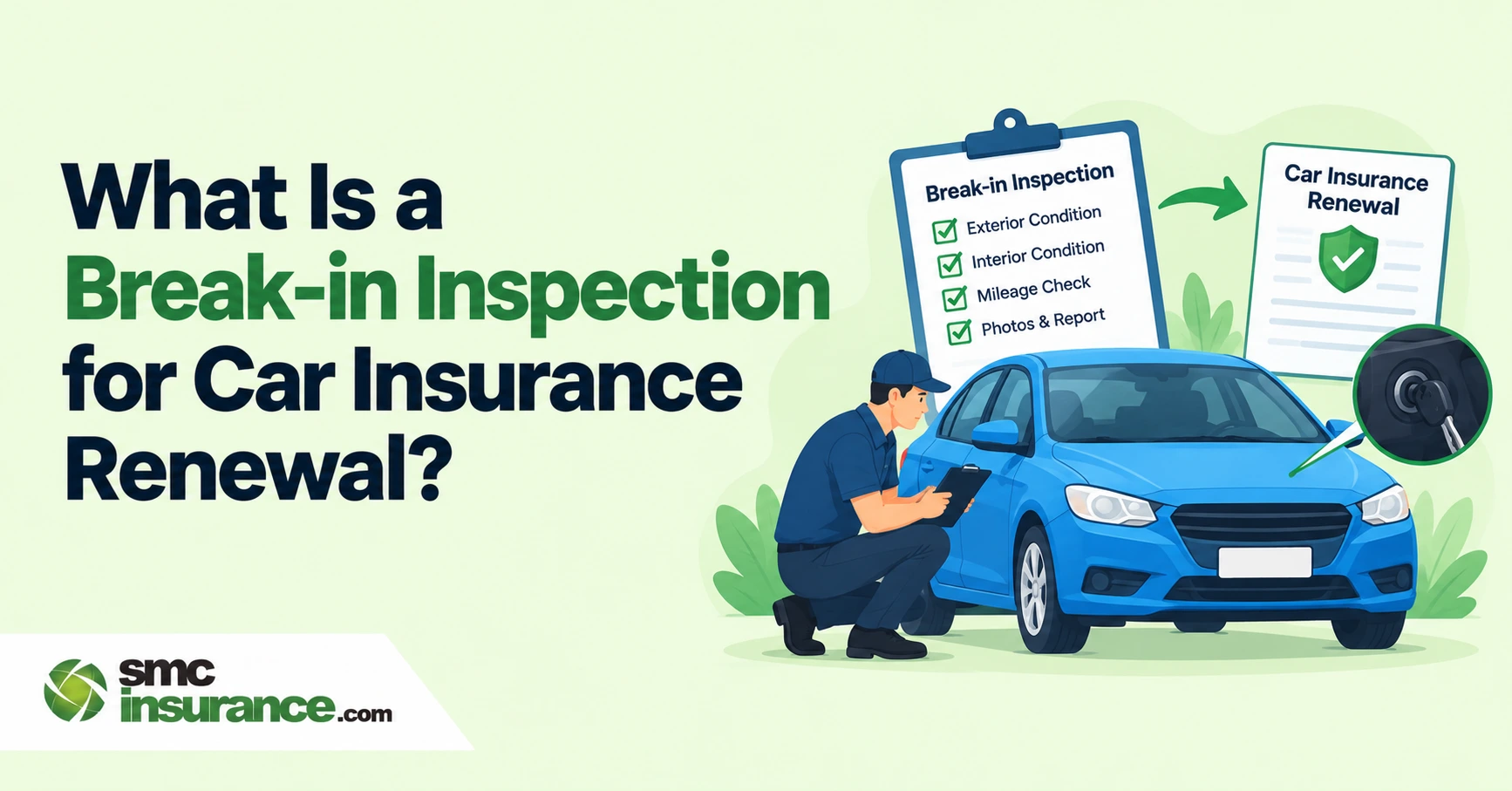
A car insurance break-in inspection is a vehicle examination carried out when an insurance policy has expired and the insurer needs to assess the car before providing fresh coverage. Even a one-day lapse can trigger this requirement. Depending on the insurer, the inspection may involve a physical examination or photographs and videos submitted digitally. Existing damage is documented, and own-damage protection begins only from the effective date and time accepted by the insurer, subject to its policy terms. If you renew within 90 days of expiry, you can generally retain your accumulated No Claim Bonus, provided you meet the applicable conditions. Renewing before expiry helps avoid a break in coverage and the associated inspection process.
Table of Contents
- What Is a Car Insurance Break in Inspection and Why Do Insurers Insist on It?
- When Is a Car Insurance Break in Inspection Needed After Expiry?
- How a Car Insurance Break in Inspection Works: Surveyor Visit vs Self-Inspection
- What Do Surveyors Check During a Vehicle Inspection for Car Insurance?
- What a Lapse Really Costs: No Claim Bonus, Inspection Charges and Premium
- How to Avoid a Break in Policy and Renew Car Insurance on Time
Your policy expired on the 14th, the renewal SMS got buried under bank alerts and when you finally open the insurer's page a week later it will not show you a price until a vehicle inspection is done. That is the point where most car owners learn that missing the renewal date by even a day changes how an insurer treats the car. A car insurance break-in inspection allows the insurer to examine your vehicle's condition before accepting the risk after a policy lapse. The findings can influence whether your application is approved, whether existing damage is excluded and when your own-damage protection takes effect. Before you shop for car insurance coverage plans, this guide explains how the inspection works, what a surveyor actually looks at and how to clear it without a second attempt.
What Is a Car Insurance Break in Inspection and Why Do Insurers Insist on It?
The short version is that your insurer has no idea what happened to your car while the policy was dead, so it wants to see the car before taking the risk back.
A car insurance policy is a one-year contract and the day it ends the insurer stops carrying any risk on your vehicle. Come back after a week or a month and the insurer cannot tell whether the car scraped a pillar in a parking lot or took a knock on the highway in between. That uncertainty is the whole reason for the check. The Insurance Regulatory and Development Authority of India (IRDAI) says that if a motor policy lapses by even one day the vehicle has to be inspected and that the insurer may levy extra charges for it.
The consequence sits in the fine print. Go Digit's policy schedule, for instance, carries a break-in clause stating that own damage cover does not begin until a satisfactory inspection report is received and that the insurer may cancel the policy if the report shows adverse findings. Other insurers word it differently, so read yours, but the principle is the same: paying the premium is not the finish line and the day you pay and the day you are actually covered can be two different days.
When Is a Car Insurance Break in Inspection Needed After Expiry?
Not every renewal triggers one and when you renew matters more than most people expect.
Renew before the expiry date and there is usually no inspection, with your bonus rolling over untouched. Miss the date and the renewal becomes a break-in case, where what you lose depends on how long you wait.
Renewal timing |
Inspection requirement |
NCB eligibility |
Own-damage coverage |
Before policy expiry | Generally not required for an ordinary renewal | Retained according to claim history and policy conditions | Continues without a gap if the new cover begins when the old cover ends |
Within 90 days after expiry | Generally required, subject to insurer underwriting procedures | Accumulated NCB can ordinarily be retained | No protection for the expired period; fresh coverage begins according to the insurer's accepted terms |
Beyond 90 days after expiry | Generally required | Accumulated NCB is ordinarily forfeited | No protection during the lapse; fresh coverage depends on insurer approval and effective dates |
Note: The 90-day bonus window comes from IRDAI's guidance and insurer policy wordings, but the exact terms sit in your own policy, so confirm them before relying on the window. If you switch insurers, you will need proof of your earlier bonus, such as the previous renewal notice.
One detail trips people up. Your own damage cover and your third-party cover can run on different calendars, since many newer cars carry a multi-year third-party policy, so an expired own damage cover alone does not expose you to a challan but still puts you in inspection territory. If your third-party insurance has also expired, you must not drive the vehicle on a public road without obtaining valid coverage. Section 146 of the Motor Vehicles Act, 1988 requires applicable third-party insurance, while Section 196 provides penalties for driving without it. The statutory fine is Rs. 2,000 for a first offence and Rs. 4,000 for a subsequent offence, with imprisonment of up to three months also possible under the applicable provisions.
That legal point shapes how you should get the inspection done. If third-party cover is gone too, driving to a workshop or branch means driving uninsured, which makes a surveyor who comes to you, or a self-inspection video shot at home, the safer route.
How a Car Insurance Break in Inspection Works: Surveyor Visit vs Self-Inspection
Insurers usually offer two routes and the better one depends on how comfortable you are with a phone camera and how soon you need the policy.
Route |
How it works |
What you do |
Speed |
Suits you if |
Surveyor visit | The insurer sends an authorised surveyor to examine and photograph the car at an agreed place | Fix a slot, keep the car and papers ready | Depends on slot availability in your city | You prefer a person to verify the car |
Self-inspection | The insurer sends a link by SMS and you record a guided video plus photos | Shoot and upload from your phone | HDFC ERGO states its team processes submissions in about an hour | You want the policy quickly and have decent daylight |
Note: Turnaround and charges vary by insurer. The one-hour figure is HDFC ERGO's stated processing time for its own app and other insurers publish different timelines.
The video route is the one most people end up using, so here is how it typically runs. The steps below follow the process HDFC ERGO publishes for its app and insurers elsewhere follow a similar sequence with small differences.
Step by step
- Tell your insurer or advisor that the policy has lapsed and ask for the self-inspection option instead of a surveyor visit.
- Open the SMS carrying your inspection reference number and link. Some insurers also run the process inside WhatsApp so there is no app to download.
- Park the car in an open area with plenty of daylight, because a dim basement is where most rejected videos begin.
- Record the guided video and make sure the engine and chassis numbers are readable on camera.
- Take the photos the app asks for, which include the registration certificate, all four sides of the car and close-ups of any damage already there.
- Submit, wait for the insurer's approval and pay the premium through the link once it comes.
- Check the policy schedule for the exact date and time your own damage cover starts.
If your policy is being arranged through SMC, you can follow the request on the Inspection Status page of SMC Insurance.
Mistakes that send you back to re-record
Re-recording is the quickest way to lose an afternoon, because insurers can ask for a fresh video when the first one is not clear enough. A few habits avoid it:
- Shoot outdoors in daylight rather than in a poorly lit parking level.
- Keep the engine and chassis numbers legible on camera.
- Cover every side of the car, since the photo set is meant to show the whole vehicle.
- Show existing damage up close instead of hoping it goes unnoticed.
What Do Surveyors Check During a Vehicle Inspection for Car Insurance?
Knowing what the report covers makes it easier to spot a problem before the surveyor does.
A typical break-in inspection report records the owner and vehicle details, the date and place of inspection, a panel-by-panel condition check of the exterior and interior and the details of your previous policy. It also carries a declaration from you that the car has not met with an accident since the old policy expired.
What is checked |
What the surveyor looks for |
What you can do first |
Registration, engine and chassis numbers | A match with the registration certificate | Keep the RC at hand and locate the plates beforehand |
Body panels, bumpers and glass | Dents, scratches and cracks present on the day | Photograph every side yourself before the inspection |
Lights, mirrors and other exterior parts | Condition and any visible damage | Walk around the car and note what you see |
Interior | Overall condition recorded in the checklist | Clear the car so nothing is hidden |
Previous policy details | Insurer, policy number and bonus claimed | Keep the expired policy copy and bonus proof ready |
Owner declaration | No accident since the policy expired | Sign only what is true |
Note: Checklists differ between insurers, so treat this as a guide to what is typically examined rather than a fixed form.
Anything the surveyor records stays on file as pre-existing and it will not be paid for in a later claim. A car left on a crowded street for three weeks tends to pick up scratches nobody remembers causing, which is exactly why your own photos taken first are worth the five minutes. As our own renewal guide points out, an insurer can refuse to renew until the damage is repaired and the car is re-inspected, or it can renew while excluding the existing damage from future claims, so ask which route yours will take before you spend money on repairs.
Treat the declaration seriously. Insurer policy wordings allow cancellation for misrepresentation or non-disclosure, so owning up to an accident that did happen is far cheaper than being found out when you file a claim.
What a Lapse Really Costs: No Claim Bonus, Inspection Charges and Premium
The inspection itself is rarely the expensive part and the bonus you give up is.
No Claim Bonus is a discount on your own damage premium for every claim-free year and it belongs to you rather than the car, which is why it can move with you to a new insurer as long as you carry proof. Our guide to No Claim Bonus in motor insurance covers how it is earned and the standard grid looks like this.
Claim-free years |
NCB on own damage premium |
1 | 20% |
2 | 25% |
3 | 35% |
4 | 45% |
5 or more | 50% |
Note: The bonus applies to the own damage premium only, not the third-party part and a claim in the previous year resets it to zero. The example below is illustrative; your own damage premium will differ.
Suppose your car qualifies for a 50% No Claim Bonus and the own-damage premium before this discount is Rs. 10,000. Your NCB would reduce that component by Rs. 5,000, bringing it to Rs. 5,000 before other applicable adjustments and taxes. If you renew after the permitted 90-day period, you would ordinarily lose the accumulated discount. Assuming the same base premium, the own-damage component would then increase by Rs. 5,000. Your actual renewal quotation may differ because insurers consider several pricing factors.
And that is before you count the inspection fee, if your insurer charges one. An inspection following a policy lapse may involve additional charges, depending on the insurer and the method used. IRDAI's published guidance acknowledges that break-in inspections can involve extra costs but does not specify a universal fee. Before proceeding, ask your insurer whether the inspection is chargeable and whether the amount is included in your quotation. Your premium may also be recalculated after the report. Our renewal guide notes that a renewal after expiry can come with a higher premium, so ask for a fresh quote once the inspection is approved instead of assuming the old price holds.
Policy already lapsed and unsure which route to take? Enter your registration number at SMC Insurance to see renewal options from 30+ insurers, or call 1800 2666 3666 and talk it through before you book an inspection.
How to Avoid a Break in Policy and Renew Car Insurance on Time
None of this applies if the renewal lands before the expiry date and that is mostly a matter of habit.
Insurance companies may send renewal reminders through registered contact details, but the timing and frequency can differ. Rather than depending entirely on these notifications, check your policy's expiry date and set your own reminder well in advance. IRDAI advises policyholders to approach their insurer at least 15 days before the existing policy expires. Keep your contact details current with the insurer, set a calendar reminder four weeks before the date and aim to renew well before the last evening. Our car insurance renewal page walks through the steps and documents.
A late renewal is also a natural moment to ask whether the cover still fits. If you have been on third-party only, a comprehensive car insurance plan brings own damage protection back into the picture and the inspection you are about to do anyway makes the switch easier to time.
Wrapping Up,
A break-in inspection may add another step to renewing an expired car insurance policy, but acting promptly can help minimise the inconvenience. Depending on the insurer, you may be able to complete the inspection digitally or arrange a physical examination of your vehicle.
If your policy has expired, contact your insurer, disclose any existing damage and complete the required inspection process. Check the effective date and time of your new coverage before assuming your car is insured. Renewing within 90 days can also help preserve your accumulated No Claim Bonus, subject to the applicable conditions. If your policy is still active, plan the renewal ahead of its expiry date. Most importantly, verify that your third-party insurance remains valid before driving on public roads.
Either way, do not drive an uninsured car to get it inspected.
Disclaimer: The information provided on this platform is intended for general awareness and educational purposes. While every effort is made to ensure accuracy, some details may change with policy updates, regulatory revisions, or insurer-specific modifications. Readers should verify current terms and conditions directly with relevant insurers or through professional consultation before making any decision.
All views and analyses presented are based on publicly available data, internal research and other sources considered reliable at the time of writing. These do not constitute professional advice, recommendations, or guarantees of any product’s performance. Readers are encouraged to assess the information independently and seek qualified guidance suited to their individual requirements. Customers are advised to review official sales brochures, policy documents and disclosures before proceeding with any purchase or commitment.
FAQs
In practice, yes, for a lapsed policy. IRDAI's policyholder FAQ says a lapse of even one day means the vehicle has to be inspected and insurers apply this when you renew after expiry or buy afresh. If you renew before the expiry date, an inspection is usually not needed. Your insurer's underwriting rules decide the exact trigger, so confirm it when you request the renewal.
It depends on the route you take. A self-inspection video takes a few minutes to shoot and HDFC ERGO states that its team processes submissions in about an hour. A surveyor visit depends on slot availability where you live and the insurer can give you a timeline when you book. Ask for it upfront so you know when cover is likely to begin.
No, own damage cover does not begin until the insurer accepts a satisfactory inspection report, so damage during the gap, or between payment and approval, is yours to bear. Check the policy schedule for the exact start date and time of each cover. Until it shows as active, keep the car off the road.
Not automatically. The bonus is protected if you renew within 90 days of expiry and it is lost once you cross that line, whichever insurer you choose. The inspection and the bonus are separate issues, so you can face the inspection and still keep the bonus. Keep proof of your earlier bonus ready, especially if you plan to change insurers.
Yes, a new insurer will usually ask for its own inspection before issuing the policy. You will need proof of your earlier bonus, such as the previous renewal notice, to carry it across within the 90-day window. Compare the premium after inspection as well, because the price can change once the report is in.
The damage is recorded in the report and generally treated as pre-existing, so a later claim will not pay for it. Some insurers may ask you to repair it before issuing the policy and then inspect again. Photograph the car yourself first and ask your insurer which approach it follows before you pay for any repair.
Only if valid third-party cover is still in force. Driving without it can attract a fine of Rs. 2,000 for a first offence and Rs. 4,000 for a repeat, with up to three months in jail possible. A surveyor visit at your location or a self-inspection video recorded at home avoids that risk altogether.
Yes, if your car already has valid third-party liability insurance, you can explore a standalone own-damage policy without purchasing duplicate third-party coverage. The insurer may require vehicle inspection if the previous own-damage policy has expired. Check the eligibility requirements and coverage commencement details before purchasing.


