


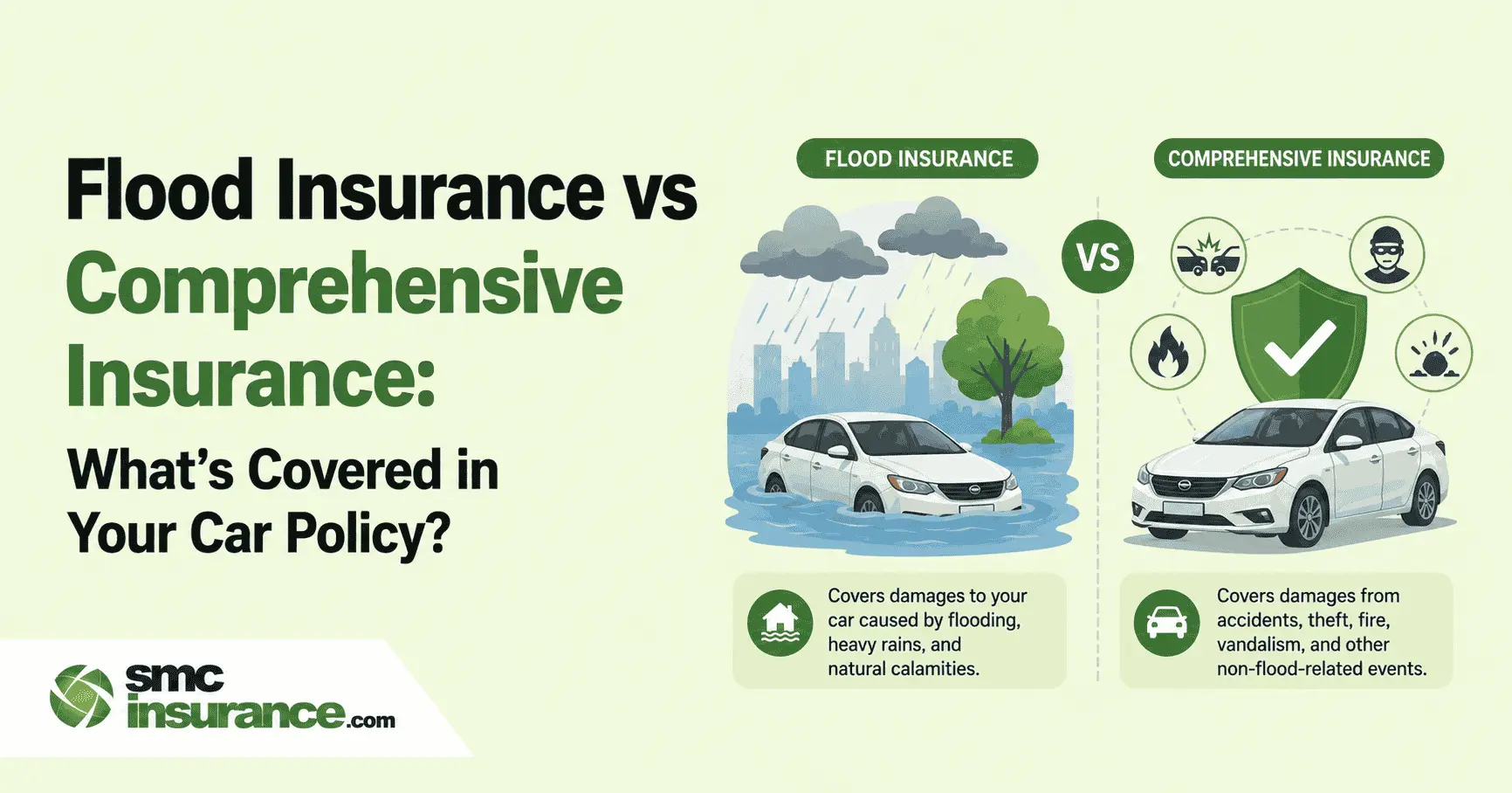

Flood and waterlogging damage to your car can be covered under a comprehensive or standalone own-damage policy, depending on the policy wording. Third-party-only insurance does not cover damage to your own vehicle. Engine damage caused by water ingress or hydrostatic lock may be excluded or treated as consequential damage under the base policy, although some policies offer broader engine coverage through an Engine Protection add-on. Zero Depreciation, Consumables, Return to Invoice and Roadside Assistance are optional add-ons with separate terms and eligibility conditions.
You wake up to news of waterlogged streets in your neighbourhood and the first thing you think about isn't the commute, it's the car parked right outside your gate. Half submerged, engine possibly flooded and you have no idea whether your policy will pay for any of it. This confusion gets worse because most people go searching for flood insurance assuming it's a separate product they should have bought, when the real answer sits inside a policy they may already own. By the end of this article, you'll know exactly which policy pays for flood damage, what it leaves out and which add-ons close those gaps before the next monsoon catches you off guard.
Table of Contents
- Is Flood Insurance a Separate Car Policy in India?
- What Comprehensive Car Insurance Actually Pays for During a Flood
- What Your Policy Leaves Out and Why It Matters
- Third-Party vs Standalone Own Damage vs Comprehensive: Flood Coverage Compared
- Add-ons That Actually Close the Flood Damage Gap
- How to File a Flood Damage Claim, Step by Step
- What to Do If Your Car Is Sitting in Floodwater Right Now
Is Flood Insurance a Separate Car Policy in India?
Here's the part that trips up most car owners. There is generally no separate standard flood-only car insurance policy that you need to buy. Flood, inundation and related natural calamity damage are ordinarily covered under the own-damage section of comprehensive or standalone own-damage motor insurance, subject to the policy's terms and exclusions. What people search for as flood insurance is actually a peril covered within your comprehensive car insurance or standalone own-damage policy, not a distinct plan you buy on its own. Flood and inundation are generally listed among the natural calamity perils covered under the own-damage section of motor policies. The exact list of covered perils and exclusions depends on the insurer's policy wording.
So when someone asks whether to buy flood insurance or comprehensive insurance, the honest answer is that comprehensive insurance already includes flood protection as part of its own-damage cover. The real decision isn't between two products, it's between having own-damage cover at all or sticking with a bare third-party policy that won't pay a rupee toward your own car's repairs, flood or otherwise.
What Comprehensive Car Insurance Actually Pays for During a Flood
A comprehensive policy compensates you for loss or damage to your own vehicle caused by floods, heavy rain, or waterlogging, in addition to the third-party liability every car owner is legally required to carry. A covered flood or inundation event can result in an own-damage claim for affected vehicle components and accessories, subject to the policy terms, deductibles, exclusions and the assessment of the loss by the insurer.
Where things get specific is the engine. A standard comprehensive policy does not automatically cover hydrostatic lock, which happens when water gets sucked into the combustion chamber and the engine seizes because water, unlike air and fuel, doesn't compress. Because engine repairs can be substantially more expensive than many other flood-related repairs, understanding the policy's treatment of water-related engine damage is particularly important. The term "comprehensive" does not mean every type of damage is automatically covered — exclusions, deductibles and add-on conditions still apply.
What Your Policy Leaves Out and Why It Matters
Beyond the engine, a base comprehensive policy typically excludes consequential damage, which is the domino-effect harm that follows an initial loss. For example, if water has entered the engine and the vehicle is subsequently restarted, any additional damage caused by that action may be treated as consequential damage and may not be covered under the base policy, depending on the policy wording. It also won't cover normal wear and tear, mechanical or electrical breakdown unrelated to the flood event, or depreciation on replaced parts unless you've added zero depreciation cover.
This is why two people with the same comprehensive policy can walk away with very different claim settlements after the same flood. One had the right add-ons stacked on and the other didn't.
Third-Party vs Standalone Own Damage vs Comprehensive: Flood Coverage Compared
The table below breaks down how each policy type responds when your car takes on water.
Policy Type |
Flood/Waterlogging Damage to Own Car |
Third-Party Liability |
Water-Related Engine Damage |
Third-Party Only |
No |
Yes |
No |
Standalone Own Damage |
Generally yes, subject to policy wording |
No |
Depends on policy wording. Engine Protection may extend cover for specified water-related damage |
Comprehensive |
Generally yes, subject to policy wording |
Yes |
Depends on policy wording. Engine Protection may extend cover for specified water-related damage |
Note: Actual coverage depends on your insurer's policy wording, the IDV set on your car and whether the vehicle was restarted after being submerged, since additional damage caused by restarting a water-affected engine may be treated as consequential damage and may not be covered under the applicable policy terms. Always check the specific exclusions listed in your policy schedule.
If you're still driving on a bare third-party policy, it's worth understanding the full difference between comprehensive and third-party insurance before the next heavy spell catches your car exposed.
Add-ons That Actually Close the Flood Damage Gap
Comprehensive insurance is the foundation, but the add-ons decide how much of the actual repair bill you end up paying yourself. These are the ones worth considering if you park anywhere near a low-lying road or an area that floods even once a season.
Add-on |
What It Covers |
Engine Protection Cover |
May cover specified engine, gearbox or transmission damage caused by water ingress, hydrostatic lock or other listed events, depending on the insurer's policy wording. |
Consumables Cover |
May cover specified consumable items such as engine oil, lubricants, coolant, nuts, bolts, washers and other non-reusable items used during an admissible repair, subject to the add-on terms. |
Zero Depreciation Cover |
Full part value at claim time, without deducting depreciation |
Return to Invoice Cover |
May bridge the gap between the vehicle's IDV and the specified invoice/on-road acquisition value in cases such as total loss or theft, subject to the add-on's eligibility, limits and terms. |
Roadside Assistance |
May provide towing and other roadside services when the insured vehicle is immobilised, subject to the insurer's RSA terms and conditions. |
NCB Protection Cover |
May preserve the applicable No Claim Bonus after a claim, subject to the add-on's conditions and permitted number/type of claims. |
Engine Protection may be particularly relevant for vehicles in areas that experience frequent flooding or waterlogging, while Zero Depreciation can reduce depreciation deductions on eligible parts during a covered claim. You can see the full list of motor insurance add-ons to decide which combination fits your car and your city's rain pattern.
Getting this cover sorted before the season starts is far less stressful than shopping for it while your car is sitting in a flooded basement. If your policy is due for renewal or you're still on a third-party-only plan, it takes a few minutes to compare comprehensive options and add-ons that suit your car and city at SMC Insurance.
How to File a Flood Damage Claim, Step by Step
Filing the claim correctly matters just as much as having the right policy, since a wrong first move can weaken your case even when the coverage exists.
- Do not start the engine. If the car has been submerged, starting it can turn a covered water-ingestion claim into an uncovered mechanical-damage one.
- Inform your insurer immediately through their claims helpline or app and note down the claim reference number.
- Photograph and video the damage from multiple angles before the car is moved or touched.
- Arrange a tow if the car isn't safe to drive, rather than attempting to start or push it.
- Keep your RC, driving licence and policy copy ready for the surveyor and the garage.
- Wait for the surveyor's inspection before authorising any repair work, since unapproved repairs can be excluded from settlement.
- Choose a network garage for cashless settlement, or pay upfront and submit bills for reimbursement if you use an outside garage.
What to Do If Your Car Is Sitting in Floodwater Right Now
If your car is currently submerged or parked in rising water, skip the claim process for a moment and focus on limiting the damage first. Disconnect the battery if you can safely reach it, since this reduces the risk of a short circuit spreading through the wiring. Do not attempt to start the engine, even if the water looks like it has receded, because moisture can still be sitting inside the cylinders. Once the car is towed out, get the brakes checked before you drive it anywhere, as water tends to reduce braking efficiency until the system fully dries out.
Wrapping Up
You generally do not need a separate flood-only car insurance policy. Flood and inundation are ordinarily covered under the own-damage section of comprehensive or standalone own-damage insurance, subject to the policy wording. However, water-related engine damage, depreciation and certain repair expenses may be treated differently depending on the base policy and the add-ons you have selected. A base comprehensive policy handles the water damage to your interiors, electricals and upholstery, but it stops short of the engine unless you've specifically added Engine Protection.
If you live in a city that floods even occasionally, treat that add-on as non-negotiable rather than optional. The additional premium should be weighed against the potential cost of eligible engine or gearbox repairs, particularly for vehicles that are frequently exposed to flood or waterlogging risks. Review your current policy before the next heavy spell, check what's actually excluded and fill the gaps now rather than during a claim dispute later.
Disclaimer: The information provided on this platform is intended for general awareness and educational purposes. While every effort is made to ensure accuracy, some details may change with policy updates, regulatory revisions, or insurer-specific modifications. Readers should verify current terms and conditions directly with relevant insurers or through professional consultation before making any decision.
All views and analyses presented are based on publicly available data, internal research, and other sources considered reliable at the time of writing. These do not constitute professional advice, recommendations, or guarantees of any product’s performance. Readers are encouraged to assess the information independently and seek qualified guidance suited to their individual requirements. Customers are advised to review official sales brochures, policy documents, and disclosures before proceeding with any purchase or commitment.
FAQs
There is generally no separate standard flood-only car insurance policy for private cars. Flood and inundation are ordinarily covered as natural calamity perils under comprehensive or standalone own-damage motor insurance, subject to the policy wording. A third-party-only policy does not cover damage to your own vehicle.
Not automatically. A standard comprehensive or own-damage policy may not cover engine damage caused by water ingress, hydrostatic lock or consequential damage. Whether a particular engine loss is covered depends on the policy wording and circumstances. An Engine Protection add-on may extend cover to specified water-related engine and gearbox damage.
Starting a flooded engine can seize internal parts and turn a covered claim into an excluded one, since insurers treat this as consequential damage caused by the owner's action rather than the flood itself.
Raising a claim typically resets your No Claim Bonus, which can raise your renewal premium. An NCB Protection add-on keeps the discount intact even after you file a claim.
Not in practice. Insurers generally treat waterlogging, heavy rainfall damage and flood damage the same way under the natural calamity clause of a comprehensive or standalone own-damage policy.
You'll typically need your Registration Certificate, driving licence, policy copy and photo or video evidence of the damage, along with the claim form your insurer provides once you report the incident.


