


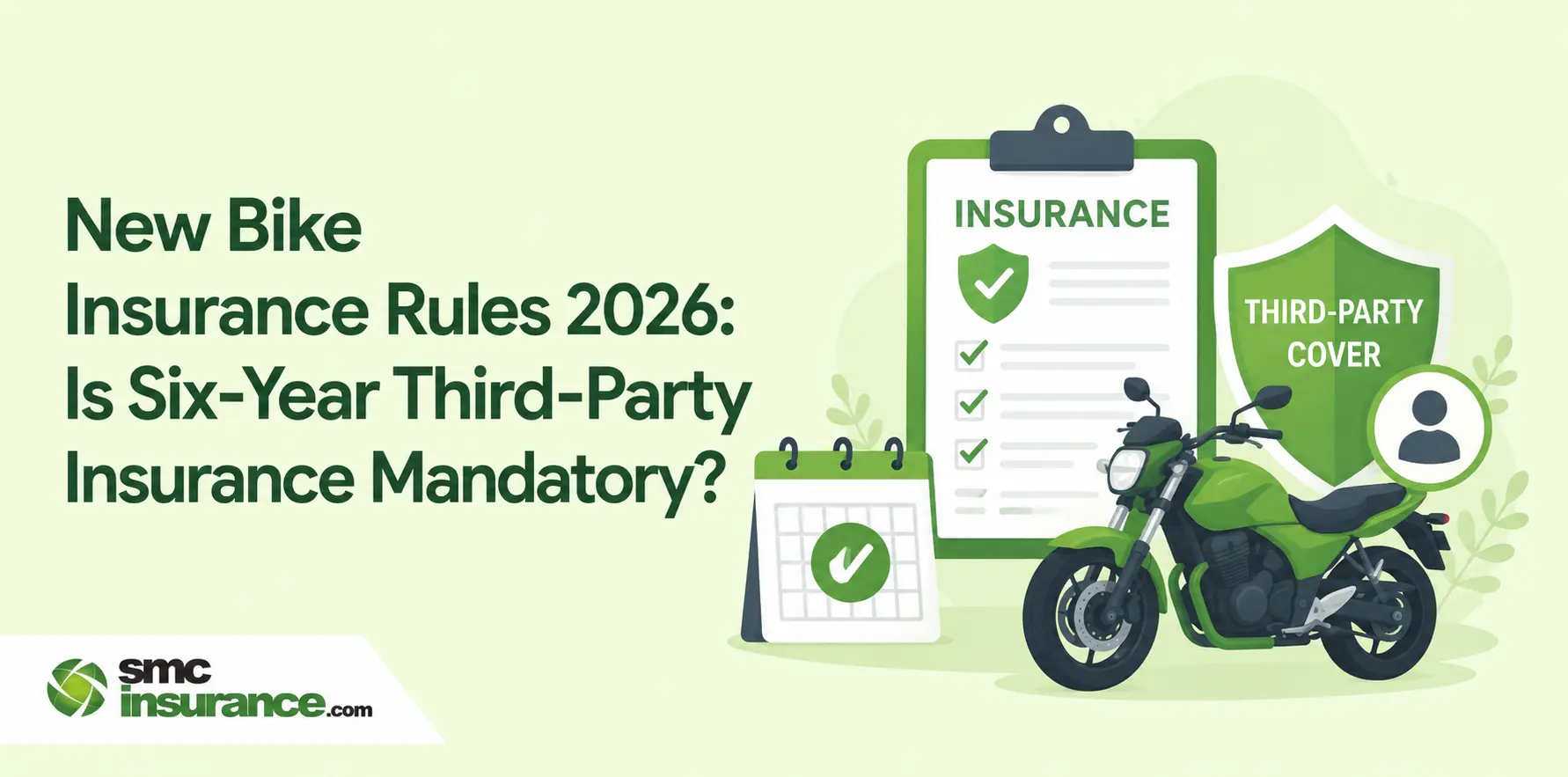
On 4 August 2026, the Supreme Court directed that new two-wheelers must have six years of third-party insurance instead of five. IRDAI was instructed to issue the necessary implementation directions. The revised requirement concerns newly purchased vehicles, while existing policies continue according to their terms. Comprehensive insurance remains optional and the premium for the extended six-year cover will depend on the applicable notified rates.
Table of Contents
You walk into a showroom to collect a new scooter, the dealer slides over an insurance quote and the figure looks heavier than what your friend paid two years ago. That difference could come from the insurance package included in the quote. On 4 August 2026, the Supreme Court directed an increase in mandatory third-party insurance for new two-wheelers from five to six years. However, the revised premium and its implementation must be checked against the applicable regulatory directions. Most buyers don’t know what the extra year costs. With the proposed changes to long-term third-party cover, bike owners should understand the available two-wheeler insurance plans and the protection each policy provides. Here is what is compulsory and what to ask before you pay.
What the Supreme Court Ordered on Six-Year Third-Party Bike Insurance
Start with what is settled, since the confusion comes from mixing it up with what is pending.
For new two-wheelers, the answer is yes. A bench of Justice Sanjay Karol and Justice Prashant Kumar Mishra, hearing National Insurance Co. Ltd. v. Smt. Thungala Dhana Laxmi, directed that new bikes carry six years of third-party cover and new cars four, replacing the five and three years fixed in 2018. IRDAI and the insurers had argued against the extension, yet the bench pointed to the roughly 56 per cent of vehicles running uninsured and went ahead.
The Supreme Court directed IRDAI to issue the necessary instructions immediately. Buyers should therefore verify the applicable policy duration and regulatory requirements before purchasing a new two-wheeler. The direction specifically addresses insurance purchased for new vehicles and does not expressly require existing policyholders to replace their current policies. Under Section 146 of the Motor Vehicles Act, third-party insurance remains compulsory, while own-damage protection is optional.
How the New Bike Insurance Rules 2026 Change Your On-Road Cost
The extra year is paid upfront, so keep these numbers beside the dealer’s quote.
Engine capacity |
1-year third-party |
5-year third-party |
Up to 75 cc | Rs. 538 | Rs. 2,901 |
75 cc to 150 cc | Rs. 714 | Rs. 3,851 |
150 cc to 350 cc | Rs. 1,366 | Rs. 7,365 |
Above 350 cc | Rs. 2,804 | Rs. 15,117 |
Note: The figures above are based on the premium rates specified in the Motor Vehicles (Third Party Insurance Base Premium and Liability) Rules, 2022, issued by the Ministry of Road Transport and Highways. They are shown before applicable taxes. These figures should not be treated as newly notified FY 2026–27 rates. A separate officially notified six-year premium schedule could not be verified for this review. Buyers should check the latest applicable rates before purchasing a policy.
The annual premium provides a useful reference, but it should not be added directly to the five-year premium to estimate the six-year cost. The actual amount will depend on the officially applicable long-term premium structure. Once a six-year policy is issued, its third-party coverage will run for the stated policy period without annual third-party renewal, provided the policy remains valid.
The third-party portion is fixed, but own-damage premiums and add-ons are where quotes drift apart. Before accepting the dealer’s bundle, run the same bike through SMC Insurance at SMC Insurance and see what it costs outside the showroom.
Third-Party Only or Comprehensive
Here is the part buyers skip and in my view it matters more than the sixth year.
Six years of third-party cover protects the person you hit, never your own bike. If your scooter is stolen or damaged in an accident, a third-party-only policy will not cover the loss to your own vehicle. Such losses may be covered under an active own-damage or comprehensive policy, subject to the policy's exclusions, deductibles and claim conditions. Under the 2018 framework, buyers could pick third-party cover bundled with one year of own damage, or a long-term package and whether insurers keep both now rests with IRDAI. That bundled year ends long before the third-party term, so diarise the renewal. Our explainer on why third-party cover alone is rarely enough for a bike covers the gap.
What Else Changes for Bike Insurance Buyers in 2026?
The Supreme Court's August 2026 judgment also focused on helping vehicle owners understand what they are purchasing. It directed a clearer presentation of motor insurance options, including mandatory third-party liability, optional occupant or pillion protection, personal accident coverage and own-damage insurance.
The Court also called for a Customer Option Form and Customer Information Sheet to help buyers identify the coverage included in their policies. These measures are intended to make insurance choices more transparent, particularly when buyers are offered multiple covers together. When purchasing a new bike, ask your insurer or dealer for a clear explanation of each coverage component, its premium and whether it is mandatory or optional.
Step-by-Step: What to Do Before Buying a New Bike
A few checks at the showroom saved a dispute later.
- Ask the dealer in writing whether the third-party term is five or six years and note the expiry date.
- Get third-party and own-damage premiums itemised separately.
- Decide own-damage cover only after comparing quotes elsewhere.
- Keep a digital copy of your policy for easy reference. The Supreme Court has also directed measures to enable police to verify vehicle insurance status through connected digital systems.
Riding uninsured can mean a fine of Rs. 2,000, up to three months in jail, or both, for a first offence. The Supreme Court has also directed IRDAI and MoRTH to develop a pilot project linking fuel purchases with valid vehicle insurance. However, the judgment itself does not establish an immediate nationwide ban on supplying fuel to uninsured vehicles.
Summing Up,
The Supreme Court has directed an increase in third-party insurance coverage for new two-wheelers from five to six years. Buyers should check the latest implementation requirements and applicable premium before purchasing a policy. Existing policyholders should continue maintaining valid insurance, while those buying a new bike should compare third-party and own-damage coverage separately. The longer mandatory term addresses third-party liability, but protecting your own bike remains a separate decision. The sensible path is simple. Ask for third-party and own-damage premiums separately, get the policy term confirmed in writing and let your parking and riding habits, not the dealer’s bundle, decide the own-damage cover. Treat six years as the minimum you carry, not the protection you stop at.
Disclaimer: The information provided on this platform is intended for general awareness and educational purposes. While every effort is made to ensure accuracy, some details may change with policy updates, regulatory revisions, or insurer-specific modifications. Readers should verify current terms and conditions directly with relevant insurers or through professional consultation before making any decision.
All views and analyses presented are based on publicly available data, internal research and other sources considered reliable at the time of writing. These do not constitute professional advice, recommendations, or guarantees of any product’s performance. Readers are encouraged to assess the information independently and seek qualified guidance suited to their individual requirements. Customers are advised to review official sales brochures, policy documents and disclosures before proceeding with any purchase or commitment.
FAQs
Yes, the Supreme Court directed it on 4 August 2026. IRDAI has to issue implementation directions, so ask your dealer which term applies on the day you buy.
No, the direction covers new vehicles, so your current policy continues. Any change for existing owners would need separate IRDAI guidelines.
No, only third-party cover is compulsory. Comprehensive insurance, which protects your own bike, remains your choice.
Slightly, at purchase. You pay one more year of third-party premium upfront, but the annual rate has not been raised by the order.
A first offence can attract a Rs. 2,000 fine, up to three months in jail, or both and the court has also pushed camera-based e-challans.


