


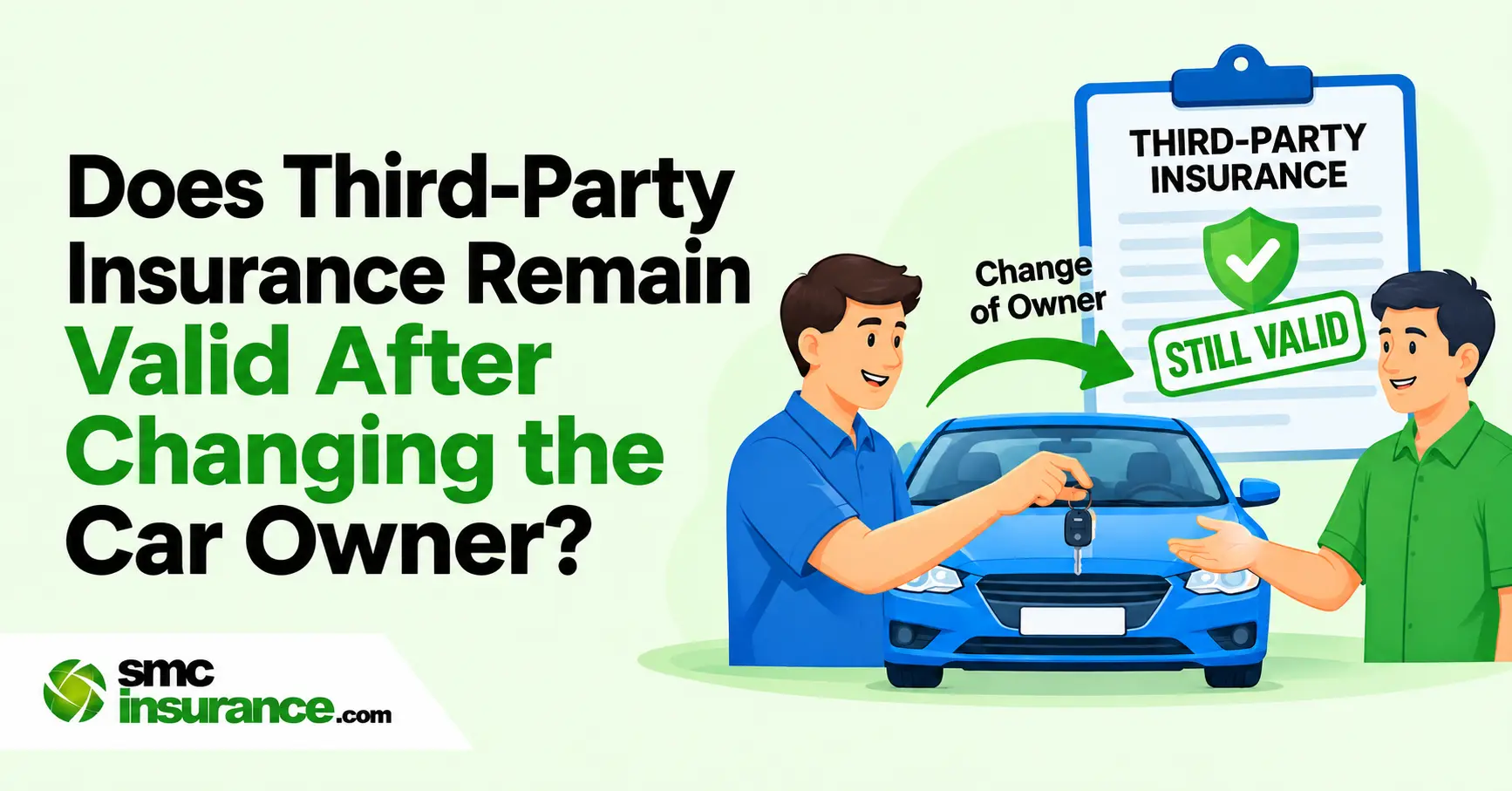
Yes, but only briefly. Under Section 157 of the Motor Vehicles Act, third-party cover passes to the new owner for 14 days from the date of transfer. Own-damage cover needs the insurer to endorse the policy in your name. After 14 days, claims, recovery and fines become your problem. Apply for the transfer within two weeks, or buy a fresh policy in your name.
Table of Contents
You bought a second-hand hatchback on Saturday, the seller handed over a running policy and the paper still carries his name. Does third-party insurance stay valid after the car owner changes? It does, but only for 14 days and only on the third-party side of the policy. Once that window closes, an accident can leave you paying a stranger’s hospital bill from your own pocket. Before anything else, check your car insurance status online to see whose name the policy is under and when it expires. Here is what the law protects, what it leaves out and what to do this week.
Is Third-Party Insurance Valid After the Car Owner Changes?
The answer sits in the law, so that is where we begin. Section 157 of the Motor Vehicles Act, 1988 provides for the automatic transfer of the insurance certificate and the related third-party protection when ownership of an insured vehicle changes. This deemed transfer takes effect from the date of ownership transfer. The buyer must also apply to the insurer within the legally prescribed period to update the insurance records. The application requirement should not be confused with an automatic expiry date for third-party protection.
Courts have also held that an insurer cannot shrug off an accident victim just because the paperwork was never updated. That protects the victim rather than you, because the insurer may still look to the owner to recover what it pays.
Third-Party Insurance After a Car Ownership Transfer: What the 14 Days Cover
The two halves of a comprehensive policy behave differently inside that window.
Third-party cover is deemed transferred with the insured vehicle under Section 157. Own-damage cover, which protects against insured loss or damage to the vehicle itself, follows different transfer requirements. Buyers should obtain the insurer's approval and policy endorsement before relying on this protection. Otherwise, an own-damage claim may face rejection or a dispute over the buyer's entitlement to claim.
Situation |
Third-party cover |
Own-damage cover |
Within 14 days, transfer applied for | Valid | Valid once endorsed in your name |
Within 14 days, nothing filed | Valid | Do not assume it |
After 14 days, no transfer | Victim can claim, insurer may recover from you | Likely rejected |
Note: Based on Section 157 and court rulings. Policy wording and the facts of each claim can change the outcome.
Driving without valid insurance attracts a fine of Rs. 2,000 for a first offence and Rs. 4,000 for a repeat. Sellers are not off the hook either, since the owner in law is whoever appears on the RC.
How to Transfer Car Insurance to the New Owner Before Day 14
The process is quick if you begin with the RC rather than the insurer.
- Initiate the vehicle ownership transfer using Form 29 and Form 30, as applicable, and retain the application acknowledgement. For a normal sale, Parivahan specifies a 14-day application period for transfers within the same state and 45 days for interstate transfers. These RC-related timelines are separate from the insurance endorsement requirements. For more details, you can check our guide to ownership transfer in motor insurance.
- Ask the seller for a copy of the current policy.
- Apply to the insurer with your ID and address proof, asking for the policy to be endorsed in your name.
- Pay any endorsement charge and download the revised policy.
A policy cannot keep running in the seller’s name once the RC shows yours. If the insurer refuses the transfer, our note on how to insure your second-hand car explains the fresh-policy route.
What a Third-Party Car Insurance Policy Costs and the No Claim Bonus Catch
Fixing this costs less than most people expect, though one benefit does not come with the car.
Private car engine |
Annual third-party premium |
Up to 1,000 cc | Rs. 2,094 |
1,000 to 1,500 cc | Rs. 3,416 |
Above 1,500 cc | Rs. 7,897 |
Note: Base rates notified by the Road Transport Ministry in 2022, before 18% GST. A revision has been under discussion, so confirm the current figure when you buy.
The No Claim Bonus belongs to the seller, not the car, so you start at zero while the seller can carry up to 50% to the next vehicle. A third-party-only policy earns none at all.
Unsure whether the policy that came with your car would survive a claim? Get one issued in your name at SMC Insurance, ideally before day 14 ends.
Wrapping Up,
Third-party insurance does survive a change of car owner, but the protection is short and thin. For 14 days the law carries the cover across to you and after that you depend on tribunals rather than a policy in your name. Own-damage cover and the No Claim Bonus do not follow the car the same way. Finish the RC transfer first, apply for the endorsement straight away and confirm the new name on the policy. Sellers should do their half too, because the RC decides who is liable.
Disclaimer: The information provided on this platform is intended for general awareness and educational purposes. While every effort is made to ensure accuracy, some details may change with policy updates, regulatory revisions, or insurer-specific modifications. Readers should verify current terms and conditions directly with relevant insurers or through professional consultation before making any decision.
All views and analyses presented are based on publicly available data, internal research and other sources considered reliable at the time of writing. These do not constitute professional advice, recommendations, or guarantees of any product’s performance. Readers are encouraged to assess the information independently and seek qualified guidance suited to their individual requirements. Customers are advised to review official sales brochures, policy documents and disclosures before proceeding with any purchase or commitment.
FAQs
Yes, for 14 days from the date of transfer. Section 157 works in the buyer’s favour during that period and the buyer should apply to the insurer before it ends.
Not once the RC shows your name. Request an endorsement in your name, or buy a fresh policy.
Victims can still claim, but the insurer may recover the amount from you and own-damage claims are likely to be rejected. Apply immediately.
Possibly, if the RC still carries the seller’s name at the time of an accident.
Yes, with the same documents: RC proof, the existing policy, ID and an application to the insurer. It carries no No Claim Bonus, so only the cover changes hands.


