


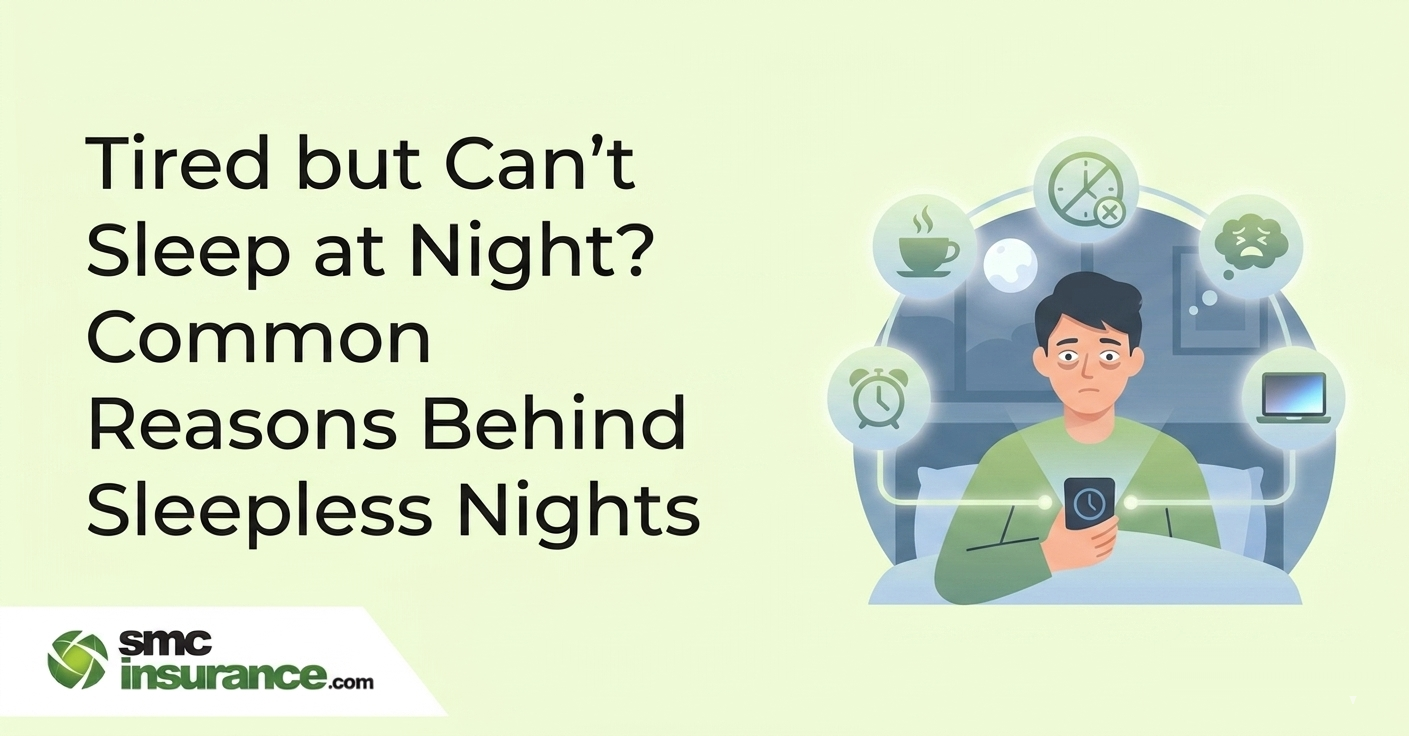

Why Am I Tired but Can't Sleep?
Feeling tired but unable to sleep usually happens when your brain's alertness system overrides your body's fatigue signals. The most common reasons include elevated stress hormones (cortisol) at night that block melatonin, poor sleep habits like irregular schedules and late-night screen use, anxiety or mental health conditions that keep the nervous system active and undiagnosed sleep disorders like sleep apnea or restless legs syndrome. In India, roughly 1 in 3 adults reports insomnia symptoms. If the problem persists beyond 3-4 weeks, medical evaluation is recommended. Cognitive Behavioural Therapy for Insomnia (CBT-I) and lifestyle corrections are the most effective long-term solutions.
You've been up since 6 AM, worked a full day, skipped lunch, dragged yourself through the evening and by 10 PM you're ready to collapse. You get into bed. You close your eyes. And then nothing. Your mind races, your body won't settle and the ceiling becomes oddly interesting at midnight.
This is one of the most frustrating experiences people describe at doctor's clinics across India. You're clearly exhausted. So why won't your body just sleep? The answer isn't always simple, but it is usually findable. Studies show that nearly 33% of Indian adults struggle with insomnia and the number is rising with urbanisation, sedentary lifestyles and stress. Most of them never seek treatment, partly because they don't understand what's happening. By the end of this article, you'll have a clear picture of why you feel tired but can't sleep at night, what each cause actually means for your body and what you can do about it.
Why You Feel Tired but Can't Sleep: What's Actually Happening in Your Body
Feeling sleepy and being able to sleep are two very different things. Your body manages these through two separate systems.
One is the circadian rhythm, your internal 24-hour clock, which tells your brain when to release melatonin (the sleep hormone). The other is sleep pressure, which builds up the longer you stay awake through a molecule called adenosine. When both systems align correctly, you fall asleep within minutes of lying down.
But when stress hormones, irregular schedules, screen light, or underlying health conditions interfere with either of these systems, you end up stuck in a frustrating middle state: tired but wired. Understanding which system is being disrupted tells you exactly what to fix.
1. Your Cortisol Levels Are Spiking at the Wrong Time
Cortisol is your body's primary stress hormone. It follows a natural daily rhythm, peaking in the early morning to wake you up and gradually falling through the day to allow melatonin to rise in the evening.
The problem starts when chronic stress keeps cortisol elevated well into the night. High cortisol at bedtime suppresses melatonin and dilutes adenosine, the molecule responsible for building sleep pressure through the day. The result is a body that's physically fatigued but neurologically alert.
This is especially common in people with demanding work schedules, relationship stress, financial anxiety, or those who check their phones and emails close to bedtime. In India, where work culture increasingly bleeds into evenings, this pattern is widespread.
What it feels like: You're tired all day but get a second wind around 9-10 PM. You lie down and feel restless, or your mind starts running through everything you need to do tomorrow.
What to do: A simple wind-down routine starting 60-90 minutes before bed makes a measurable difference. Dim the lights, stop work-related tasks and avoid news or stimulating content. Progressive muscle relaxation and slow breathing exercises help bring cortisol down faster.
2. Poor Sleep Habits That Slowly Erode Your Sleep Drive
Sleep follows rhythm. When you disrupt that rhythm repeatedly, your brain loses the ability to produce strong, timely sleep signals. Some habits that consistently undermine sleep quality include:
|
Habit |
Why It Disrupts Sleep |
|
Irregular sleep/wake times |
Confuses your circadian clock, weakening melatonin timing |
|
Using phones or laptops in bed |
Blue light blocks melatonin release for up to 2 hours |
|
Late-afternoon naps (post 4 PM) |
Reduces adenosine (sleep pressure) before bedtime |
|
Heavy meals within 2 hours of sleep |
Triggers digestion, raises body temperature |
|
Caffeine after 2 PM |
Caffeine blocks adenosine receptors for 8–10 hours |
|
Alcohol close to bedtime |
Alcohol fragments sleep cycles and reduces REM sleep |
Note: You don't need to eliminate all of these overnight. Fixing one or two consistently, especially screen use and sleep timing, typically produces visible improvement within a week.
The most underestimated habit on this list is inconsistent wake times. Going to bed at the same hour matters less than waking at the same hour. A fixed wake time anchors your entire circadian rhythm.
3. Stress and Anxiety: When Your Brain Refuses to Switch Off
Stress and anxiety are among the most common triggers for insomnia. They create what sleep researchers call hyperarousal, a state where your nervous system stays in high-alert mode even when your body is done for the day.
Racing thoughts at bedtime are not random. They are a byproduct of your brain trying to process unresolved worries. The longer you lie awake trying to force sleep, the more anxious you become about not sleeping, which raises arousal further. It becomes a loop.
Clinical anxiety disorders, work-related burnout, grief and major life changes can all produce this kind of sleep disruption. In India, where mental health is still under-discussed, many people with anxiety-driven insomnia spend years blaming their mattress or the heat.
The distinction to know: General stress may cause short-term sleep issues (acute insomnia). If it lasts for three or more nights a week for over three months, it has crossed into chronic insomnia and warrants proper medical attention.
4. Your Sleep Disorder Is Going Undiagnosed
Not all sleeplessness comes from lifestyle or stress. Some people have underlying sleep disorders that prevent restful sleep regardless of what they do before bed.
Insomnia Disorder is the most common, affecting roughly 1 in 4 Indians. It is a clinical diagnosis, not just "bad sleep." Untreated chronic insomnia significantly increases the risk of depression, hypertension, diabetes and reduced immune function.
Obstructive Sleep Apnea (OSA) affects an even larger portion. A meta-analysis of Indian data found OSA prevalence at 37.4%. In OSA, breathing repeatedly stops during sleep, causing micro-awakenings that prevent deep sleep. People with OSA often wake up tired despite spending 7-8 hours in bed. Snoring, morning headaches and daytime fatigue are common signs.
Restless Legs Syndrome (RLS) creates an uncomfortable urge to move the legs, especially at night, making it nearly impossible to fall asleep. Studies estimate RLS prevalence in India at around 10.6%.
|
Sleep Disorder |
Key Symptom |
Who Is Most at Risk |
|
Insomnia Disorder |
Difficulty falling or staying asleep |
Adults under chronic stress, women, older adults |
|
Obstructive Sleep Apnea |
Snoring, waking unrefreshed |
Overweight individuals, men over 40 |
|
Restless Legs Syndrome |
Urge to move legs at night |
Middle-aged adults, those with iron deficiency |
|
Circadian Rhythm Disorder |
Sleep shifted to odd hours |
Shift workers, night owls, frequent travellers |
Note: A sleep specialist can diagnose these through a clinical interview or a sleep study (polysomnography). Many hospitals in Indian metros now offer overnight sleep testing.
5. Mental Health Conditions That Alter Sleep Architecture
This is different from everyday stress. Certain mental health conditions change how the brain regulates emotions and arousal, which in turn directly disrupts sleep at a neurological level.
Depression is strongly linked to early-morning awakening (waking at 3-4 AM and being unable to return to sleep) and changes in REM sleep. Anxiety disorders produce the classic "tired but wired" profile. Bipolar disorder can cause reduced need for sleep during manic phases and hypersomnia during depressive ones. ADHD creates restlessness and cognitive hyperactivity that persists into the night. PTSD disrupts sleep through nightmares and hypervigilance.
What makes this harder to identify is that poor sleep also worsens each of these conditions. The relationship runs in both directions. Treating the sleep problem alone, without addressing the underlying mental health condition, rarely leads to lasting improvement. If you recognise these patterns, speaking to a psychiatrist or psychologist is the most productive step. This is not a lifestyle fix situation.
6. Chronic Pain and Medical Conditions
Physical pain at night is a straightforward, often overlooked reason for sleeplessness. Conditions like arthritis, lower back pain, fibromyalgia, acid reflux and thyroid disorders can all prevent restful sleep.
Hyperthyroidism, for instance, increases metabolic rate and raises alertness. Hypothyroidism can cause sleep apnea. Diabetes disrupts sleep through nocturnal hypoglycaemia, frequent urination and nerve pain. Asthma symptoms often worsen at night due to circadian changes in airway resistance.
Pain also creates a secondary stress response. Lying in bed knowing that a certain position will cause discomfort activates anticipatory anxiety, which keeps the nervous system alert even before pain is present.
Important: If you have been sleeping poorly for months alongside unexplained fatigue, weight changes, or other physical symptoms, a general physician visit is the right starting point. Many of these conditions are treatable once identified.
7. Evening Lifestyle Habits You Haven't Connected to Sleep Yet
Some contributors to poor sleep are not obvious. They don't feel like sleep habits at all.
Late workouts: Exercise improves sleep quality, but vigorous exercise within 2-3 hours of bedtime raises core body temperature and adrenaline, which can delay sleep onset.
Bright light exposure at night: Your eyes don't distinguish between phone screens and sunlight well after dark. Both suppress melatonin production. Even overhead tube lights in Indian homes, which tend to be bright white, can delay sleep when used at full intensity after 9 PM.
Overthinking in bed: Many people use the bed as the only quiet space in a busy household to think, plan, or decompress. Over time, the brain associates the bed with being awake and alert, not with sleep.
Fluid intake timing: Drinking too much water or tea in the evening means waking for bathroom trips, which fragments sleep. Shifting most fluid intake to earlier in the day prevents this.
Already Struggling with Sleep? Here's What Consistent Action Looks Like
Most people try one or two things for a few days and give up when they don't see immediate results. Sleep hygiene improvements take 2-4 weeks to show clear effects.
Step 1: Pick a fixed wake time and hold it for 14 days straight, including weekends.
Step 2: Stop all screens 60 minutes before your target sleep time.
Step 3: If you're not asleep within 20 minutes, get out of bed and do something quiet in dim light until you feel sleepy. Return to bed only when sleepy. This technique (called stimulus control) is part of Cognitive Behavioural Therapy for Insomnia (CBT-I), which research consistently shows to be more effective than sleep medication for chronic insomnia.
Step 4: If sleep issues persist beyond 3-4 weeks despite consistent effort, see a doctor. This applies especially if you also have daytime functioning problems.
Struggling with disrupted sleep night after night takes a real toll and managing it often involves medical consultations, tests and follow-ups. A comprehensive health insurance plan that covers OPD visits, specialist consultations and mental health treatment can take the financial pressure off. Explore your options at SMC Insurance.
When to See a Doctor for Sleep Problems
Not all sleeplessness needs medical intervention, but some situations do. See a doctor if:
- You have trouble sleeping 3 or more nights a week for over a month
- Daytime tiredness is affecting your work, driving, or relationships
- You snore loudly or wake up gasping
- You experience low mood, persistent anxiety, or feel hopeless alongside sleep problems
- No lifestyle change seems to make a difference
A general physician can rule out thyroid disorders, anaemia, or other physical causes. A sleep specialist handles complex cases. A psychiatrist or psychologist is the right first step if mental health is involved. In India, many multi-specialty hospitals and large clinics in metro cities now have dedicated sleep medicine departments. Apollo, Fortis, AIIMS and Manipal hospitals are among those with accredited sleep labs.
Wrapping Up,
Feeling tired but unable to sleep is one of the body's clearest signals that something is out of balance. It is rarely about willpower or "just relaxing more." The causes range from stress hormones misfiring at night, to undiagnosed sleep disorders, to mental health conditions, to habits that feel unrelated but quietly chip away at sleep quality over weeks and months.
The good news is that most of these causes are addressable. A fixed wake time, reduced screen light in the evening, a proper wind-down routine and honest attention to stress levels can significantly improve sleep for many people within a few weeks. For those with underlying disorders or mental health conditions, the right professional support makes an enormous difference. India has a large and growing sleep problem. Awareness is the first step. If you have been ignoring your sleeplessness and telling yourself it will sort itself out, this is the nudge to take it seriously.
Disclaimer:The information provided on this platform is intended for general awareness and educational purposes. While every effort is made to ensure accuracy, some details may change with policy updates, regulatory revisions, or insurer-specific modifications. Readers should verify current terms and conditions directly with relevant insurers or through professional consultation before making any decision.
All views and analyses presented are based on publicly available data, internal research, and other sources considered reliable at the time of writing. These do not constitute professional advice, recommendations, or guarantees of any product’s performance. Readers are encouraged to assess the information independently and seek qualified guidance suited to their individual requirements. Customers are advised to review official sales brochures, policy documents, and disclosures before proceeding with any purchase or commitment.
FAQs
It typically means your body and brain are out of sync. Physical fatigue (muscle tiredness, eye heaviness) and mental alertness (inability to stop thinking, restlessness) are controlled by different systems. When stress hormones like cortisol remain high in the evening, they suppress melatonin and block adenosine, the two chemicals your body needs to transition into sleep. This leaves you in an exhausted but alert state. It can also result from irregular sleep schedules, excessive screen use, anxiety, or undiagnosed conditions like sleep apnea.
Research estimates suggest that around 25-33% of Indian adults experience insomnia symptoms, with the higher figures seen in patient populations and those with chronic health conditions. Despite this, treatment-seeking remains low. A 2024 study found only 3% of older adults with insomnia actually sought treatment. Factors like stigma around sleep problems, lack of awareness and limited access to sleep specialists contribute to this gap.
Yes and it is one of the most common causes. Stress triggers cortisol release, which suppresses melatonin and keeps the nervous system in a state of arousal. Over time, this creates a learned pattern where the brain associates bedtime with anxiety rather than relaxation. Short-term stress causes acute insomnia. If it continues for over three months, it becomes chronic insomnia. Cognitive Behavioural Therapy for Insomnia (CBT-I) is the most evidence-backed long-term treatment for stress-driven insomnia.
Yes and it is very common. Insomnia is not about a lack of tiredness. It is about the brain's inability to switch from an alert state to a sleep state. Chronic insomnia patients often report extreme fatigue during the day and yet are unable to nap or fall asleep at a reasonable time. This is because their nervous system stays in a state of hyperarousal, where it is primed to stay awake as a kind of protective mechanism. Treating this requires retraining the brain's association with sleep, not just trying to sleep harder.
If sleeplessness has persisted for more than 3-4 weeks and is affecting daily functioning (concentration, mood, physical energy), a doctor visit is warranted. A general physician is a good starting point to rule out thyroid disorders, anaemia, vitamin deficiencies, or other physical causes. For suspected sleep apnea, a pulmonologist or sleep specialist is appropriate. For insomnia linked to anxiety or depression, a psychiatrist offers the most effective treatment path. Major hospitals in cities like Delhi, Mumbai, Bengaluru, Hyderabad and Chennai have dedicated sleep clinics.
Many health insurance plans in India now cover sleep disorders under their mental health or inpatient benefit provisions, particularly following the Mental Healthcare Act, 2017, which mandates parity in mental and physical health coverage. Sleep studies (polysomnography), specialist consultations and hospitalisation related to conditions like severe sleep apnea may be covered. However, OPD-only consultations and CBT-I sessions may vary by policy. It is worth reviewing your specific policy wording or speaking with your insurer to understand what is covered.
Sleeping pills can provide short-term relief but are generally not recommended as a long-term solution for chronic insomnia. They can create dependence, lose effectiveness over time and do not address the root causes. Current clinical guidelines in India and globally recommend Cognitive Behavioural Therapy for Insomnia (CBT-I) as the first-line treatment for chronic insomnia. Medication, when prescribed, is usually used as a short bridge while CBT-I takes effect.


