


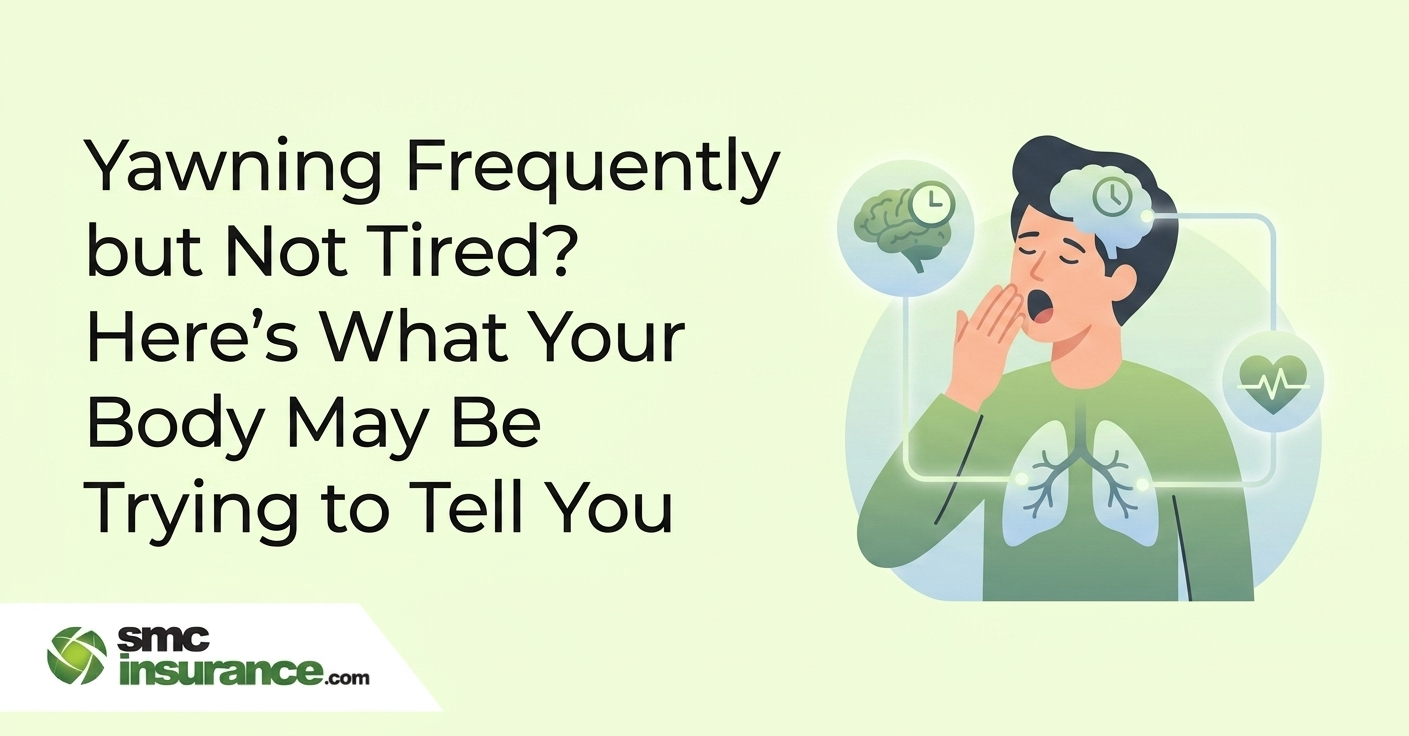

Why am I yawning frequently but not tired?
Frequent yawning without tiredness is most commonly caused by your brain's temperature regulation reflex, stress or anxiety raising your core body temperature, side effects from medications like SSRIs, or hidden poor sleep quality from conditions like sleep apnea that do not feel like classic fatigue. Low blood sugar, boredom, altitude changes and contagious yawning are also known triggers. In most cases, addressing the underlying cause (cooling your environment, managing stress, reviewing medications, or getting a sleep evaluation) resolves the pattern. If yawning is new, persistent and accompanied by dizziness, chest discomfort, numbness, or neurological symptoms, see a doctor promptly, as rare causes include cardiac and neurological conditions.
You are sitting at your desk, fully awake and you yawn. Then again, five minutes later. Nothing about you feels sleepy. You slept fine, the coffee is working and yet your body keeps pulling you into that wide, jaw-stretching reflex. It is easy to shrug it off as boredom, but that explanation falls short more often than people realise.
Frequent yawning when you are not tired is surprisingly common and it usually has nothing to do with sleep. Your body is a communication system and yawning is one of its more underused signals. It can point to your stress levels, your medications, a nerve that runs from your brain to your stomach, or in rarer cases, something that genuinely needs medical attention.
This article breaks down the most well-supported causes of yawning when you are not tired, the signs that tell you it is worth a doctor's visit and what you can do to address it.
Why You Keep Yawning Even When Not Tired: The Brain Cooling Explanation
The most widely supported reason for yawning has nothing to do with oxygen or boredom. It is temperature regulation. Your brain runs slightly warmer than the blood supplying it and it constantly needs to shed that heat. When brain temperature creeps upward, yawning works like a built-in cooling mechanism.
Here is what happens during a single yawn: the deep jaw stretch increases blood flow through the neck, head and face. The long inhale pushes cerebrospinal fluid downward and draws cooler blood into circulation. Air rushing through nasal and oral passages cools the venous blood draining from the brain. The net effect is a small but measurable drop in brain temperature within seconds.
Research has backed this up directly. Studies monitoring brain temperature in real time found that yawning consistently followed rapid temperature spikes of roughly 0.11 degree Celsius per minute, with temperature recovering almost immediately after each yawn. In documented case studies, women experiencing chronic yawning bouts showed body temperatures around 37.5 degree Celsius at the start of an episode, dropping an average of 0.4 degree Celsius after the bout ended. Practically, this means that sitting in a warm room, concentrating intensely, drinking a hot beverage, or even mild physical activity can trigger repeated yawning with zero sleepiness involved. Your brain is simply running its air conditioning.
Stress and Anxiety: A More Common Trigger Than You Think
Stress activates your sympathetic nervous system, raising your core body temperature and heart rate. That temperature increase alone can set off the cooling reflex described above. But anxiety also disrupts your breathing, causing you to take shallow, rapid breaths that fail to fully inflate the lungs. Yawning forces a reset with one deep, involuntary inhale that expands the lungs completely.
This explains why yawning spikes in anticipation of high-pressure situations. Athletes yawn before competitions. People yawn before public speaking, job interviews and tense conversations. It is not a sign of relaxation. It is your body responding to a state of heightened arousal, trying to regulate itself.
Persistent anxiety, particularly generalised anxiety disorder or chronic work stress, can make yawning a near-constant background habit throughout the day. If your yawning worsens during stressful periods and improves during calmer ones, anxiety is almost certainly part of the picture.
Medications That Quietly Cause Excessive Yawning
If you recently started or changed a medication and began yawning more, the two are likely connected. Antidepressants that work by increasing serotonin activity are the most well-documented culprits. Clinical trial data tells a clear story here:
|
Medication |
Drug Class |
Reported Yawning Rate |
|
Fluoxetine (OCD treatment group) |
SSRI |
~7% of patients |
|
Fluoxetine (bulimia treatment group) |
SSRI |
~11% of patients |
|
Citalopram |
SSRI |
~2% vs <1% on placebo |
|
Sertraline |
SSRI |
Reported side effect |
|
Clomipramine |
TCA |
Reported side effect |
|
Desipramine |
TCA |
Reported side effect |
|
Some anti-seizure medications |
Anticonvulsants |
Reported side effect |
|
Some anti-nausea medications |
Various |
Reported side effect |
Note:A 2025 prospective study confirmed that yawning increases with SSRI use and also correlates with the severity of depression itself, making it difficult to isolate whether the medication or the underlying condition is the primary driver.
The mechanism involves serotonin interacting with brainstem circuits that control the yawn reflex. This effect sometimes reduces after the first few weeks of use. If it does not, a dose adjustment or a switch to an alternative may be worth discussing with your prescriber.
The Vagus Nerve Connection You May Not Know About
The vagus nerve is the longest cranial nerve in your body. It runs from the brainstem through the chest and into the abdomen, governing heart rate, digestion and a range of involuntary functions. When it gets overstimulated, the result is a vasovagal reaction, which can cause a sudden drop in heart rate or blood pressure. One of the early warning signs of this response is excessive yawning.
Vasovagal reactions can be set off by standing up quickly, prolonged standing, dehydration, or intense emotional stress. The yawning typically comes alongside lightheadedness, a feeling of warmth, or mild nausea. These episodes are usually harmless and pass quickly when you sit or lie down.
The more serious version of this picture involves cardiac events. In rare cases, bleeding around the heart or the early stages of a heart attack can stimulate the vagus nerve and trigger sudden, repeated yawning. This remains uncommon, but it is the reason doctors take new and unexplained yawning bouts seriously when they appear alongside chest discomfort, irregular heartbeat, or unusual fatigue.
Sleep Problems That Hide in Plain Sight
Here is something counterintuitive: you can have a sleep disorder that fragments your rest without making you feel classically sleepy during the day. Obstructive sleep apnea is the clearest example. Some people with moderate to severe sleep apnea genuinely do not feel tired, because the repeated breathing disruptions trigger stress hormone surges that keep the nervous system in a hyperaroused state.
Your body expresses that hidden sleep deficit through yawning, difficulty concentrating, irritability, or morning headaches, rather than the heavy-eyed fatigue most people associate with poor sleep. The disorder stays invisible unless you or a partner notices the signs.
|
Sign to Watch For |
What It May Indicate |
|
Snoring most nights |
Possible obstructive sleep apnea |
|
Waking with dry mouth or sore throat |
Mouth breathing or apnea events |
|
Morning headaches |
Repeated oxygen dips overnight |
|
Partner notices breathing pauses |
Strong indicator of apnea |
|
Frequent yawning without daytime sleepiness |
Hidden sleep fragmentation |
|
Irritability or poor concentration |
Cognitive effects of poor sleep quality |
Note: A polysomnography (overnight sleep study) is the gold standard test for diagnosing sleep apnea. Doctors may first ask you to keep a sleep diary before ordering a formal study.
If several of these apply to you, a sleep evaluation is worth pursuing, not because you need to feel tired to have a problem, but because untreated sleep apnea carries real long-term risks including hypertension and cardiovascular disease.
Other Physical Reasons You May Be Yawning More
Beyond the main causes, several other physical factors can increase yawning frequency.
- Boredom and understimulation reduce your brain's activity level. Yawning appears to function as a stimulatory response, increasing cortical blood flow and alertness. This is not tiredness. It is your brain trying to engage itself.
- Low blood sugar is another overlooked trigger. When glucose drops below roughly 70 mg/dL, the brain gets fewer resources and may activate compensatory reflexes. Yawning spells between meals, after skipping breakfast, or during prolonged gaps in eating can reflect dipping blood sugar rather than fatigue.
- Changes in altitude or air pressure can prompt yawning as the body attempts to equalise pressure in the middle ear. This is common during flights, mountain drives, or rapid elevation changes.
- Contagious yawning is perhaps the most benign cause. Seeing, hearing, reading about, or even thinking about yawning can trigger the reflex. This appears to be linked to empathy-related brain networks and has been documented in humans and several other animals. If you have yawned once or twice reading this article, that is entirely normal.
When Yawning Signals Something That Needs Medical Attention
Most yawning, even frequent yawning, is explained by one of the causes above. Occasional yawning throughout the day is normal for a rested, healthy person. The picture changes when yawning is new, frequent, persistent and accompanied by other symptoms. Conditions where excessive yawning has been documented as a symptom include:
- Multiple sclerosis, particularly with brainstem involvement
- Epilepsy and seizure disorders
- Migraine with aura (often preceding an episode)
- Stroke and transient ischaemic attack (TIA)
- Brain tumours affecting the frontal lobe or brainstem
- Parkinson's disease and ALS
- Liver failure, experienced alongside fatigue
Baptist Health notes that a clinical threshold worth noting is 3 or more yawns every 15 minutes, several times a day, as a pattern that warrants a medical review.
The patterns to take seriously are:
-
Yawning that began suddenly with no obvious cause
-
Yawning paired with dizziness, numbness, vision changes, or coordination problems
-
Yawning that comes with chest pain, palpitations, or shortness of breath
-
Yawning that is noticeably and persistently higher than your personal baseline
If you notice any of the above, a visit to your doctor is the right call. They will typically start with a review of your medications and sleep habits and may order an ECG, blood work, a sleep study, or neurological imaging depending on what they find.
Thinking about your health coverage? If unexpected neurological or cardiac tests come your way, having the right health insurance can make a real difference to what you can access and how fast. Check your options at SMC Insurance.
Summing Up,
Yawning when you are not tired is rarely a cause for alarm. Most of the time, it is your brain managing temperature, your body signalling low-level stress, a side effect of a medication you are already taking, or a hidden gap in your sleep quality that does not feel like classic fatigue.
Your brain and heart are both closely tied to this reflex. In most cases, addressing the obvious cause, adjusting medication, improving sleep, managing stress, keeping blood sugar stable and staying hydrated, is enough to bring things back to normal. In the cases where it is not, catching it early makes all the difference.
A good health insurance plan ensures you are not delaying investigations because of cost concerns. For families, a family floater health insurance plan can cover everyone under one policy, so if any family member develops symptoms that need looking into, the financial barrier is already taken care of.
Disclaimer:The information provided on this platform is intended for general awareness and educational purposes. While every effort is made to ensure accuracy, some details may change with policy updates, regulatory revisions, or insurer-specific modifications. Readers should verify current terms and conditions directly with relevant insurers or through professional consultation before making any decision.
All views and analyses presented are based on publicly available data, internal research, and other sources considered reliable at the time of writing. These do not constitute professional advice, recommendations, or guarantees of any product’s performance. Readers are encouraged to assess the information independently and seek qualified guidance suited to their individual requirements. Customers are advised to review official sales brochures, policy documents, and disclosures before proceeding with any purchase or commitment.
FAQs
Not usually. The most common reasons for yawning when you are not tired are brain temperature regulation, stress, anxiety, certain medications and poor sleep quality that does not feel like fatigue. In the majority of cases, one of these simpler explanations applies. However, if your yawning is new, has increased significantly and comes with other symptoms such as dizziness, numbness, chest discomfort, or vision changes, it is worth speaking to a doctor. Neurological conditions like multiple sclerosis, epilepsy, or a transient ischaemic attack (TIA) have been associated with sudden, persistent yawning, though these are far less common causes.
Yes and it is more common than most people realise. Anxiety activates your sympathetic nervous system, raising core body temperature and disrupting normal breathing patterns. Both of these changes can trigger the yawn reflex. People often notice they yawn more before high-stress situations such as public speaking, exams, or difficult conversations. This is not sleepiness. It is your body's physiological response to heightened arousal. Managing stress through regular physical activity, structured breathing exercises, or professional support can reduce anxiety-related yawning over time.
SSRIs (selective serotonin reuptake inhibitors) are the most well-documented cause. Fluoxetine, citalopram, sertraline and clomipramine have all been associated with increased yawning in clinical trials and case reports. A 2025 prospective study confirmed that yawning frequency increases with SSRI use. Some anti-seizure and anti-nausea medications can also produce this effect. The mechanism relates to how serotonin interacts with brainstem circuits that control the yawn reflex. If you started yawning noticeably more after beginning or changing a medication, raise it with your prescriber. A dose adjustment or a different formulation often helps.
Possibly, yes. Obstructive sleep apnea does not always produce the classic symptom of daytime sleepiness. In some people, repeated overnight breathing disruptions trigger stress hormone surges that keep the nervous system in a hyperaroused state, making you feel awake even though your sleep quality is poor. Your body may express this hidden deficit as frequent yawning, irritability, difficulty concentrating, or morning headaches instead. If you snore regularly, wake with a dry mouth, or have a bed partner who has noticed breathing pauses during your sleep, a sleep study is worth pursuing regardless of whether you feel tired.
The vagus nerve is the longest cranial nerve in the body. It runs from the brainstem through the chest and into the abdomen, regulating heart rate, digestion and several involuntary functions. When overstimulated, it produces a vasovagal reaction: a sudden drop in heart rate or blood pressure. Excessive yawning is one of the early signs of this response, often appearing alongside lightheadedness, a sensation of warmth, or mild nausea. Common triggers include standing up quickly, dehydration, prolonged standing, or intense emotional stress. These episodes are usually harmless, but if your yawning recurs with dizziness or near-fainting, let your doctor know.
There is no universal daily threshold, but a clinical benchmark used by doctors is 3 or more yawns every 15 minutes, occurring several times a day, as a pattern worth evaluating. The more important signal is change from your personal baseline. If your yawning has noticeably increased over days or weeks for no clear reason, that shift matters more than a fixed number. Track when the yawning happens, what else is going on when it does and whether any other symptoms accompany it. That context will help your doctor narrow down the cause far more efficiently.
See a doctor if your yawning started suddenly without any clear cause, if it has increased significantly and persistently from your usual pattern, or if it comes alongside any of the following: chest pain or palpitations, dizziness or near-fainting, numbness or weakness in any part of the body, vision changes, slurred speech, or coordination problems. These combinations can indicate cardiac or neurological events that need prompt evaluation. A good starting point is your primary care physician, who will review your medications, sleep habits and symptoms and refer you for appropriate tests such as an ECG, blood work, or a sleep study if needed.


