


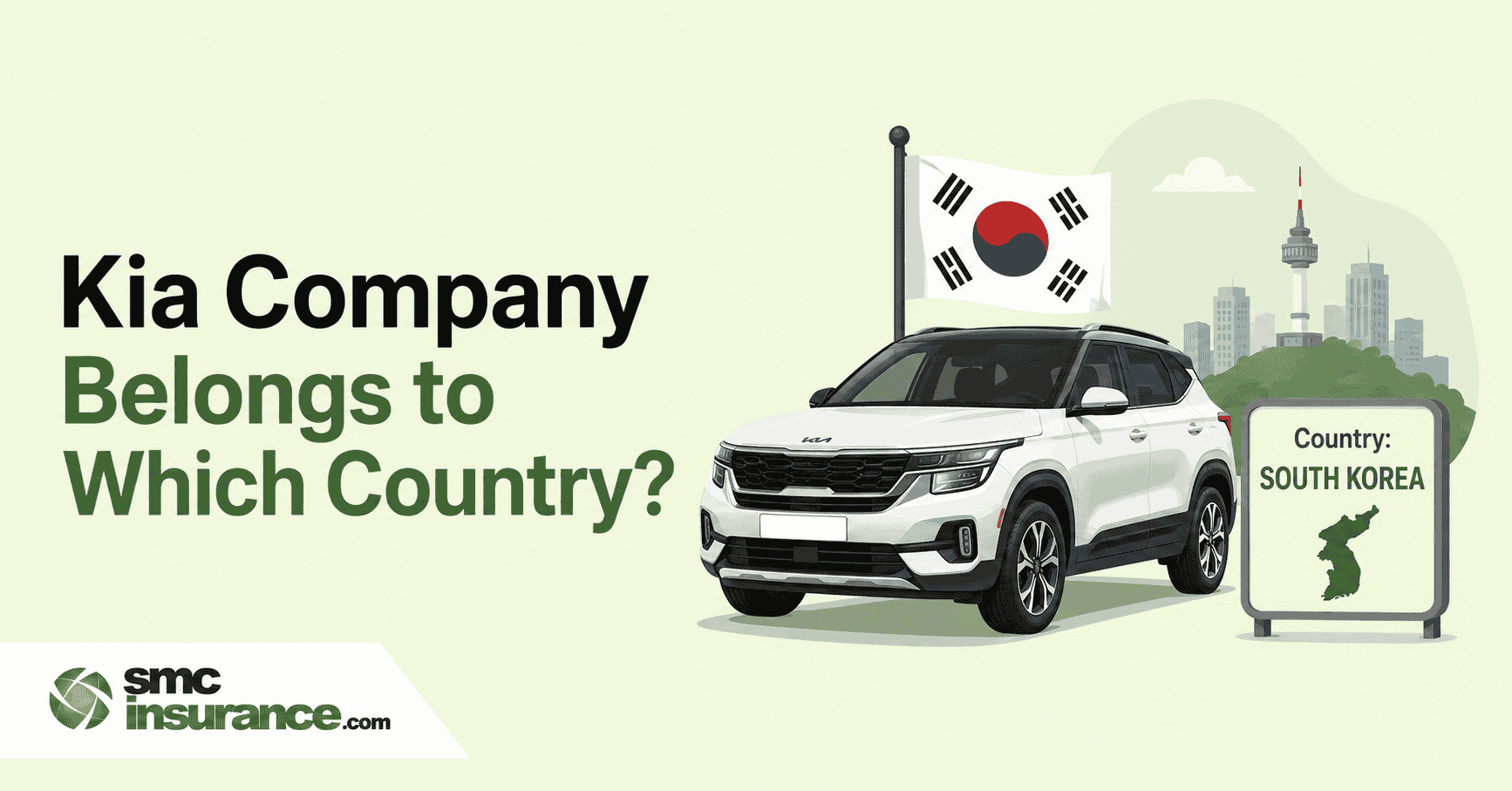

Kia belongs to South Korea. Founded in May 1944 in Seoul, it is the country's oldest motor vehicle manufacturer. After a financial crisis, Hyundai acquired a controlling stake in 1998 and today both operate under the Hyundai-Kia Automotive Group. Kia is a separate brand with its own cars, design centres and manufacturing plants. In India, Kia sells 9 models ranging from Rs. 7.33 lakh to Rs. 1.30 crore, built at its Anantapur plant in Andhra Pradesh. It holds approximately 6.3% market share in India as of May 2026.
If someone at a showroom told you Kia is a Japanese brand, they were wrong. If another person insisted it must be Chinese because of the price point, they were wrong too. Kia is a South Korean company, founded in 1944 in Seoul and it remains one of the most recognisable automotive names to come out of the Korean Peninsula. In India, Kia commenced mass production in August 2019 and quickly grabbed a serious slice of the market, with cars like the Seltos and Sonet becoming household names within a few years. This article covers where Kia comes from, how it grew into a global automaker, what its relationship with Hyundai actually means and everything relevant if you own or are planning to buy a Kia in India today.
Table of Contents
Kia Is a South Korean Company
Kia Corporation is headquartered in Seoul, South Korea. It was founded in May 1944, making it the oldest motor vehicle manufacturer in the country. The name "Kia" is drawn from Chinese characters: "ki" meaning to rise or come out of and "a" referring to Asia. Translated loosely, it means "rising out of Asia," which, given the company's global reach today, feels less like a marketing line and more like something that actually happened.
The brand started out manufacturing steel tubing and bicycle parts, then moved into motorcycles and eventually into full passenger vehicles by the 1970s. That path from bicycle maker to one of the world's largest vehicle manufacturers is not a small arc.
How Kia Became Part of the Hyundai Group?
The 1997 Asian financial crisis hit South Korean conglomerates hard. Kia, which had been operating independently, went bankrupt during that period. Hyundai Motor Company acquired a controlling stake in Kia in 1998 and the two have operated as the Hyundai-Kia Automotive Group ever since.
This is where the common confusion begins. Kia is not a sub-brand of Hyundai. It is a separate company with its own design language, product lineup and identity. The two share platforms and technology where it makes sense to do so, but a Kia Seltos and a Hyundai Creta, while built on related underpinnings, are distinct cars developed by separate teams. Kia's European design centre in Frankfurt, for instance, operates independently and has been responsible for the sharp, modern aesthetic that sets current Kia models apart even from their Hyundai siblings.
Kia's Global Scale: What the Numbers Say
In CY2025, Kia recorded its highest-ever annual global sales of 3,135,873 units, a 1.5% increase year over year and its highest-ever annual revenue of KRW 114.1 trillion (approximately USD 84.5 billion), a 6.2% increase over 2024. Electrified vehicles (HEVs, PHEVs and EVs) accounted for 749,000 units, or 24.2% of total sales, with hybrid demand leading the charge. For 2026, Kia is targeting global sales of 3.35 million units and revenue of KRW 122.3 trillion. These figures are sourced from Kia Corporation's official 2025 annual results, announced on 28 January 2026.
Kia produces vehicles across manufacturing and assembly operations in multiple countries, with facilities in South Korea, the USA, Slovakia, Mexico and India among others. Global sales reach customers through more than 3,000 distributors and dealers spread across 172 countries.
In South Korea, Kia runs three major vehicle assembly plants at Hwasung, Sohari and Kwangju. Research and development is handled at a dedicated centre in Namyang, which employs 8,000 technicians, plus a separate environmental R&D facility near Seoul focused on hydrogen fuel-cell technology and end-of-life vehicle recycling. Kia allocates roughly 6% of annual revenues to R&D, with additional research centres in the USA, Japan and Germany.
The European manufacturing plant in Zilina, Slovakia, built at a cost of EUR 1.6 billion, caters to nearly 54% of European demand for Kia vehicles and is capable of producing more than 300,000 cars per year.
|
Global Parameter |
Detail |
|
Founded |
May 1944, Seoul, South Korea |
|
Parent Group |
Hyundai-Kia Automotive Group |
|
Annual Sales (CY2025) |
3,135,873 units (highest ever) |
|
Annual Revenue (CY2025) |
KRW 114.1 trillion (~USD 84.5 billion) |
|
Global Dealer Network |
3,000+ dealers in 172 countries |
|
R&D Spend |
~6% of annual revenues |
|
2026 Sales Target |
3.35 million units |
Note: Figures sourced from Kia Corporation's official 2025 Annual Business Results (released 28 January 2026). Revenue figures are in KRW under K-IFRS accounting standards.
Kia in India: Market Share, Models & Pricing (June 2026)
Kia India Private Limited was incorporated in May 2017 following a memorandum of understanding signed with the Andhra Pradesh government and the company commenced mass production at its Anantapur plant in August 2019. The plant was purpose-built for the Indian market, a significant signal that this was not a half-hearted market entry. The results bore that out. Kia India has recorded best-ever annual sales of 280,286 units in CY2025, a 14% year-on-year increase and its highest-ever May sales of 27,586 units in May 2026, representing 23.6% year-on-year growth. Kia's market share in India stood at approximately 6.3% in May 2026, according to monthly passenger vehicle dispatch data.
Currently, Kia offers 9 models in India across SUV and MUV/MPV segments.
|
Model |
Starting Price (Ex-Showroom) |
|
Kia Sonet |
Rs. 7.33 Lakh |
|
Kia Syros |
Rs. 8.40 Lakh |
|
Kia Seltos |
Rs. 10.99 Lakh |
|
Kia Carens |
Rs. 11.00 Lakh |
|
Kia Carens Clavis |
Rs. 11.21 Lakh |
|
Kia Carens Clavis EV |
Rs. 17.99 Lakh |
|
Kia Carnival |
Rs. 59.42 Lakh |
|
Kia EV6 |
Rs. 65.97 Lakh |
|
Kia EV9 |
Rs. 1.30 Crore |
Note: Prices are indicative ex-showroom figures as of June 2026 and may vary by city and variant. Kia has announced a price increase of up to 2% across its India lineup effective 1 July 2026. Confirm current pricing with your nearest Kia dealer or at kia.com/in before purchase.
The Sonet is currently Kia India's best-selling model, having overtaken the Seltos as the top seller since early 2024 and crossing 100,000 annual units in CY2025. The Seltos, boosted by its second-generation launch in January 2026 and a record 5-star BNCAP rating in March 2026, has bounced back strongly with over 10,000 monthly units since launch. The Carens Clavis has carved out genuine space in the family MPV segment.
- Regarding upcoming launches, Kia at its 2026 CEO Investor Day officially announced plans to expand its India lineup to 10 models, of which eight will be electrified.
- Three new models confirmed are the Syros EV (expected in 2026, likely Q3), the Sorento Hybrid (expected by end of 2026) and the Carnival Hybrid (targeted by 2030 but likely by 2027).
- Alongside this, Kia is targeting annual India sales of 4.1 lakh units and a 7.6% market share by 2030 and plans to expand its dealer network to 800 outlets.
This signals that Kia's India strategy is moving decisively toward electrification and hybridisation, not just expanding the petrol and diesel range.
Why Korean Car Brands Took Off in India?
It is worth pausing on why Korean automakers, Hyundai first, then Kia, found India so receptive. Part of the reason is product positioning. Korean manufacturers figured out relatively early that Indian buyers want European design sensibility and feature richness, but within pricing bands that make sense for household budgets. That combination of looks, features and value is something Japanese and European brands historically did not prioritise in the same way for India.
Kia specifically doubled down on interior quality and connected technology, particularly through its UVO connected car platform, which allows remote control, vehicle tracking and emergency assistance via a smartphone app. You see this most in buyers comparing a Kia Seltos against a Hyundai Creta or a Maruti Grand Vitara, where the tech experience often tips the decision.
From an insurance standpoint, Korean cars like Kia tend to sit in a reasonably favourable zone when it comes to premiums. Parts availability has improved significantly since Kia set up local manufacturing and the Anantapur plant handles a large share of localisation, which typically keeps repair costs in check. That is worth knowing if you are factoring in the total cost of ownership before your purchase.
If you own a Kia and want to ensure your car insurance policy is appropriately structured, including the right add-ons like zero depreciation or return to invoice, comparing options online rather than accepting what the dealer suggests at the time of purchase can make a meaningful difference. Visit SMC Insurance to compare Kia car insurance plans from multiple insurers in one place.
Kia's Brand Identity: What Changed in 2021
Kia rebranded in January 2021, dropping "Kia Motors Corporation" in favour of simply "Kia Corporation." The name change came alongside a new logo, a new brand slogan ("Movement that inspires") and a strategic pivot toward electric vehicles and purpose-built vehicles. In India, the rebrand was reflected in April 2021. The logo redesign caused considerable confusion online at launch, with many people debating what the stylised letters actually said. But the intent was deliberate: Kia was signalling that it no longer sees itself primarily as a car company, but as a mobility company.
This shift matters in practice. The EV6, which won the World Car of the Year award in 2022, was a demonstration that Kia could compete at the top of the electric vehicle market globally, not just in the affordable segment. The EV9, priced at Rs. 1.30 Crore in India, puts Kia in conversation with premium European SUV brands in a way that would have seemed ambitious even five years ago.
Must-Read Guides From SMC
Summing Up
Kia is a South Korean company, founded in 1944 in Seoul and currently operates as part of the Hyundai-Kia Automotive Group following Hyundai's acquisition of a controlling stake in 1998. It is not a Chinese brand, not a Japanese brand and not a subsidiary of Hyundai in the sense of being a sub-label. It is a distinct automaker with its own products, design philosophy and manufacturing footprint across multiple countries.
In India, Kia commenced mass production in August 2019 with its Anantapur plant in Andhra Pradesh and has built approximately 6.3% market share in a competitive landscape, with best-ever annual sales of 280,286 units in CY2025. Its current India lineup spans from the Rs. 7.33 lakh Sonet to the Rs. 1.30 crore EV9, covering compact SUVs, mid-size SUVs, MPVs and electric vehicles. The Syros EV, Sorento Hybrid and Carnival Hybrid are confirmed additions to the range, with Kia targeting 4.1 lakh annual sales and a 7.6% market share in India by 2030.
If you own a Kia, keeping your car insurance updated and correctly structured matters more than most people realise. For relevant reading on Kia insurance coverage and how to manage your premiums smartly, take a look at Kia Car Insurance on SMC Insurance and How to Lower Your Car Insurance Premium Without Reducing Coverage.
Disclaimer: The information provided on this platform is intended for general awareness and educational purposes. While every effort is made to ensure accuracy, some details may change with policy updates, regulatory revisions, or insurer-specific modifications. Readers should verify current terms and conditions directly with relevant insurers or through professional consultation before making any decision.
All views and analyses presented are based on publicly available data, internal research and other sources considered reliable at the time of writing. These do not constitute professional advice, recommendations, or guarantees of any product's performance. Readers are encouraged to assess the information independently and seek qualified guidance suited to their individual requirements. Customers are advised to review official sales brochures, policy documents and disclosures before proceeding with any purchase or commitment.
FAQs
Kia Corporation belongs to South Korea. It was founded in May 1944 in Seoul and remains headquartered there. It is the oldest motor vehicle manufacturer in South Korea and is currently part of the Hyundai-Kia Automotive Group.
Hyundai Motor Company acquired a controlling stake in Kia in 1998 after Kia's bankruptcy during the Asian financial crisis. The two operate as the Hyundai-Kia Automotive Group. However, Kia is a separate company with its own management, vehicle lineup and brand identity. It is not simply a badge variation of Hyundai.
Kia manufactures its India-sold vehicles at its plant in Anantapur Andhra Pradesh. The facility was purpose-built for the Indian market and commenced mass production in August 2019. Models like the Seltos, Sonet, Carens and Syros are produced here. The Carnival, EV6 and EV9 are currently imported as CBUs. Local manufacturing helps keep localisation levels high and reduces dependence on imports, which in turn has a positive effect on spare parts availability and repair costs.
The name Kia is derived from Chinese characters: "ki" meaning to rise or emerge and "a" referring to Asia. The intended meaning is "rising out of Asia," which reflects the company's South Korean origins and global ambitions.
Kia has built strong traction in India since 2019, recording its best-ever annual sales in CY2025 at 280,286 units. Its cars are rated well for feature density, design and driving quality. The new-generation Seltos earned a 5-star Bharat NCAP rating with a combined score of 76.70 (the highest for any ICE vehicle tested under BNCAP to date) and the Sonet and Carens Clavis both have loyal owner bases. Parts availability has improved significantly with local manufacturing in Andhra Pradesh, which also has a positive effect on repair costs and, by extension, insurance premiums.
Kia's manufacturing presence in India through its Anantapur plant has improved spare parts availability considerably. This generally keeps repair costs reasonable and works in the buyer's favour when insurers calculate own-damage premiums. However, for premium or EV models where components may still be imported (Carnival, EV6, EV9 are currently CBU imports), it is worth adding relevant add-ons like engine protection or zero depreciation to your comprehensive policy.


