


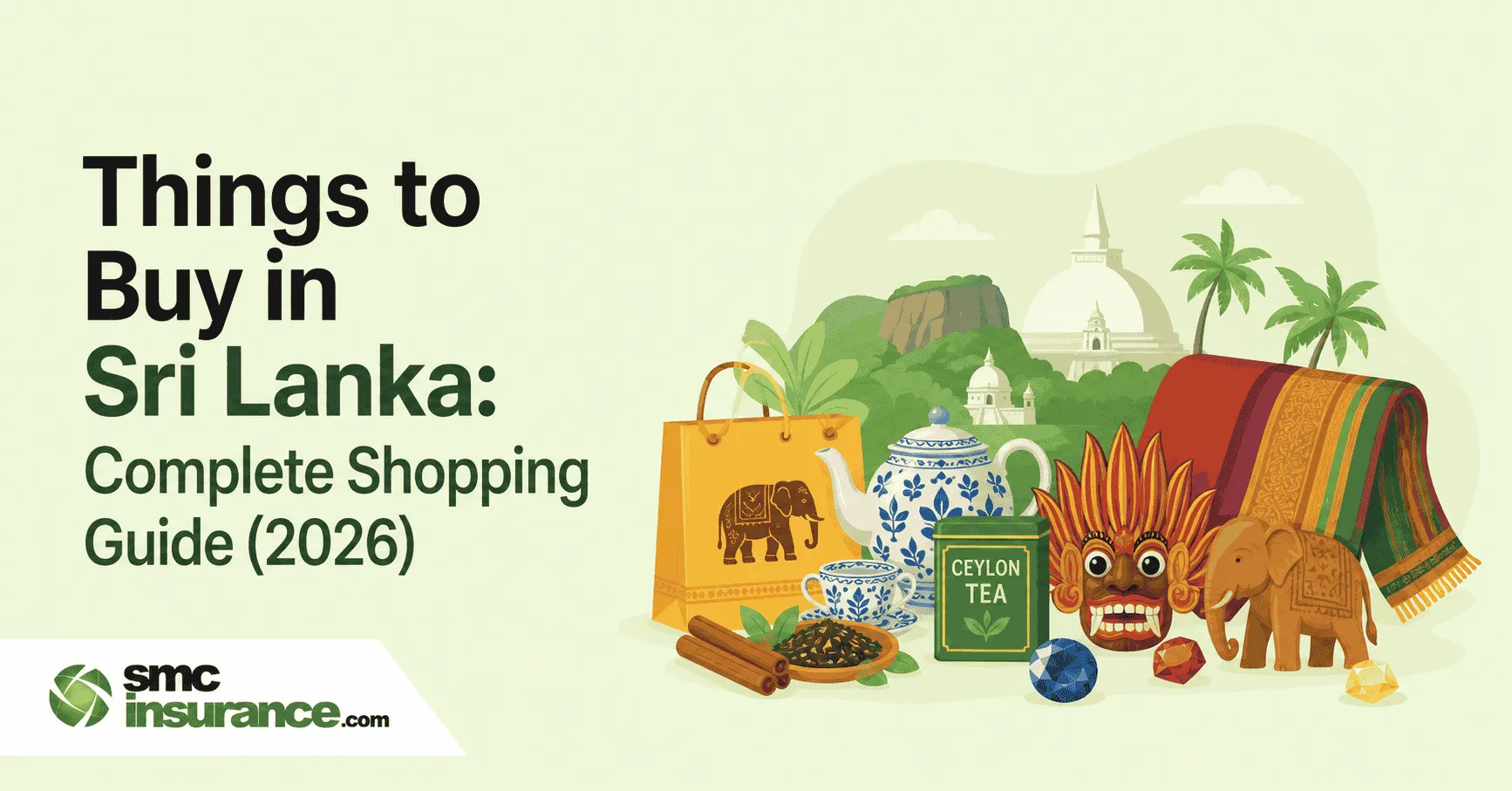

The best things to buy in Sri Lanka are Ceylon tea, certified gemstones, handloom batik, true Ceylon cinnamon and spices, and handicrafts like Ambalangoda masks and Kandyan brassware. The real skill isn't knowing the list — it's avoiding the fakes: Cassia sold as cinnamon, machine-printed cloth sold as batik, and uncertified stones sold as natural gems. Indian tourists should also know the 2026 customs duty-free allowance for bringing purchases home is ₹75,000.
Table of Contents
- What to Buy in Sri Lanka — Quick List
- Ceylon Tea — What to Buy and Where
- Gemstones — Buy Right or Don't Buy at All
- Spices — The Cinnamon Trap
- Batik and Handloom Textiles
- Handicrafts and Souvenirs
- Where to Shop — Markets, Malls and Government Stores
- Common Mistakes People Make Shopping in Sri Lanka
- Bringing Your Purchases Back to India — 2026 Customs Rules
- Master Shopping Checklist
- Final Checklist, Before You Fly Home
Every Sri Lanka shopping guide lists the same five things: tea, gems, batik, spices, handicrafts. That part isn't wrong — it's just not the useful part. The useful part is knowing that the cinnamon in most tourist shops isn't real Ceylon cinnamon, that a lot
of "batik" is machine-printed, and that gem sellers routinely pass off treated stones as natural ones.
This article does something most of the ranking pages don't: it separates what to actually buy and how to tell the real thing from the tourist-trap version, from what to watch out for — and, since most shopping guides are written for a global audience, exactly what Indian tourists need to know about bringing purchases home under the customs rules that changed earlier this year.
Last updated: August 2026, including the current Indian Baggage Rules 2026 duty-free allowance.
What to Buy in Sri Lanka — Quick List
- Ceylon tea — from specialty boutiques, not generic supermarket blends
- Certified gemstones — sapphires, rubies, cat's eye, from NGJA-registered dealers only
- True Ceylon cinnamon and other spices — cardamom, pepper, cloves, nutmeg
- Handloom textiles and genuine hand-drawn batik
- Ambalangoda wooden masks and Kandyan brassware
- Ayurvedic products — herbal oils and natural skincare
Ceylon Tea — What to Buy and Where
Ceylon tea remains Sri Lanka's most recognised export, and it's genuinely worth buying here over anywhere else. Quality ranges from Orange Pekoe (the highest common grade) down to everyday blends.
Where to Buy |
Why |
Dilmah or Mlesna boutiques, Colombo |
Specialty tea houses with reliable grading and sealed packaging |
Tea estate shops, Nuwara Eliya / Kandy |
Guided tastings and the chance to pick a custom blend |
Sri Lanka Tea Board Sales Centre |
Government-backed source for verified Ceylon tea |
Airport boutiques (last resort) |
Convenient for last-minute buys, but prices run highest here |
Gemstones — Buy Right or Don't Buy at All
Sri Lanka is genuinely one of the world's best places to buy blue sapphires, rubies and cat's eye stones at prices well below international retail. It's also where synthetic and heat-treated stones get sold at natural-stone prices more often than tourists realise.
Warning
Buy only from NGJA-registered dealers, and always get a gemological certificate (from NGJA or another
recognised gem-testing laboratory) handed over with the stone, not promised for later. Separately from
certification, any gemstone or piece of jewellery you take out of the country needs NGJA export
clearance regardless of value, so keep the original invoice and be ready to declare gem
purchases at the airport's NGJA/Customs gem counter.
- Buy only from NGJA-registered dealers — ask to see the registration, not just a shop certificate.
- Ratnapura is the traditional mining source; Colombo has the widest range of certified showrooms.
- Always get the gemological certificate physically handed over with the stone, not promised separately.
Tip: Claim your VAT back on gem and jewellery purchases
Since July 2025, Sri Lanka's Tourist VAT Refund Counter lets foreign visitors reclaim VAT on purchases of LKR 50,000 or more (VAT-inclusive) from registered merchants. You'll need original receipts and the goods on hand for inspection before departure; apply at the refund counter before you fly out.
Spices — The Cinnamon Trap
This is the single most common authenticity mistake tourists make in Sri Lanka, and almost no shopping guide explains it clearly.
Feature |
True Ceylon Cinnamon |
Cassia (often sold as cinnamon) |
Bark texture |
Thin, flaky, easy to crumble |
Thick, hard, woody |
Rolled form |
Multiple thin layers rolled together |
Single thick curl |
Flavour |
Sweeter, more delicate |
Sharper, stronger, slightly bitter |
Price |
Higher |
Cheaper — and often mislabelled as the real thing |
Beyond cinnamon, look for cardamom, black pepper, cloves and nutmeg — spice gardens along the Kandy–Matale road offer guided walks with on-site sales, and government emporiums tend to have more transparent pricing than roadside stalls.
Batik and Handloom Textiles
Genuine batik is wax-resist dyed by hand, which shows up as slight irregularities in the pattern. A lot of what's sold in tourist shops is machine-printed to look like batik at a fraction of the effort.
- Look closely for slight pattern irregularities — hand-drawn batik is never perfectly uniform.
- Selyn and similar fair-trade handloom brands guarantee genuine handwoven textiles.
- Ask directly whether a piece is hand-drawn or machine-printed — reputable shops will tell you honestly.
Handicrafts and Souvenirs
Item |
Where It's Made / Sold |
Wooden masks (demon, dance masks) |
Ambalangoda — the traditional home of Sri Lankan mask-making |
Brassware (oil lamps, elephants, ritual vessels) |
Pilimatalawa, near Kandy — a recognised brassware workshop hub |
Government-backed handicrafts |
Laksala outlets — state-run, reliable authenticity, fixed pricing |
Antiques (50+ years old) |
Requires an export licence under the Cultural Property Act (apply via the Department of Archaeology / Controller of Exports; rare books, palm-leaf manuscripts and anthropological items are cleared through the Director, National Archives). Without it, items are confiscated at customs. |
Where to Shop — Markets, Malls and Government Stores
Shopping Venue |
Best For |
Bargaining? |
Pettah Market, Colombo |
Everyday goods, spices, fabric, bargain hunting |
Yes, expected |
Galle Fort / Kandy Central Market |
Antiques, crafts, local flavour |
Yes, in smaller shops |
Laksala (government outlets) |
Authentic handicrafts at fixed, fair pricing |
No — fixed prices |
One Galle Face / Colombo City Centre malls |
Modern retail comfort, fixed-price convenience |
No |
Bandaranaike Airport boutiques |
Last-minute tea, spice and gem purchases |
No — highest prices in the country |
Haggling is expected in open markets and small craft shops, but not in malls, government emporiums, or fixed-price boutiques. A common local rule of thumb is to start your counter-offer around 40% of the asking price and negotiate from there — politely, and with a smile.
Common Mistakes People Make Shopping in Sri Lanka
- Buying "cinnamon" without checking whether it's thin and flaky (real) or thick and hard (Cassia).
- Assuming all batik is hand-drawn — much of what's sold to tourists is machine-printed.
- Buying gemstones above LKR 50,000 without an NGJA certificate in hand.
- Doing all your shopping at the airport — it consistently has the highest prices and narrowest selection.
- Overpacking perishables for a long flight home — kithul jaggery and dodol travel fine for 4–6 weeks; oil cakes and milk-based sweets don't.
- Buying wood, ivory-look items, or seed-based products without checking destination-country import restrictions.
Bringing Your Purchases Back to India — 2026 Customs Rules
This is the part most Sri Lanka shopping guides skip entirely, and it changed earlier this year. India's Baggage Rules 2026, effective 2 February 2026, raised the general duty-free allowance for returning Indian residents from ₹50,000 to ₹75,000.
Rule |
2026 Limit |
General duty-free allowance (Indian residents/OCI, arriving by air or sea) |
₹75,000 |
Gold jewellery — women resident abroad 1+ year |
40 grams, duty-free |
Gold jewellery — other passengers |
20 grams, duty-free |
Laptop allowance |
1 unit duty-free per passenger aged 18+, separate from the ₹75,000 limit |
Goods above the duty-free limit |
Taxed at a flat 10% on the excess value, under the 2026 rules |
Keep every purchase receipt, especially for gemstones and higher-value handicrafts — you'll want them both for the NGJA certificate trail and in case you need to declare goods above your allowance at the Red Channel.
Pro Tip
If you're travelling with valuable purchases — certified gemstones, jewellery, or fragile antiques — check that your travel insurance
covers baggage loss and valuables in transit before you fly home, not after something goes missing.
Master Shopping Checklist
Category |
Buy |
Verify Before Paying |
Tea |
Orange Pekoe or estate-specific blends |
Sealed packaging, boutique or estate source |
Gems |
Sapphires, rubies, cat's eye |
NGJA certificate for anything above LKR 50,000 |
Spices |
True cinnamon, cardamom, pepper |
Thin, flaky bark — not thick Cassia |
Textiles |
Hand-drawn batik, handloom |
Slight pattern irregularity confirms hand-drawn |
Handicrafts |
Masks, brassware, wood carving |
Laksala or known workshop origin |
Antiques |
50+ years old items |
Central Cultural Fund export permit in hand |
Final Checklist, Before You Fly Home
- All gemstone purchases have their NGJA certificates physically in hand.
- Cinnamon and spice purchases checked for authenticity, not just price.
- Total purchase value estimated against the ₹75,000 Indian duty-free allowance.
- Antiques over 50 years old have the required Central Cultural Fund export permit.
- Fragile items (masks, brassware, lacquerware) properly boxed for checked baggage.
- Receipts kept for every higher-value purchase, in case of a customs declaration.
Sri Lanka's shopping scene rewards a little homework — the difference between a real souvenir and a tourist-trap fake usually comes down to knowing exactly what to check before you pay. Buy from the sources in this guide, verify what you can, and you'll come home with things actually worth the suitcase space.
Disclaimer: The information provided on this platform is intended for general awareness and educational purposes. While every effort is made to ensure accuracy, some details may change with policy updates, regulatory revisions, or insurer-specific modifications. Readers should verify current terms and conditions directly with relevant insurers or through professional consultation before making any decision.
All views and analyses presented are based on publicly available data, internal research, and other sources considered reliable at the time of writing. These do not constitute professional advice, recommendations, or guarantees of any product’s performance. Readers are encouraged to assess the information independently and seek qualified guidance suited to their individual requirements. Customers are advised to review official sales brochures, policy documents, and disclosures before proceeding with any purchase or commitment.
FAQs
Ceylon tea, certified gemstones, true Ceylon cinnamon, hand-drawn batik textiles, and handicrafts like Ambalangoda masks or Kandyan brassware are the most popular and genuinely worthwhile souvenirs. Government-run Laksala outlets are a reliable starting point if you want authenticity without doing extensive research yourself.
Real Ceylon cinnamon has thin, flaky bark rolled into multiple delicate layers and crumbles easily. Cassia, the cheaper substitute frequently sold as cinnamon, has thick, hard, woody bark rolled into a single curl. If it feels sturdy rather than delicate, it's probably Cassia.
Yes, for anything above LKR 50,000. Always insist on a certificate from the National Gem and Jewellery Authority (NGJA) before buying, and buy only from NGJA-registered dealers. Uncertified stones are frequently synthetic or heat-treated despite being priced as natural.
Under India's Baggage Rules 2026, effective 2 February 2026, returning Indian residents get a general duty-free allowance of ₹75,000, up from the earlier ₹50,000. Goods above this limit are taxed at a flat 10% on the excess value. Gold jewellery has a separate weight-based allowance of 40 grams for women and 20 grams for other passengers who've been abroad a year or more.
Yes, in open markets and small craft shops — starting your counter-offer around 40% of the asking price is a common local guideline. Bargaining isn't appropriate in malls, government emporiums like Laksala, or fixed-price boutiques.
Airport boutiques are convenient for last-minute tea, spice or gem purchases, but they consistently have the highest prices and the narrowest product range in the country. Treat the airport as a backup, not your main shopping stop.
Antiques over 50 years old require an export permit from Sri Lanka's Central Cultural Fund. Without this permit, such items will be confiscated at customs, regardless of how they were purchased.


