


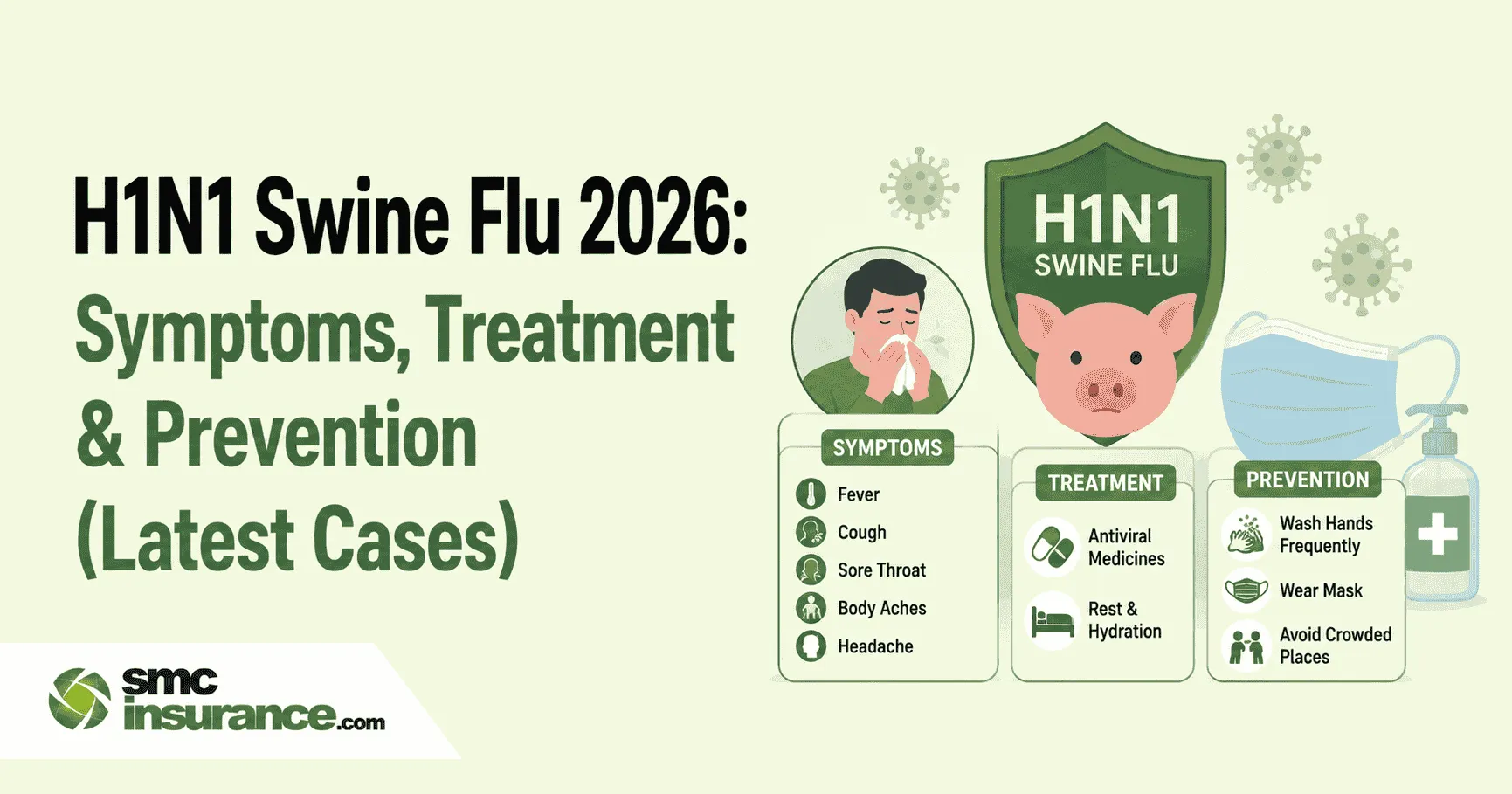

H1N1 (swine flu) is a seasonal strain of Influenza A that's currently surging in India during the August–October 2026 monsoon peak, with Delhi alone reporting 1,349 cases this season, nearly six times last year's count.Symptoms mirror regular flu: fever, cough, sore throat and body aches. Most healthy adults recover in 5–7 days, but pregnant women, young children, the elderly and those with chronic conditions face higher risk of complications and should seek care early.
If you've had a stubborn fever this monsoon and everyone around you keeps mentioning swine flu, you're not imagining the surge. Delhi's H1N1 count has jumped sixfold compared to last year, and states
across the country are seeing a similar pattern as the monsoon peak sets in.
This article covers what's actually happening right now — real case numbers, not just generic symptom lists — along with how to tell H1N1 apart from the dengue cases circulating at the same time, who's
genuinely at risk, and when a fever needs more than rest and paracetamol.
Last updated: August 2026. Case figures are based on the latest state health department statements available at the time of writing and will change as the season
progresses — always check current numbers with your local health authority.
Medical Disclaimer
This article is for general information only and is not a substitute for professional medical advice, diagnosis or treatment.
Always consult a qualified doctor for symptoms, testing or medication decisions.
Table of Contents
- H1N1 Cases in India Right Now: August 2026 Update
- Why H1N1 Peaks Twice a Year in India
- H1N1 Symptoms: What to Watch For
- H1N1 vs Dengue vs Seasonal Flu: How to Tell Them Apart
- Who Is Most at Risk
- H1N1 Treatment: What Actually Happens
- H1N1 Prevention: What Actually Works
- H1N1 Vaccine: Cost and Availability
- Hospitalisation, Treatment Cost and Health Insurance
- Common Mistakes People Make With H1N1
- Final Checklist: What to Do This Season
H1N1 Cases in India Right Now: August 2026 Update
Here's where things stand in the areas seeing the sharpest rise this season.
Location |
Latest Reported Update |
Deaths This Season |
Delhi |
Delhi's Health Minister confirmed zero official H1N1 deaths as of 7 August 2026, extending a run of zero recorded fatalities in the city since 2020, including 3,151 cases in 2024 alone with no reported deaths. However, medical news outlets have since reported a hospital-confirmed H1N1-linked death (a child under four) at BLK-Max Hospital, which authorities have not officially added to the government tally. |
Zero deaths reported as of 7 Aug 2026, per Delhi's Health Minister |
Karnataka |
Active alert following a fatality in Uttara Kannada district |
One confirmed death (21 June 2026) after delayed hospital care |
Maharashtra (Nagpur) |
First H1N1-linked death of 2026 reported in the region |
At least one confirmed death |
Delhi (2024 season, for comparison) |
3,151 cases, second-highest nationally that year |
Zero deaths recorded |
Delhi's own numbers make an important point: high case counts don't automatically mean high fatality. The city logged zero H1N1 deaths every year from 2020 through September 2025 despite thousands of confirmed cases, the outcome depends heavily on how early treatment starts, not just on how many people catch it.
Why H1N1 Peaks Twice a Year in India
Unlike a single flu season, India typically sees two distinct H1N1 peaks: one from January to March, and a second from August to October during and after the monsoon. The exact timing varies by state, but this two-peak pattern is well established and explains why swine flu headlines resurface twice annually rather than once.
- Winter peak (Jan–Mar): cooler, drier conditions favour virus survival and indoor crowding.
- Monsoon/post-monsoon peak (Aug–Oct): humidity, waterlogging and indoor gathering during rains create a second wave.
- Urban and peri-urban areas see the highest case density, though rural areas aren't spared.
- Closed populations, hostels, army barracks, schools, religious gatherings, see disproportionately high attack rates.
H1N1 Symptoms: What to Watch For
H1N1 symptoms are nearly identical to seasonal flu, which is exactly why it's easy to dismiss early on.
Common Symptoms |
Warning Signs: Seek Care Immediately |
Fever (not always present) |
Difficulty breathing or shortness of breath |
Cough and sore throat |
Persistent chest pain or pressure |
Body aches and headache |
Sudden dizziness or confusion |
Chills and fatigue |
Severe or persistent vomiting |
Runny or stuffy nose |
Symptoms that improve then suddenly worsen |
H1N1 vs Dengue vs Seasonal Flu: How to Tell Them Apart
This monsoon, Delhi is tracking H1N1 and dengue at almost the same volume, 1,349 H1N1 cases alongside 1,379 dengue cases. Both start with fever, which causes real diagnostic confusion. Here's a rough guide, though only a test can confirm which one you actually have.
Feature |
H1N1 (Swine Flu) |
Dengue |
Onset |
Sudden fever with respiratory symptoms |
Sudden high fever, often without cough |
Key signs |
Cough, sore throat, body aches |
Severe joint/muscle pain, rash, low platelet count |
Transmission |
Person-to-person via respiratory droplets |
Mosquito-borne (Aedes aegypti) |
Confirmation |
RT-PCR / rapid antigen test |
NS1 antigen or platelet count / dengue test |
Don't self-diagnose based on symptoms alone. If you have a persistent fever during this season, get tested rather than guessing, the treatment for each is different.
Who Is Most at Risk
Most healthy adults recover from H1N1 within 5–7 days without complications. Certain groups face meaningfully higher risk and should seek medical attention as soon as symptoms appear, not after a few days of waiting it out.
- Pregnant women
- Children under 5 years
- Adults over 65
- People with diabetes, heart disease, or chronic respiratory conditions
- Individuals who are immunocompromised
Important Note
The Karnataka death in June 2026 involved a 41-year-old man who was not elderly and had no reported chronic condition, he sought care at
three separate hospitals over 11 days before antiviral treatment began. His case is a reminder that delayed treatment, not just
underlying risk factors, is itself a major risk in H1N1.
H1N1 Treatment: What Actually Happens
Treatment for most people is supportive, not aggressive, the same basic care you'd expect for any flu, with close monitoring for anyone in a high-risk group.
- Consult a doctor as soon as flu-like symptoms appear, especially during an active outbreak period.
- Get tested if your doctor recommends it, particularly if you're in a high-risk group or symptoms are severe.
- Antiviral medication such as oseltamivir may be prescribed, it works best when started within 48 hours of symptom onset, so don't delay a doctor visit.
- Rest, stay well hydrated, and use fever-reducing medication only as directed by your doctor.
- Isolate at home if symptoms are mild, to avoid spreading the infection to others.
- Seek emergency care immediately if breathing difficulty, chest pain, or sudden worsening occurs.
H1N1 Prevention: What Actually Works
There's no single precaution that eliminates risk, prevention works best as a combination of habits, not one silver bullet.
- Annual flu vaccination, which includes protection against the circulating H1N1 strain, get it ahead of the monsoon season if possible.
- Regular handwashing, especially after being in crowded public spaces.
- Wearing a mask in crowded or poorly ventilated indoor settings during an active outbreak.
- Avoiding close contact with anyone showing flu-like symptoms.
- Ensuring good ventilation in shared indoor spaces, homes, offices, classrooms.
- Staying home when unwell, rather than pushing through symptoms at work or school.
H1N1 Vaccine: Cost and Availability
The H1N1 strain is included in the standard seasonal influenza vaccine rather than requiring a separate shot. Private clinics in India typically charge approximately Rs. 700 to Rs. 1,500 for the vaccine, though exact pricing varies by clinic and city. It's worth checking with your regular doctor ahead of the next seasonal peak rather than waiting until cases are already climbing.
Hospitalisation, Treatment Cost and Health Insurance
Most H1N1 cases are managed at home, but severe cases, particularly in high-risk groups, can require hospitalisation, oxygen support, or ICU care in rare complications like viral pneumonia. This is where a health insurance policy with adequate sum insured and cashless hospitalisation makes a practical difference, since flu-related hospital stays are typically covered like any other acute illness under a standard health policy.
Pro Tip
If you're hospitalised for H1N1 or any acute respiratory illness, check whether your hospital is in your insurer's cashless network
before treatment begins where possible, it significantly reduces the paperwork and upfront payment burden during an already stressful
time.
Common Mistakes People Make With H1N1
- Dismissing it as "just viral fever" and delaying a doctor visit This is exactly what turned a manageable case fatal in the Karnataka death.
- Self-medicating with antivirals without a prescription Oseltamivir requires medical supervision and timing.
- Assuming dengue and H1N1 can be told apart by symptoms alone During a season when both are circulating.
- Skipping the flu vaccine because "it's just the flu" Vaccination remains the single most effective preventive step available.
- Returning to work or school too soon while still symptomatic Spreading the infection further.
Final Checklist: What to Do This Season
- Get your seasonal flu vaccine if you haven't already, especially if you're in a high-risk group.
- Don't wait more than a day or two before consulting a doctor if fever and respiratory symptoms appear together.
- Ask specifically about testing if dengue is also active in your area, don't assume based on symptoms alone.
- Know your nearest cashless-network hospital in case hospitalisation becomes necessary.
- Isolate at home with mild symptoms rather than continuing normal routines around others.
H1N1 isn't a new or exotic threat — it's a seasonal virus India has managed for over a decade, and most people recover without incident. The real risk this season, as Delhi's own numbers show, isn't the virus itself but how early treatment starts. Don't wait out a persistent fever; get it checked.
Disclaimer: The information provided on this platform is intended for general awareness and educational purposes. While every effort is made to ensure accuracy, some details may change with policy updates, regulatory revisions, or insurer-specific modifications. Readers should verify current terms and conditions directly with relevant insurers or through professional consultation before making any decision.
All views and analyses presented are based on publicly available data, internal research, and other sources considered reliable at the time of writing. These do not constitute professional advice, recommendations, or guarantees of any product’s performance. Readers are encouraged to assess the information independently and seek qualified guidance suited to their individual requirements. Customers are advised to review official sales brochures, policy documents, and disclosures before proceeding with any purchase or commitment.
FAQs
Yes. India is in its August–October seasonal peak, and several states are reporting sharp increases. Delhi alone has logged 1,349 cases this season, nearly six times last year's count for the same period, alongside isolated fatalities reported in Karnataka and Maharashtra.
Early symptoms typically include fever, cough, sore throat, body aches, chills and fatigue — closely resembling ordinary seasonal flu. Because the symptoms overlap so closely with regular flu and even dengue, testing is the only reliable way to confirm H1N1 specifically.
H1N1 is a respiratory virus spread person-to-person, causing cough and sore throat alongside fever. Dengue is mosquito-borne, typically causes severe joint and muscle pain with a possible rash, and doesn't usually involve respiratory symptoms. Both are circulating simultaneously this monsoon, so testing is essential rather than guessing from symptoms.
Yes, though most cases resolve without complications. Fatalities are more likely among high-risk groups or when treatment is delayed — as seen in the June 2026 Karnataka case, where a 41-year-old man died after seeking care too late. Early medical attention significantly reduces this risk.
The H1N1 strain is included in the annual seasonal flu vaccine, and vaccination remains the most effective preventive measure available. It doesn't guarantee zero infection risk but meaningfully reduces the chance of severe illness.
If you have a persistent or high fever during an active outbreak period, especially alongside respiratory symptoms, consult a doctor about testing rather than assuming it's routine viral fever. Given how closely H1N1, dengue and seasonal flu symptoms overlap this season, a test is the only way to know which one you actually have.


