


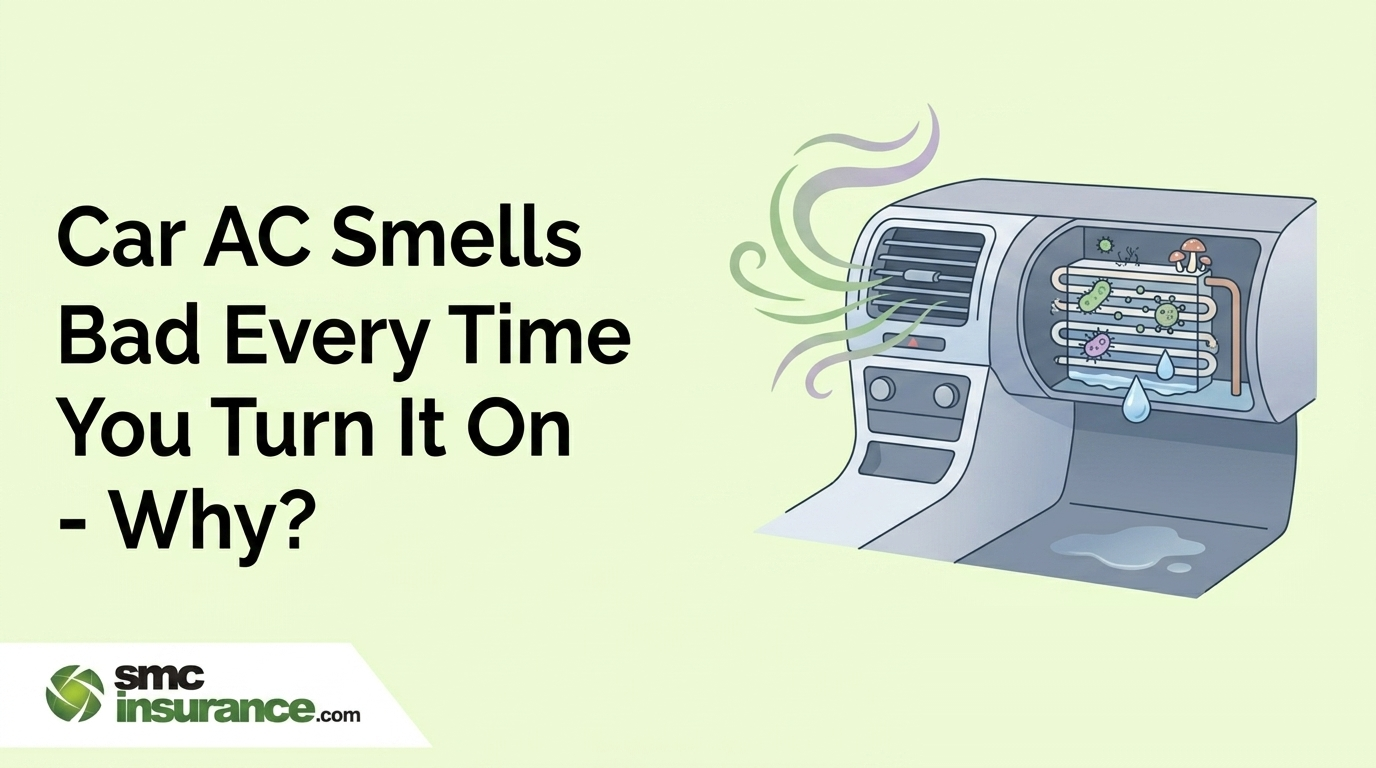

Why does car AC smell bad every time you turn it on?
The most common reason is mold or mildew growing on the evaporator coil inside the dashboard, which forms when moisture from the air conditioning process does not drain fully and sits in a dark, humid environment. A clogged cabin air filter and bacterial buildup in the ducts are the other frequent causes. A sweet smell points to a coolant leak; a chemical smell suggests a refrigerant issue. The fix for most cases involves replacing the cabin air filter (Rs. 300 to Rs. 1,200) and using an AC cleaning spray. Switching off the AC two minutes before parking is the most effective free habit to prevent the problem from recurring. Persistent smells after DIY treatment need a professional evaporator clean, which costs Rs. 800 to Rs. 3,000 at most Indian service centres.
You get into your car on a hot day, hit the AC button and instead of cool, fresh air, you get a blast of something that smells like a wet towel left in a gym bag. It's unpleasant, it lingers and no amount of windows-down driving seems to fix it. Sound familiar?
Most car owners in India deal with this problem, especially after the monsoon or after the car has been parked for a few weeks. The smell is not just a nuisance. In some cases, it is a sign of a problem that can get worse and costlier if ignored. Just as routine maintenance helps prevent unexpected repair bills, having the right car insurance can protect you from other costly surprises that come with vehicle ownership. By the end of this article, you will know exactly what is causing that smell, how to fix it and how to make sure it does not come back.
Table of Contents
Why Car AC Smells Bad: The Most Common Causes
The smell you notice is not random. Different odours point to different root causes inside your car's climate control system. Here is a breakdown of what each smell usually means.
Mould and Mildew on the Evaporator Coil
This is the single most common reason your car AC smells bad and it is especially common in humid cities like Mumbai, Chennai, Kolkata and Kochi. The evaporator coil sits inside the dashboard and is responsible for cooling the air before it enters the cabin. As it cools the air, it also pulls moisture out of it. That moisture sits inside a dark, confined space and if it does not drain properly, mould and mildew begin to grow.
The result is a musty, damp, sour smell that hits you the moment the AC starts. The longer you leave it, the deeper the mold gets into the system. Older cars are more prone to this because their drainage lines are more likely to be partially blocked.Clogged or Dirty Cabin Air Filter
The cabin air filter sits between the outside air inlet and your car's interior. Its job is to trap dust, pollen and other particles before they enter the cabin. Over time, this filter becomes saturated with debris and in a humid environment, it can trap moisture too. A clogged filter restricts airflow, promotes mold growth and pushes stale, dusty air into the car every time you switch on the AC.
Most car manufacturers recommend replacing the cabin air filter every 12,000 to 15,000 kilometres. Many car owners in India skip this entirely for years. If you have never changed yours, there is a good chance it is the source of the smell.Bacterial Growth in the System
Bacteria thrive in damp, warm environments. The inside of a car's AC system, with its moisture and organic matter like skin cells and dust, provides exactly that. Bacterial colonies can settle into the evaporator coil, the ducts and the filter housing. The smell they produce ranges from mildly musty to genuinely foul and it can sometimes be mistaken for a drainage or sewage odour.
Running the AC on recirculation mode for long periods makes this worse. When outside air does not flow through the system, bacterial buildup accelerates.Antifreeze or Coolant Leak
A sweet, slightly syrupy smell coming from the vents is not pleasant and should not be ignored. This usually points to a leak in the heater core, which is a small radiator inside the dashboard that uses coolant to warm the cabin in cold weather. When the heater core develops a leak, coolant vapour enters the ventilation system and gets blown into the cabin.
If you notice this smell alongside fogging on the inside of the windscreen that does not go away easily, or small greasy droplets on the inside of the glass, the heater core is almost certainly leaking. This is a serious repair and should be addressed promptly.Refrigerant Leak
A sweet or slightly chemical smell, sometimes compared to ether, can indicate a refrigerant leak. Refrigerant is the substance that makes cooling possible in the AC system. Besides causing a smell, a refrigerant leak will reduce your AC's cooling performance noticeably. If the system is blowing warm or barely cool air alongside the smell, have a technician check for a refrigerant leak.Exhaust or Burning Smell Through the Vents
If you smell engine exhaust or something burning when the AC is on, the issue is not inside the AC system itself. The car's ventilation intake, located near the base of the windscreen, can pick up exhaust fumes if there is a leak in the exhaust system, or if you are idling in traffic with the windows down and the AC intake open. A burning smell can also come from an overheating engine, worn belts, or brake dust entering the cabin. These smells are a safety concern. Do not dismiss them as just an AC issue.Smoke and Cigarette Residue
If someone smokes regularly in the car, the chemicals from cigarette smoke settle into the upholstery, carpet and the AC ducts and coils over time. When the AC runs, those deposits get picked up and blown back into the cabin. The smell can be stubborn and might persist even after the car has been cleaned, because the residue is embedded deep in the system.
Smell Type vs. Likely Cause: Quick Reference
|
Smell |
Most Likely Cause |
Urgency |
|
Musty or damp, like wet cloth |
Mould on evaporator coil or clogged filter |
Medium |
|
Sour or vinegar-like |
Bacterial growth in ducts/coil |
Medium |
|
Sweet, syrupy |
Coolant/antifreeze leak in heater core |
High |
|
Chemical/ether-like |
Refrigerant leak |
High |
|
Foul, rotten |
Bacterial growth or dead animal in system |
Medium to High |
|
Burning plastic or rubber |
Electrical fault or belt issue |
High |
|
Engine exhaust |
Exhaust system leak or intake problem |
High |
|
Stale smoke |
Cigarette residue in ducts |
Low to Medium |
Note: Smells in the High urgency category indicate a mechanical problem beyond routine maintenance. Have a mechanic inspect the car promptly. Musty and sour smells are usually fixable with cleaning and filter replacement.
How to Get Rid of Car AC Bad Smell: Step-by-Step
The fix depends on the cause, but most cases of musty AC smell follow a similar treatment path.
Step 1: Replace the Cabin Air Filter
This is the first and cheapest fix. Pull out the old filter and inspect it. If it is grey, compressed, or visibly dirty, replace it. For most Indian cars like the Swift, i20, Creta, or Nexon, the filter is accessible from inside the glove box or under the dashboard. A replacement costs between Rs. 300 and Rs.
1,200 depending on the car make and filter type. Refer to your owner's manual for the exact location and recommended filter spec.
Step 2: Use an AC Duct Cleaning Spray
AC cleaning sprays are available at auto accessories shops and online. You spray them into the air intake vents (located at the base of the
windscreen, outside the car) or directly into the cabin vents with the AC running on fresh air mode. The spray travels through the ducts
and coats the evaporator coil, killing mold and bacteria. Run the AC for a few minutes after application to distribute the product.
You may need two or three treatments for severe cases.
Step 3: Dry Out the Evaporator Coil Before Switching Off
Get into the habit of turning off the AC about two minutes before you park the car, while keeping the fan running. This circulates dry air through
the system and reduces the moisture left behind on the evaporator coil. Less moisture means less mold. It sounds small, but this single habit
can prevent the problem from recurring.
Step 4: Clean the Interior Thoroughly
Mold and bacteria do not live only inside the ducts. They can grow in carpet, floor mats and seat upholstery, especially if the car has had
water entry during monsoon. Remove floor mats and dry them out in the sun regularly. Vacuum the carpet and wipe down all surfaces.
If the car smells even with the AC off, the source is in the cabin, not the ventilation system.
Step 5: Professional Evaporator Cleaning
If the smell persists after the above steps, the evaporator coil may need a deep professional clean. This involves partial disassembly of
the HVAC housing and direct application of an antibacterial or antifungal solution to the coil. At a reputed service centre in India,
this typically costs between Rs. 800 and Rs. 3,000 depending on the car model and the severity of contamination.
Does Car Insurance Cover AC Repair in India?
This is a question many car owners have and the short answer is: it depends on the cause. Standard car insurance policies in India, whether third-party or comprehensive, do not cover routine maintenance items like replacing a cabin air filter or cleaning the evaporator coil due to normal wear. These fall under upkeep costs.
However, if your car's AC system or ductwork is damaged in an accident, flood, or fire, a comprehensive car insurance policy does cover repair or replacement of those components as part of the overall vehicle damage claim. Similarly, if a refrigerant leak or heater core leak is the result of accident damage, the repair cost can be claimed under a comprehensive policy, subject to the surveyor's assessment.
Understanding how comprehensive car insurance works can help you identify when a repair is claimable and when it is a maintenance expense you bear yourself. If your car was caught in severe flooding during monsoon and the AC system sustained water damage, that would typically fall under the own-damage section of a comprehensive policy. Some zero-depreciation add-on plans also cover the cost of rubber and plastic components inside the HVAC system if replaced after such damage.
How Much Does Fixing a Smelly Car AC Cost in India?
|
Fix |
Estimated Cost (India) |
DIY Possible? |
|
Cabin air filter replacement |
Rs 300 to Rs 1,200 |
Yes |
|
AC duct cleaning spray (DIY) |
Rs 400 to Rs 900 |
Yes |
|
Professional evaporator cleaning |
Rs 800 to Rs 3,000 |
No |
|
Refrigerant top-up |
Rs 500 to Rs 1,500 |
No |
|
Heater core repair/replacement |
Rs 5,000 to Rs 20,000+ |
No |
|
Full AC system service |
Rs 2,000 to Rs 6,000 |
No |
Note: Costs vary based on car model, city and service centre. Authorised service centres charge more than independent garages but use OEM-grade parts. Always ask for an itemised estimate before authorising any work.
If the smell is affecting your daily commute and you are not sure whether your car insurance covers part of the repair, it is worth checking your policy documents once. A comprehensive plan from SMC Insurance gives you clarity on what is covered and our team can walk you through claims if AC damage results from an accident or natural calamity. Visit SMC Insurance to compare and renew your car insurance policy.
Preventive Habits That Keep Car AC Fresh
Most AC smell problems are preventable. None of the steps below cost money; they are simply small changes to how you use the car.
Run the AC regularly, even in cooler months. Using it for a few minutes every week keeps the compressor seals lubricated and prevents stagnation inside the system. Park in sunlit spots when possible. Sunlight discourages mold and mildew growth inside a parked car. Avoid using the recirculation mode for extended periods. Recirculation is useful for quick cooling, but keeping it on for long drives stops fresh outside air from flowing through the system and encourages bacterial growth. Turn off the AC two minutes before you park. This is the single most effective free habit to reduce evaporator mold. Keep your car's interior dry. Wet floor mats and damp upholstery after monsoon are a direct cause of musty AC smells. Remove and dry them promptly.
Service the cabin air filter annually. Budget around Rs 500 to Rs 1,000 per year for this. It is the most overlooked maintenance item on most Indian cars and one of the most impactful for air quality.
Wrapping Up,
A bad smell from your car AC is not something you have to live with. In most cases, the fix is straightforward: replace the cabin air filter, use an AC cleaning spray and build the habit of switching off the AC before you park. These three things alone resolve the majority of musty odour complaints.
For persistent or chemical smells, the cause goes deeper. Refrigerant leaks, heater core issues and exhaust infiltration all need a qualified mechanic. Do not put these off, as they can escalate into costly repairs or, in the case of exhaust smells, a genuine health risk in the cabin.
India's humid climate makes cars especially prone to mold in the AC system. That is not a design flaw; it is just a reality of driving in Chennai in August or Mumbai in July. The solution is regular maintenance and a few smart habits. Your car's air should work for you, not against you. And if a repair ever crosses the line from maintenance into claim territory, make sure your comprehensive car insurance policy is in place and up to date. You can also read about the car insurance claim process to understand what documentation you need if you ever need to file one for vehicle damage.
Disclaimer:The information provided on this platform is intended for general awareness and educational purposes. While every effort is made to ensure accuracy, some details may change with policy updates, regulatory revisions, or insurer-specific modifications. Readers should verify current terms and conditions directly with relevant insurers or through professional consultation before making any decision.
All views and analyses presented are based on publicly available data, internal research, and other sources considered reliable at the time of writing. These do not
constitute professional advice, recommendations, or guarantees of any product’s performance. Readers are encouraged to assess the information
independently and seek qualified guidance suited to their individual requirements. Customers are advised to review official sales brochures, policy documents,
and disclosures before proceeding with any purchase or commitment.
FAQs
The smell is typically strongest at startup because mold, mildew, or bacteria on the evaporator coil and inside the ducts get blown into the cabin with the first rush of air. Once the system has been running for a few minutes, the odour may reduce as the air cycles through. This pattern almost always points to organic growth inside the HVAC system, specifically on the evaporator coil or cabin air filter, which sits in the path of incoming air. Replacing the filter and using an AC cleaning spray usually resolves it.
Prolonged exposure to mold spores and bacteria blown through the AC can irritate the respiratory tract, trigger allergies and worsen asthma in sensitive individuals. It is especially relevant for children and elderly passengers who spend extended time in the car. The smell is a sign that the air quality is not clean. Fixing the underlying cause is important not just for comfort but for cabin air hygiene.
Most car manufacturers recommend replacing the cabin air filter every 12,000 to 15,000 kilometres or once a year, whichever comes first. In Indian cities with high dust levels and pollution, the filter may need replacement closer to the 10,000 km mark. If you notice reduced airflow from the vents, increased dust inside the car, or a musty smell, check the filter regardless of mileage. A dirty filter in a dusty city can degrade noticeably faster than the standard interval suggests.
A sweet or syrupy smell from the vents typically means coolant is entering the cabin, most commonly through a leaking heater core. The heater core is a small heat exchanger inside the dashboard that uses engine coolant. When it develops a crack or a failed gasket, coolant vapour escapes into the ventilation system. You may also notice the windscreen fogging from the inside or tiny greasy streaks on the glass. This is a repair that needs prompt attention, as coolant loss can affect engine temperature and the fumes are not safe to breathe in an enclosed space.
You can treat the evaporator with a commercial AC cleaning spray without professional help. These sprays are applied through the air intake or cabin vents and are designed to reach the coil and duct surfaces. They are effective for mild to moderate odour issues. For severe mould contamination, where the smell persists after multiple spray treatments, a professional clean involving partial disassembly is needed. That is a job for a qualified technician and cannot be done at home without the right tools.
Not necessarily. Mould and bacteria can produce strong odours without affecting cooling performance at all. The smell and the cooling function are separate issues. However, if the bad smell is accompanied by warm air, weak airflow, or a hissing sound, the problem is more serious and likely involves a refrigerant leak or a failing compressor. In that case, get a full AC inspection done rather than treating only the odour.
Routine AC cleaning and filter replacement are maintenance expenses and are not covered by any car insurance policy in India. However, if the AC system is damaged in an accident, flood, or fire, the repair cost can be included in a comprehensive insurance claim. For example, if monsoon flooding caused water to enter the HVAC system and damaged the blower motor or evaporator, that would typically be covered under own-damage cover in a comprehensive plan, subject to the insurer's surveyor assessment.


